The Rupert Lowe–Sunny Hostin “The View” Story Is Going Viral — But Where Is the Evidence?
A dramatic social-media account claims British MP Rupert Lowe stunned The View after Sunny Hostin mocked him as an “old political clown.” Searches of available reporting and indexed sources, however, do not currently establish that the confrontation happened as described. The episode offers a useful case study in how emotionally powerful political stories can spread faster than their underlying evidence.
A striking story involving British politician Rupert Lowe and American television host Sunny Hostin has begun circulating online with all the ingredients of a made-for-television confrontation: an insult, laughter from a studio audience, a mysterious black notebook, an unexpected revelation about a dying woman, and a final moment of silence supposedly powerful enough to leave an entire television panel speechless.
According to the account, Lowe appeared on ABC’s daytime talk show The View, where Hostin allegedly dismissed him as “just an old political clown.” The story says she accused him of surviving on outrage, nostalgia and sympathy generated through social media.
Lowe supposedly responded not with anger, but by quietly removing a worn notebook from his jacket and placing it on the table.
Then came the line around which the entire story is constructed:
“I spoke at your friend’s memorial.”
The studio, according to the viral narrative, immediately fell silent.
It is an exceptionally effective piece of political storytelling. There is only one major problem: available evidence does not currently verify that this exchange occurred.
Searches for the alleged confrontation, including the distinctive quotations attributed to Hostin and Lowe, did not produce a reliable ABC report, an identifiable The View episode, a transcript of the exchange, or independent mainstream reporting confirming the incident.
That does not prove that every detail is impossible. But it does mean the story should not currently be presented as an established account of something that happened on television.
And the distinction matters.
What can actually be established?
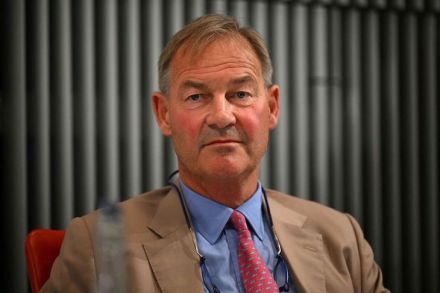
Rupert Lowe is a real British political figure representing Great Yarmouth in Parliament. Parliamentary records show him continuing to submit written questions in 2026 on subjects ranging from the replacement of the James Paget Hospital to death-certification policy. (Nghị viện song song)
Lowe has also developed a substantial public profile through outspoken interventions on immigration, public services and other politically contentious subjects. His own recent public communications illustrate the direct language he frequently uses on issues such as NHS recruitment and immigration. (LinkedIn)
He has appeared in American long-form media as well. An independent website devoted to information about Lowe documents his July 2026 appearance on Joe Rogan’s podcast, where he discussed immigration, the BBC, Covid-era controversies and British politics. (RupertLowe.co)
There is also documented evidence of Lowe supporting charitable and end-of-life causes locally. His constituency website, for example, reported a March 2025 donation to the Louise Hamilton Trust, which provides end-of-life care at the James Paget Hospital. (Rupert Lowe)
Those facts provide some context for why a story portraying Lowe privately comforting a dying admirer might sound plausible to people already familiar with him.
But plausibility is not verification.
Nothing found in the available searches establishes the much more specific claims at the heart of the viral story: that Lowe appeared on The View for this confrontation; that Sunny Hostin called him an “old political clown”; that the panel laughed at him; that Lowe produced the described notebook; that Hostin had a late friend who requested a meeting with Lowe; or that Lowe replied with the memorial line attributed to him.
Those details therefore need to remain explicitly labelled unverified unless primary evidence emerges.
The alleged confrontation
The circulating version begins in an atmosphere of casual ridicule.
Hostin is portrayed as dismissing Lowe while other members of the panel and audience laugh. Lowe, meanwhile, is presented as completely composed.
This contrast is essential to the narrative.
One side laughs.
The other remains silent.
One side supposedly judges a political figure based on his public reputation.
The other reveals a deeply private act of compassion.
That structure transforms what initially appears to be an ordinary political argument into a morality tale.
Yet the unusually cinematic details are also reasons for caution.
The story describes a “quiet thud” as the notebook reaches the table. It says “silence detonated across the studio.” It claims there were “ten full seconds of absolute stillness” and that the audience “stopped breathing.”
Those phrases may create a vivid mental picture, but they are narrative descriptions rather than evidence.
If an exchange occurred on a nationally televised program, the strongest evidence would normally be straightforward: an official video, an episode archive, a transcript, an ABC account, or multiple independent reports quoting the exchange.
Without those materials, recreating the scene as fact would go beyond what can presently be established.
Why the notebook matters to the story
The black notebook plays an unusually important role.
According to the viral account, Lowe carries it while meeting struggling families, veterans, business owners and people who believe the political establishment has forgotten them.
It functions almost like a symbol.
The notebook represents listening rather than talking. It suggests that behind the public politician exists another person recording private stories that never reach television.
But this particular description also remains unverified.
There is no reliable evidence located in the searches establishing that Lowe possesses the notebook described in the post, much less that it was involved in an appearance on The View.
This is an important example of how online stories can mix potentially accurate background information with unsupported details.
A political figure may genuinely meet constituents.
He may genuinely work with charities.
He may genuinely have private conversations that never become public.
None of those facts automatically validates a specific story about a particular television confrontation.
The hospital-bed story
The most emotionally powerful part of the narrative concerns Hostin’s supposed late friend.
The circulating version claims the woman admired Lowe and requested to meet him during the final days of her life.
Lowe allegedly visited privately.
There were supposedly no television cameras, photographers or publicity operation.
He is described as sitting beside her hospital bed, reading or speaking from his notebook and comforting the woman’s relatives.
Then, according to the story, he never mentioned the encounter publicly.
It is precisely the secrecy of the supposed act that makes the narrative emotionally compelling.
It also makes independent verification difficult.
No reliable source identified in the available search results substantiates the identity of this woman, her relationship with Hostin, her alleged request to meet Lowe, the hospital visit or the memorial described in the viral post.
That does not justify declaring the underlying story false with absolute certainty.
It does justify withholding the language of certainty.
A responsible account would say that these allegations are circulating but remain unsupported by publicly available evidence.
What about The View?

The View is a long-running American daytime television program built around panel discussions of politics, culture and current affairs. Sunny Hostin and Whoopi Goldberg are among its established co-hosts. (Movdatas)
Politicians and politically controversial guests are hardly unusual on American daytime television.
A British politician appearing on such a program would therefore not, by itself, be extraordinary.
What would be extraordinary is the specific exchange described here.
The alleged quotation is also highly searchable because “old political clown” is distinctive language. Yet searches pairing Lowe’s name with Hostin, The View, and the quotation did not surface corroborating coverage of the confrontation.
The same problem applies to Lowe’s supposed response.
A televised statement as dramatic as “I spoke at your friend’s memorial,” followed by an extended studio silence, would provide an obvious clip for social-media accounts, political publications and entertainment sites.
The absence of readily identifiable primary footage or corroborating coverage is therefore significant.
It is not mathematical proof of fabrication. Search indexes are imperfect, videos disappear, regional availability varies, and not every television exchange generates extensive reporting.
But extraordinary specificity requires more than a compelling paragraph posted online.
A real politician inside an unverified story
One reason political misinformation can be difficult to detect is that it often does not consist entirely of invented material.
Instead, real people and genuine characteristics can be placed inside an unsupported event.
Lowe is undeniably a controversial and outspoken politician.
His public comments frequently generate strong reactions.
His political activities are extensively documented.
He has also publicly presented himself as an MP who receives information directly from constituents and whistleblowers. For example, in one public post concerning catering at the James Paget Hospital, he said information had been brought to him by multiple whistleblowers and described pursuing the issue with hospital leadership. (LinkedIn)
His parliamentary activity is likewise easily documented through official records. (Nghị viện song song)
So an online storyteller does not need to invent an entirely fictional character.
A recognisable public figure already exists.
The unsupported element can simply be the event placed around him.
That combination makes verification especially important.
Lowe’s political identity
The political context is also more complicated than the viral story suggests.
Lowe was elected to Parliament for Great Yarmouth in 2024 as a Reform UK candidate, but his subsequent political relationship with Reform deteriorated. By early 2026, his own public communications showed him sharply criticising Nigel Farage and discussing the need for a different political vehicle. (LinkedIn)
His positions have attracted both enthusiastic supporters and strong critics.
Supporters often describe him as unusually willing to challenge political institutions and discuss subjects they believe other politicians avoid.
Critics dispute many of his arguments, particularly on immigration, integration and public services.
Those disagreements are legitimate subjects of political debate.
But they should remain separate from whether a particular television event happened.
Someone’s opinion of Lowe’s politics cannot establish the authenticity of a video.
Likewise, disagreement with Lowe does not establish that a story flattering him must be fabricated.
Verification requires evidence independent of political preference.
The danger of emotional verification
Social media encourages a very different standard.
People frequently ask themselves whether something sounds like a person rather than whether there is evidence that the person actually said it.
That distinction is crucial.
A viewer who already considers Lowe calm under criticism might think: “That is exactly what he would do.”
Someone who strongly dislikes The View might think: “That sounds exactly like something the hosts would say.”
Neither reaction verifies anything.
Political misinformation is especially effective when it confirms the audience’s existing impression of everyone involved.
The hero behaves heroically.
The antagonist behaves arrogantly.
The confrontation exposes everyone’s “true character.”
And the conclusion confirms what the intended audience believed before reading the first sentence.
Real life is usually less narratively convenient.
The quotations are particularly important


Direct quotation creates an unusually strong impression of authenticity.
Readers reasonably assume quotation marks mean somebody has documented the exact words.
That is why quotations require greater caution than paraphrases.
The viral account attributes several precise statements to Hostin.
It also gives Lowe an exact reply.
Unless those lines can be traced to video, audio, a transcript or credible reporting, they should not be repeated as confirmed quotations.
A responsible publication could instead write:
A viral post claims Hostin described Lowe as an “old political clown,” but no primary recording or reliable transcript confirming the quotation has been identified.
That sentence preserves the existence of the online claim without converting the claim into fact.
The same principle applies to Lowe’s supposed memorial statement.
“Within hours, the clip exploded”
Another unsupported element is the assertion that a clip of the incident rapidly went viral.
A viral video normally leaves traces.
There may be reposts on X, Facebook, Instagram, TikTok and YouTube. Entertainment publications may reference it. Political commentators may respond. Fact-checkers may examine it. The television program itself may publish excerpts.
Yet the searches conducted for this article did not locate a reliable original clip corresponding to the described event.
Readers encountering such a video should therefore examine its provenance rather than relying on captions attached to reposts.
Is it uploaded by ABC or The View?
Can the full segment be found?
Do the cuts preserve chronological order?
Does the audio match the speakers’ visible movements?
Is the dramatic quotation actually audible?
Can the episode date be established?
Do credible publications independently report the same event?
Those questions have become increasingly important as inexpensive generative tools make fabricated audio, manipulated images and fictional “news” narratives easier to produce.
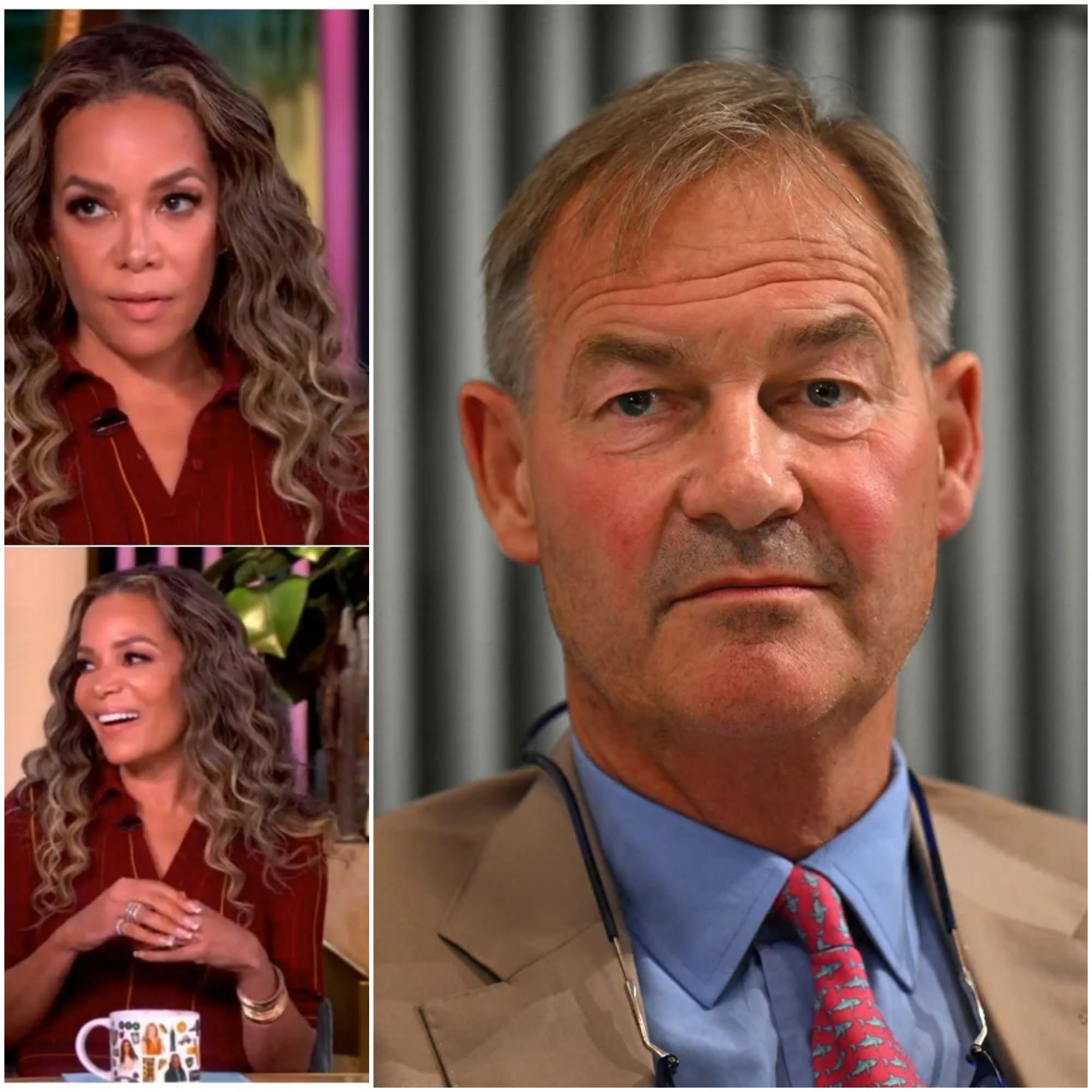
The photograph does not prove the meeting
Images accompanying viral posts can strengthen the impression that two people appeared together even when they did not.
A collage showing Hostin on one side and Lowe on another demonstrates only that photographs of both individuals exist.
Unless they are visibly present in the same verified television frame, such an image cannot establish a joint appearance.
This is a simple distinction, but one frequently overlooked on social platforms.
Composite images are common because they communicate the premise of a story instantly.
They are useful illustration.
They are not documentation of an encounter.
Why stories like this travel so quickly
The alleged Lowe confrontation is constructed around several powerful emotional mechanisms.
First comes humiliation.
Then restraint.
Then revelation.
Then reversal.
Finally comes vindication.
The person who appeared weak suddenly controls the room.
The people who laughed become silent.
The audience receives both surprise and moral satisfaction.
It is an extremely effective narrative formula, particularly for Facebook posts where the opening lines must compete for attention.
The problem begins when storytelling conventions are presented as journalism without evidence.
Political reporting has a different obligation.
It must sometimes disappoint the reader.
A journalist may investigate an extraordinary claim only to discover that the available evidence supports a far less dramatic conclusion.
That restraint is not a weakness.
It is part of the distinction between reporting and entertainment.
Could new evidence change the picture?
Certainly.
Verification is not permanent when new primary evidence becomes available.
If ABC publishes an episode containing Lowe and Hostin, that would materially change the assessment.
If a complete, authentic video emerges, individual statements could be checked against it.
If Lowe, Hostin or ABC publicly confirms the encounter, that would also become relevant evidence—although specific claims about a third person’s private medical circumstances would still require careful treatment.
Until then, the appropriate status is straightforward:
Unverified.
Not “definitely fake.”
Not “confirmed.”
Unverified.
That word protects the distinction between what is known and what is merely circulating.
There is a broader lesson here
The political significance of the story may ultimately have less to do with Rupert Lowe or Sunny Hostin than with the modern information environment.
Social platforms increasingly blur the boundaries between political commentary, fictionalised storytelling, satire, partisan advocacy and conventional journalism.
A post may contain real politicians, authentic photographs and accurate biographical details while describing an encounter for which no evidence exists.
Once thousands of users share it, repetition itself begins to resemble corroboration.
But ten thousand repetitions of one unsupported source are still one unsupported claim.
Virality measures distribution.
It does not measure truth.
That principle applies equally to stories benefiting politicians on the left, right or centre.
What is genuinely documented about Lowe?
There is no shortage of verifiable material through which to evaluate Lowe’s public career.
His parliamentary questions are public.
His political statements are public.
His disputes are public.
A May 2026 High Court judgment, for example, records proceedings involving Lowe and Parliament’s Independent Complaints and Grievance Scheme. (Courts and Tribunals Judiciary)
His political communications provide direct evidence of his positions rather than second-hand characterisations. (LinkedIn)
His constituency activity can likewise be assessed through documented records, including his support for the Louise Hamilton Trust. (Rupert Lowe)
People can interpret that record differently.
Some will support his politics.
Others will strongly oppose them.
Those judgments belong to voters and readers.
What journalism can provide is the underlying evidence on which those judgments should be based.
Separating three different questions


The controversy is easier to understand if three questions are kept separate.
The first is whether Rupert Lowe is an influential and controversial political figure.
That is readily established.
The second is whether his political positions are good or bad.
That is an evaluative political question on which citizens will reach different conclusions.
The third is whether the extraordinary confrontation described in the viral post actually occurred.
That is an evidentiary question.
And on that third question, the available evidence currently falls short.
The emotional effectiveness of the story cannot fill the gap.
Neither can admiration for Lowe.
Neither can dislike of Hostin.
Only evidence can.
A more accurate headline
For publishers sharing the story before primary confirmation appears, a headline such as “Viral Post Claims Rupert Lowe Silenced The View — But the Dramatic Exchange Remains Unverified” would more accurately describe what is currently known.
That framing does not suppress the story.
It actually makes the central mystery more interesting while protecting readers from being told that uncertain claims are established facts.
It also leaves room for the evidence to develop.
Should an authentic clip appear tomorrow, the story can be updated.
Should ABC deny that Lowe appeared on the program, that too would become relevant.
Journalism works best when conclusions follow evidence rather than preceding it.
The silence that cannot yet be heard
The most memorable detail in the viral narrative is silence.
Hostin supposedly stops smiling.
Whoopi Goldberg supposedly freezes.
The audience supposedly becomes completely still.
Lowe supposedly says almost nothing more.
It is an effective ending because readers can imagine the scene without seeing it.
But that is precisely the problem.
At present, the public is being asked to imagine a moment that should, if it happened as described on national television, potentially be capable of being watched.
Until that footage or equivalent primary documentation can be established, the silence remains part of the story—not verified evidence of the event.
Rupert Lowe’s actual political career provides plenty of material for debate without embellishment. His speeches, parliamentary questions, interviews, public campaigns and controversial positions can all be examined on their merits.
The same principle should apply to his critics.
Sunny Hostin should be judged on words that can actually be attributed to her, rather than on a dramatic quotation circulating without reliable documentation.
Political debate is contentious enough without adding uncertain encounters to the historical record.
Perhaps evidence will eventually establish that some version of this remarkable exchange occurred.
If it does, the evidence should lead the story.
Until then, the most important sentence is not the dramatic comeback attributed to Lowe.
It is a much simpler one:
The confrontation described in the viral post has not been independently verified by the reliable sources located for this article.
