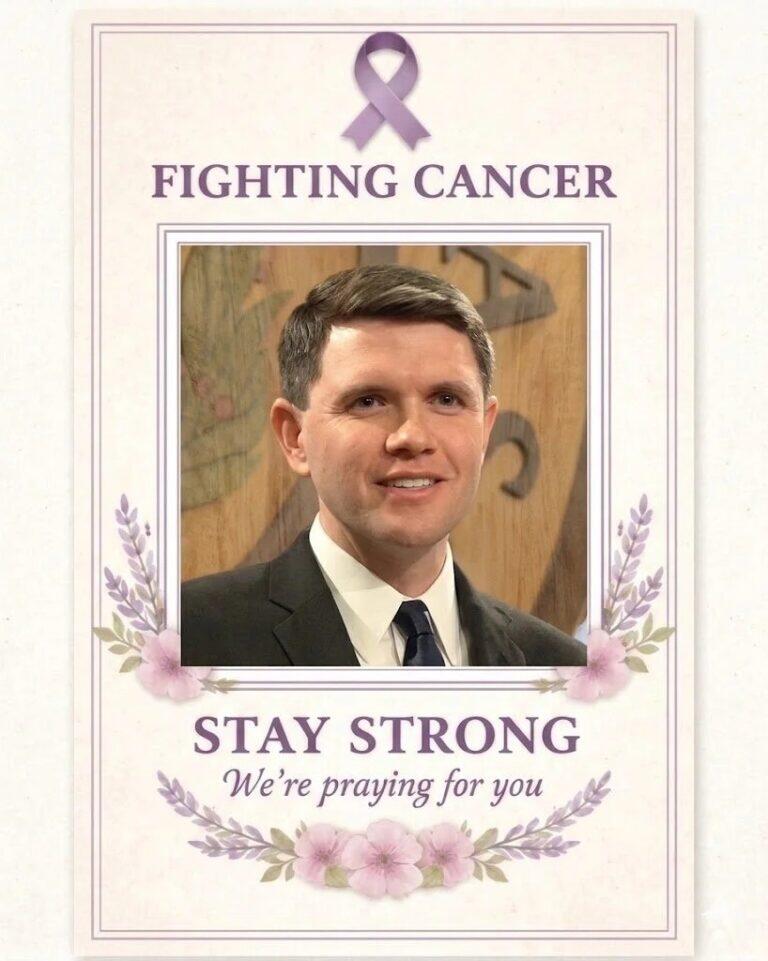
🥹 VIRAL CLAIMS SPARK CONCERN: James Talarico at the Center of Alarming Health Rumors — What Is Actually Confirmed?



🥹 VIRAL CLAIMS SPARK CONCERN: James Talarico at the Center of Alarming Health Rumors — What Is Actually Confirmed?
In the fast-moving world of social media, emotionally charged messages can spread across platforms in a matter of minutes.
Recently, a wave of posts has surfaced claiming that Texas State Representative James Talarico is facing a severe and life-threatening illness.
The language used in these posts is dramatic and deeply concerning, urging followers to pray and share support.
As a result, thousands of people have reacted with shock, sympathy, and confusion.
But behind the emotional headlines lies a crucial question: is there any verified truth to these claims?
James Talarico has become a recognizable figure in American politics, particularly in Texas, where he serves as a member of the state legislature.
Known for his articulate speaking style, strong advocacy for public education, and emphasis on ethical leadership, Talarico has built a reputation that extends beyond traditional political boundaries.
His speeches often go viral, resonating with audiences who appreciate his clarity and sincerity.
Because of his growing public profile, any news involving Talarico—especially something as serious as a health crisis—can quickly attract widespread attention.
However, as of now, there is no credible or official confirmation that James Talarico is battling cancer or is in critical condition.



The spread of such unverified claims highlights a familiar issue in today’s digital environment: misinformation driven by emotion.
Posts that include urgent language, personal appeals, and references to serious illness often trigger immediate reactions.
People share them out of concern, not realizing that the information may be inaccurate or entirely fabricated.
This phenomenon is not unique to James Talarico.
Public figures across politics, entertainment, and media frequently become subjects of viral rumors, particularly when their names are already circulating widely.
In many cases, these stories follow a predictable pattern—an alarming claim, a call for prayers, and a vague “full story” that never actually links to verified reporting.
While the intentions behind such posts may vary, the consequences can be real.
For the individual at the center of the rumor, it can lead to confusion, reputational impact, and unnecessary stress for both them and their loved ones.
For the public, it creates an environment where it becomes increasingly difficult to distinguish fact from fiction.
James Talarico, in particular, has often emphasized the importance of truth, integrity, and thoughtful discourse in his public statements.
His approach to leadership has consistently focused on honesty and accountability—values that stand in stark contrast to the spread of unverified information.


It is also important to consider the broader impact of sharing sensitive health-related rumors.
Illness is a deeply personal matter, and public speculation without confirmation crosses ethical boundaries.
Even when driven by concern, spreading false or unverified claims can contribute to misinformation and erode trust in reliable sources.
In situations like this, responsible information consumption becomes essential.
Rather than relying on viral posts, individuals are encouraged to seek out credible news organizations, official statements, or direct communications from verified accounts.
These sources provide the level of accuracy and accountability that social media posts often lack.
At the same time, the outpouring of concern seen online reflects something genuine: people care.
The emotional responses, messages of support, and calls for prayer—even if based on unverified claims—demonstrate the connection that many feel toward James Talarico.
His work, voice, and presence have clearly made an impact.
However, compassion is most meaningful when it is grounded in truth.
Supporting public figures should involve not only empathy but also a commitment to accuracy and respect for their privacy.
As of now, there is no confirmed evidence supporting the claim that James Talarico is facing a “vicious cancer virus” or is in critical condition.
Until such information is verified through trustworthy sources, these rumors should be treated with caution.
In a time when information travels faster than ever, the responsibility to pause, verify, and think critically has never been more important.
Stories like this serve as a reminder that not everything we read online reflects reality—and that truth still matters.
For those who follow and support James Talarico, the best course of action is simple: stay informed, rely on credible sources, and continue to engage with his work based on facts rather than speculation.
Because in the end, the real story is not the rumor itself—but how we choose to respond to it.
