Sydney Roosters Crush Dragons 62–16 in Historic Anzac Day Statement Win as Questions Follow the Celebration
The Sydney Roosters delivered one of the most emphatic performances in recent NRL memory on Friday afternoon, dismantling the St. George Illawarra Dragons 62–16 in Round 8 of the 2026 season at Allianz Stadium.
Played on Anzac Day (25 April 2026), one of the most significant dates on the Australian sporting calendar, the clash was expected to carry its usual intensity, emotion, and fierce rivalry. Instead, it became a record-breaking demolition that rewrote the history books of the Anzac Day Cup.

The Roosters’ 46-point margin now stands as the largest winning margin ever recorded in the annual Anzac Day fixture between the two clubs, surpassing previous records and instantly becoming one of the defining moments in the long-running tradition.
Yet despite the avalanche of points, the story of the afternoon extended beyond the scoreboard. While Roosters supporters celebrated a ruthless attacking masterclass, post-match discussion quickly shifted toward standards, officiating, discipline, and what the result means for both clubs moving forward.
For the Roosters, it was a statement of premiership intent.
For the Dragons, it was another painful chapter in a season rapidly descending into crisis.
A Day of Meaning Turns Into a One-Sided Spectacle
The annual Roosters vs Dragons Anzac Day meeting is traditionally one of the most emotional and respected events in the NRL season. The pre-match ceremony, moments of silence, military tributes, and packed Allianz Stadium crowd once again created a powerful atmosphere.
But once the whistle blew, sentiment gave way to complete domination.
The Roosters wasted no time imposing themselves physically and tactically. Their line speed was sharper, their kicking game more precise, and their ball movement far too quick for a Dragons side already struggling for confidence.
Within minutes, Sydney had crossed for their first try. Then another followed. Then another.
By halftime, the scoreboard read a scarcely believable 34–4, with the Dragons already overwhelmed by relentless pressure through the middle and clinical finishing out wide.
The contest, in practical terms, was already over.
Roosters Run Riot With 11 Tries
Over the full 80 minutes, the Roosters piled on 11 tries, slicing through the Dragons repeatedly with a mixture of structured attack and instinctive support play.
Every time St. George Illawarra threatened to show resistance in the second half, the Roosters answered immediately.
The Dragons managed a few consolation tries, but they never truly looked capable of shifting momentum. Their defensive line was repeatedly exposed, their edges struggled under pressure, and their inability to slow Sydney’s ruck speed proved fatal.
The final whistle confirmed the brutal numbers:
Sydney Roosters 62
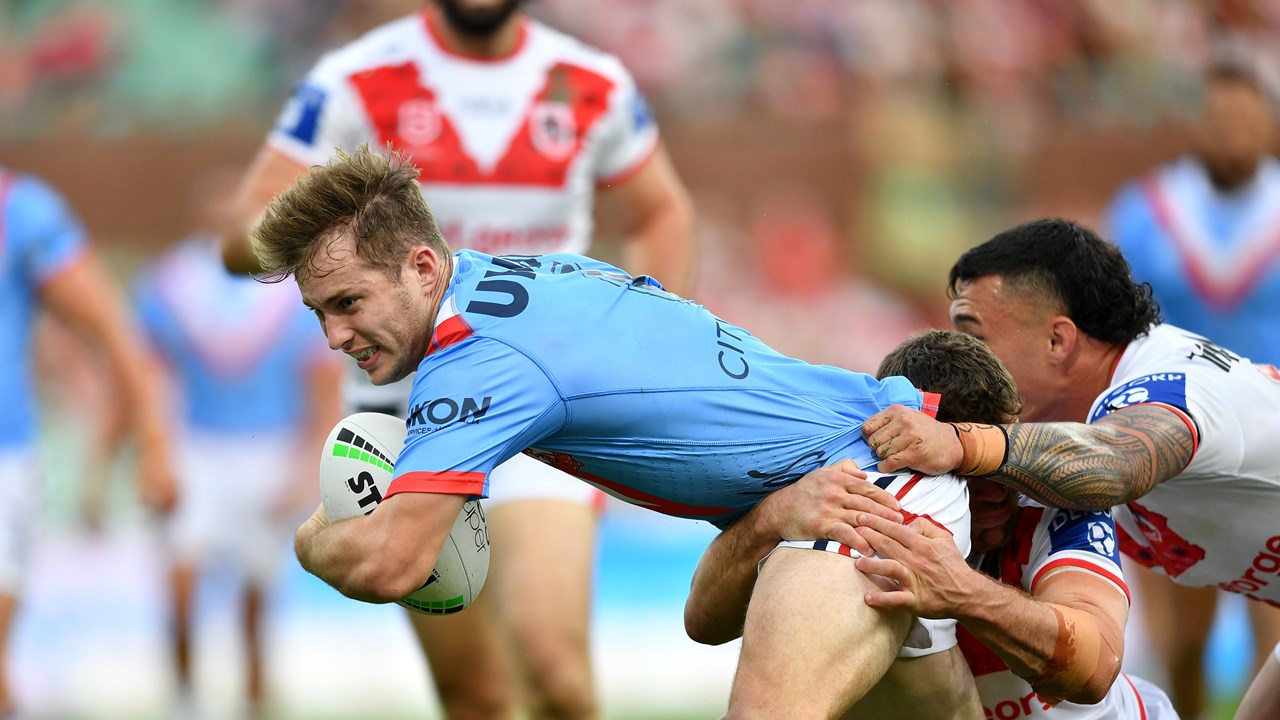
St. George Illawarra Dragons 16
It was not merely a win. It was a dismantling.
Sam Walker Orchestrates the Destruction
At the heart of the performance was halfback Sam Walker, whose display underlined why many consider him one of the most dangerous playmakers in the competition.
Walker was the engine behind the Roosters attack from start to finish.
He controlled tempo, shifted defenders with intelligent ball-playing, linked with his outside men, and repeatedly found space with precision kicking. He also added points directly, capping off an all-round performance that left the Dragons chasing shadows.
Whenever the Roosters needed composure, Walker delivered it.
Whenever they smelled weakness, Walker exploited it.
His fingerprints were all over the result.
While the scoreboard reflected team dominance, Walker’s influence ensured the attack remained ruthless rather than complacent.
Backline Brilliance and Forward Power
Though Walker rightly drew headlines, the Roosters’ entire squad contributed to a complete team performance.
Their outside backs finished chances with accuracy and confidence, turning half-opportunities into tries. Support lines were sharp, decision-making in transition was disciplined, and ball security remained excellent throughout the afternoon.
Just as importantly, Sydney’s middle forwards laid the platform.
They won the collision battle early, generated momentum with strong carries, and allowed the halves to play on the front foot. With quick play-the-balls and dominant field position, the Roosters dictated the match exactly where they wanted it.
In high-pressure rivalry games, emotional energy can sometimes create chaos.
Instead, the Roosters remained composed.
That composure may have been the most impressive part of the afternoon.
Dragons Continue to Sink
For St. George Illawarra, the defeat was more than another loss.
It was a psychological blow.
The Dragons have now opened the 2026 campaign with eight straight defeats, leaving them anchored near the bottom of the ladder and facing growing pressure from fans, media, and former players.
Losing to a quality Roosters side is one thing.
Conceding 62 points in a marquee fixture on one of the season’s biggest stages is something else entirely.
There were brief moments in the second half when the Dragons showed effort and managed to cross for points, but structurally they looked fragile. Defensive communication broke down repeatedly, and confidence appeared to evaporate each time Sydney struck back.
Head coach and club leadership now face serious questions:
- How does the team recover mentally from this?
- Can current systems produce improvement?
- How long can poor results continue before major changes are considered?
For supporters who arrived hoping for a competitive contest, the afternoon became another painful reminder of how far the club currently has to climb.
Trent Robinson Praises Performance — But Issues Warning
Despite the historic scoreline, Roosters coach Trent Robinson reportedly struck a measured tone after the match.
He praised the professionalism and execution of his side but warned against complacency, noting that tougher challenges lie ahead in the coming weeks.
That message resonated.
Great teams often celebrate wins. Elite teams quickly move on from them.
Robinson knows a 62-point explosion in April means little if standards slip later in the season. With heavyweight clashes still to come, the veteran coach emphasized discipline, consistency, and humility.
Internally, the Roosters are likely pleased with the result—but equally aware that premiership credentials are built across months, not one afternoon.
Still, statement wins matter.
And this was undeniably a statement.
What the Victory Means for the Ladder
The two competition points strengthen Sydney’s position near the top of the table after eight rounds and reinforce the sense that they are genuine contenders in 2026.
More importantly, their points differential receives a major boost—often a crucial factor later in the season when ladder positions tighten.
Momentum also matters in the NRL, and performances like this can energize a club.
Confidence grows. Combinations strengthen. Belief spreads.
For the Roosters, the challenge now becomes sustaining that level.
Anzac Day History Rewritten
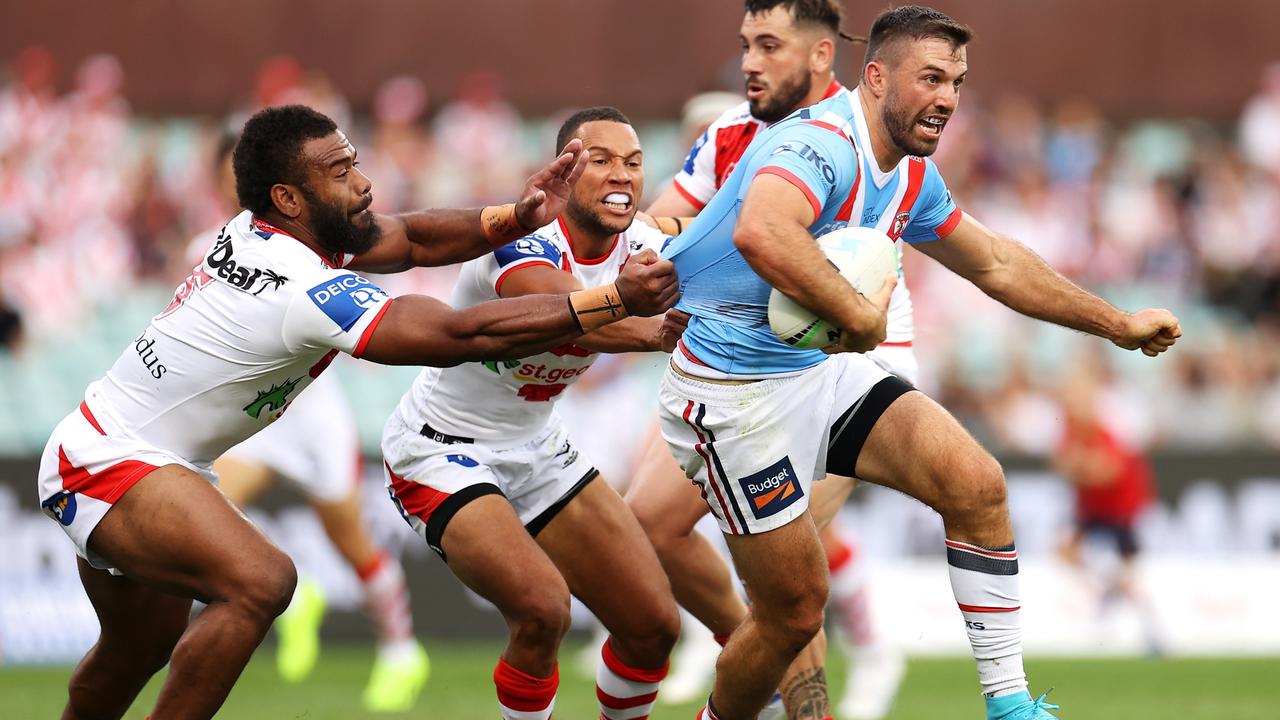
The Anzac Day Cup carries a unique place in rugby league culture. It is never just another regular season game.
Players understand the meaning. Fans understand the tradition. Clubs understand the responsibility of performing on such an occasion.
That is why the scale of this result is so striking.
This was not a narrow classic or a dramatic golden-point finish.
It was a historic blowout in one of the game’s most symbolic annual fixtures.
Years from now, people may forget individual tries or exact passages of play.
They will remember the number:
62–16
And they will remember that on Anzac Day 2026, the Sydney Roosters turned tradition into domination.
Final Thought
For the Roosters, this was the kind of afternoon that fuels title ambitions: disciplined, explosive, clinical, and emotionally controlled.
For the Dragons, it was a humbling collapse that deepens an already dangerous season spiral.
One club walked off Allianz Stadium with confidence soaring.
The other walked off searching for answers.
And while scoreboards often tell the story, sometimes they also issue a warning.
On Anzac Day, the Roosters didn’t just win.
They announced themselves.
