A Silence Louder Than the Haka: The Night Eden Park Stood Still
Eden Park has witnessed countless moments of triumph, heartbreak, and sheer sporting poetry over the decades.
But on a brisk Auckland evening, the hallowed grounds felt fundamentally different.
The stadium lights were dimmed, casting long, solemn shadows across the usually bustling media room.
There was no roaring crowd, no echoing referee whistle, no national anthems reverberating through the stands.
Instead, there was a palpable, suffocating silence that seemed to swallow the room whole.
Sir John Kirwan, an immortal icon of New Zealand rugby and a beloved son of Aotearoa, stepped up to the microphone.
But the man who once tore through defensive lines with unmatched ferocity was now facing an opponent far more formidable than any sporting rival in the world.
The Weight of the Silver Fern
For generations, the All Blacks jersey has symbolised strength, resilience, and an almost superhuman stoicism.
Sir John Kirwan—affectionately known as JK across the motu—wore that black jersey with unparalleled pride.
He is revered not just for his World Cup heroics in 1987, but for his pioneering, decades-long crusade for mental health awareness.
Yet, as reporters and camera crews filed into the media centre, a sense of deep, unshakeable unease settled over the room.
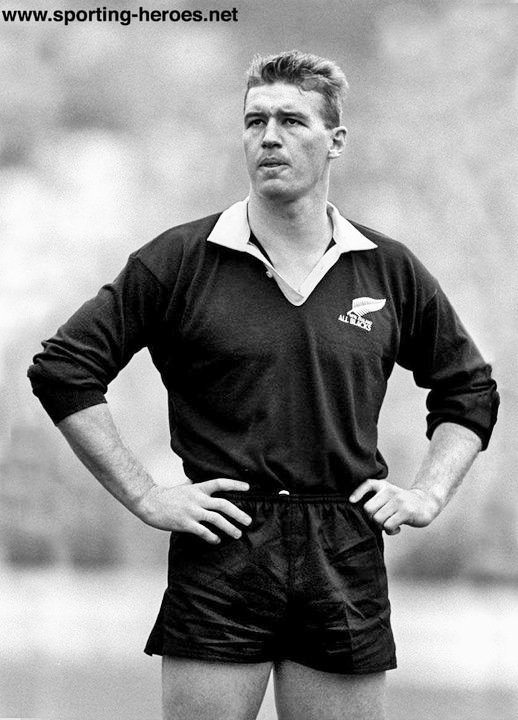
Current members of the squad stood at the back of the room, their usual pre-match energy replaced by a heavy, sorrowful stillness.
You could see it in their posture—the broad shoulders slumped, the impenetrable game faces entirely stripped away.
This gathering was profoundly disconnected from the sport they live for.
“You could hear a pin drop in that room,” remarked a veteran sports journalist who had covered the national team for three decades.
“It wasn’t the confident, charismatic JK we usually see laughing on television.
This was a father, a husband, a vulnerable man bearing his soul to the entire nation.”
The Unthinkable Reality
As JK adjusted the microphone, his hands visibly shook.
The nation, watching live feeds with bated breath from their living rooms and local rugby clubs, anticipated news of a new advisory role, a major foundation launch, or perhaps a nostalgic reflection on his storied career.
But the reality was far more devastating.
The intense suspense that had gripped the room throughout the day culminated in a tearful, breathtaking revelation that nobody saw coming.
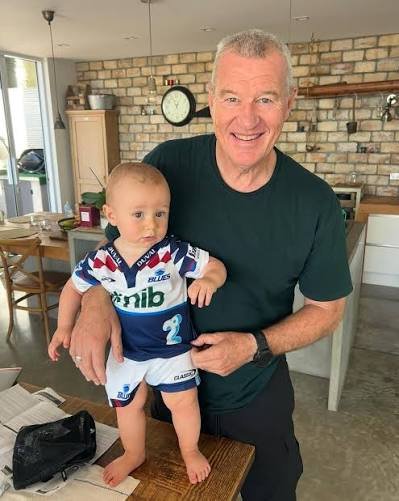
With his whānau standing closely by his side, their faces etched with exhaustion and profound sorrow, JK’s voice finally broke.
He spoke of a sudden, shattering loss—a private, catastrophic tragedy that had struck the very core of his family in the blink of an eye.
The specifics, kept fiercely private out of respect for the grieving process, painted a picture of an agonising battle fought far away from the floodlights and television cameras.
It was a stark, brutal reminder of life’s ultimate fragility.
The man who had spent his life urging Kiwis to speak up about their inner struggles was now navigating a nightmare no family should ever have to endure.
“This isn’t a game we can win in eighty minutes,” JK said, tears streaming down his face as his whānau closed in, physically holding him up.
“This is a journey of survival, and it’s going to take absolutely everything we have.
Rugby gave me an incredible life, but today, all that matters is the people standing right next to me.”
A Brotherhood United in Grief
The reaction within the press room was immediate and deeply visceral.
At the back of the conference, the towering figures of the All Blacks—men built like mountains—visibly crumbled.
Heads were bowed, eyes were red, and the silence stretched out, thick with shared, unspoken grief.
In New Zealand, rugby is often referred to as a religion, a cultural glue binding the nation together every weekend.
But in that fleeting, heart-rending moment, the sport was rendered entirely insignificant.
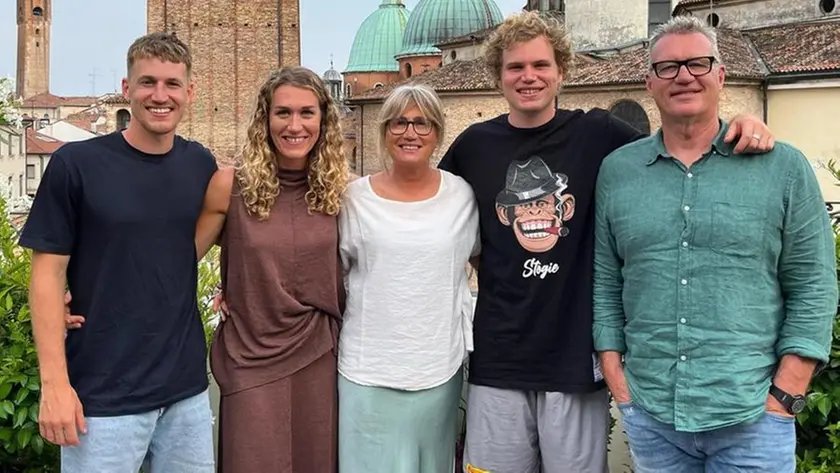
The players stepped forward, not as invincible athletes, but as a deeply connected brotherhood offering a shield of immense, quiet support.
It was a powerful display of modern masculinity and emotional vulnerability.
“We wear the fern to represent our country,” shared one of the senior players, his voice breaking into a whisper.
“But tonight, John reminded every single one of us that our absolute greatest duty is to the people we love.
We leave the game on the pitch. This is real life.”
Beyond the Game
The reverberations of that press conference have since echoed across every corner of Aotearoa, from the bustling, wind-swept cafes of Wellington to the quiet, closely-knit rural pubs of the deep South Island.
Social media feeds and talkback radio stations were flooded not with tactical analysis, but with tears, prayers, and an overwhelming outpouring of aroha for the Kirwan family.
It has sparked a vital, nationwide reflection on the importance of family, the suddenness of tragedy, and the profound courage it takes to mourn in the public eye.
“The mana he showed stepping up there today… it outweighs any World Cup medal,” noted a New Zealand Rugby official.
“He has given so much of himself to this country over the years, and now, it is the country’s turn to hold him and his whānau.”
Ultimately, the towering legacy of Sir John Kirwan will not be defined solely by his blistering pace or his iconic tries.
It will be defined by his raw, unfiltered humanity.
As the lights finally went out at Eden Park that evening, the darkness was met not with solitary despair, but with the collective, unwavering support of an entire nation standing shoulder to shoulder with its hero, proving unequivocally that love and family will always transcend the game.
