“It Doesn’t Matter Anymore”: The Song That Became Buddy Holly’s Unintended Farewell
Some songs become timeless because of their melodies. Others endure because the stories surrounding them give every note a deeper meaning. For Buddy Holly, one of rock and roll’s most influential pioneers, “It Doesn’t Matter Anymore” would eventually become something far more heartbreaking than anyone could have imagined when it was recorded. What began as a song about romantic disappointment transformed into an emotional farewell after the young musician’s sudden death shocked the world.
Holly never intended the recording to serve as a final message to his fans. He was still building his career, exploring new musical possibilities, and imagining what might come next. Yet history gave the song a meaning its creator could never have anticipated, turning an ordinary release into one of the most poignant chapters of his extraordinary life.

A Young Artist Ready to Explore New Musical Horizons
By the late 1950s, Buddy Holly had already established himself as a distinctive voice in the rapidly expanding world of rock and roll. Born in Lubbock, Texas, he brought an unmistakable combination of youthful energy, melodic sophistication, and creative independence to popular music.
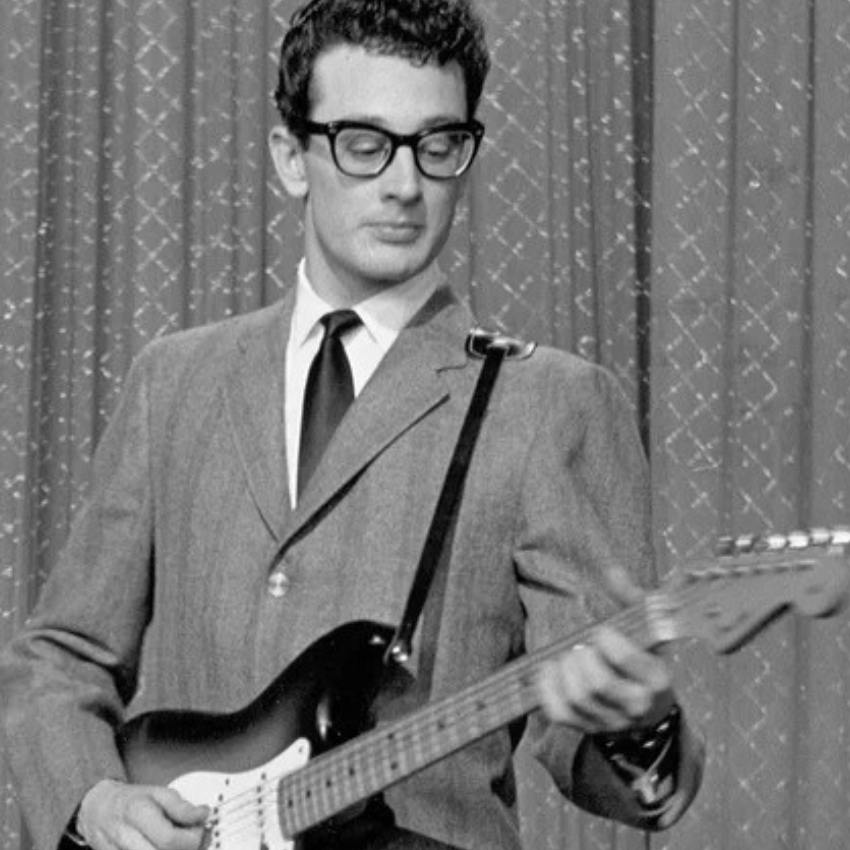
With his thick black glasses, expressive voice, and confident guitar playing, Holly challenged the image of what a rock and roll star was supposed to look and sound like. His success with the Crickets demonstrated that a young musician could help shape not only his own recordings but also the future direction of popular music.
Songs such as “That’ll Be the Day,” “Peggy Sue,” and “Everyday” revealed his remarkable ability to turn simple musical ideas into memorable recordings. Beneath their catchy melodies, however, listeners could hear a thoughtful songwriter who understood the emotional power of vulnerability.
Holly was not content to repeat the same formula indefinitely. As his career progressed, he became increasingly interested in different arrangements and recording techniques. His later work reflected an artist eager to expand beyond the straightforward rock and roll sound that had first made him famous.
That spirit of experimentation would become especially apparent in “It Doesn’t Matter Anymore.”
The Song That Carried a Different Sound
Written by Paul Anka specifically for Holly, “It Doesn’t Matter Anymore” offered a musical atmosphere that differed from the energetic performances many fans associated with the young star.
The recording featured an orchestral arrangement by Dick Jacobs, placing Holly’s unmistakable voice against a polished backdrop of strings and other instrumental elements. Rather than relying entirely on the raw excitement of a guitar-driven rock and roll performance, the arrangement created a smoother, more reflective sound.
The contrast was striking. Holly’s voice remained youthful and recognizable, but the orchestral accompaniment suggested an artist willing to experiment with the conventions of popular music.
Lyrically, the song concerns the aftermath of a broken relationship. Its narrator attempts to convince himself that the loss no longer matters, even as the emotional weight of the experience remains apparent. There is a tension between the words’ apparent acceptance and the sadness beneath them.
That contradiction gives the performance much of its lasting appeal. The song sounds composed on the surface, yet the emotion never entirely disappears.
At the time, there was no reason to believe that listeners would eventually interpret those feelings through the lens of an approaching tragedy. It was another recording from a talented musician whose career was still unfolding.
An Unexpected Goodbye
Holly recorded “It Doesn’t Matter Anymore” during his New York recording sessions in October 1958. The song was released in the United States in January 1959, placing it among the final recordings associated with his lifetime.
Less than a month later, on February 3, 1959, Holly died in a plane crash near Clear Lake, Iowa. He was only 22 years old.
The crash also claimed the lives of fellow performers Ritchie Valens and J. P. Richardson, widely known as the Big Bopper. The three musicians had been traveling during the Winter Dance Party tour, a demanding series of performances across the American Midwest.
Their deaths sent shock waves through the music industry and devastated fans who had watched rock and roll develop into a powerful cultural force. Holly’s loss was particularly difficult to comprehend because he appeared to have so much ahead of him.
He had been a husband, a songwriter, a performer, and a young man whose ambitions extended far beyond the achievements he had already earned. His story seemed unfinished because it was unfinished.
Against that background, “It Doesn’t Matter Anymore” acquired a significance that its original creators could never have planned. A song about the end of a romance now seemed to accompany the end of a remarkable musical journey.
The words took on a different emotional weight. Lines originally written to express disappointment and resignation became reminders of a life interrupted before its possibilities could fully unfold.
Why the Recording Still Hurts
Part of the song’s emotional strength lies in the distance between its original meaning and the meaning audiences discovered afterward.
When listeners know Holly’s story, it becomes difficult to hear the recording as simply another love song. The knowledge of what happened in February 1959 changes the experience, encouraging people to hear sadness and finality even where the original performance was never intended to communicate them.
Yet reducing the song to a tragic coincidence would overlook what makes it musically memorable.
Holly delivers the melody with characteristic clarity, allowing the words to remain understandable without sacrificing their emotional complexity. The orchestral backing provides a graceful contrast to his youthful voice, creating a recording that feels both intimate and carefully constructed.
The arrangement also points toward a broader artistic ambition. Holly was interested in pushing beyond the boundaries of the sound that had established his reputation. His willingness to work with orchestral musicians reflected the curiosity of someone who viewed popular music as an expanding creative landscape rather than a fixed set of rules.
In that sense, the recording preserves two important aspects of his legacy: the emotional directness that attracted audiences and the artistic restlessness that helped make him influential.
The tragedy surrounding the song deepened its meaning, but it did not create its musical value. That value was already present in the performance.
A Legacy That Outlived the Tragedy
Following Holly’s death, “It Doesn’t Matter Anymore” reached No. 13 on the Billboard Hot 100, becoming a significant posthumous hit in the United States. Its commercial success helped keep his voice in the public consciousness during a period when fans were struggling to accept his absence.
The recording also became part of the larger story of Holly’s influence on generations of musicians. His songwriting, vocal phrasing, guitar work, and approach to recording helped shape the development of modern rock music.
Artists who followed him recognized that his achievements went beyond a collection of successful singles. Holly had demonstrated how personal songwriting and creative independence could coexist with the excitement of popular entertainment.
His influence continued long after the musical landscape of the 1950s had changed. The songs survived, the recordings continued to circulate, and new listeners discovered the young Texan whose career had ended almost as soon as his possibilities began to unfold.
“It Doesn’t Matter Anymore” remains particularly powerful because it captures a moment when Holly was still moving forward. Rather than presenting a musician consciously looking back on his achievements, it preserves the voice of someone who had no way of knowing how his story would end.
That distinction makes the recording feel remarkably intimate. Listeners are not hearing a planned farewell or a final statement designed to summarize a career. They are hearing a working artist creating music, unaware that the world would soon attach a tragic significance to his work.

The Voice That Time Could Not Silence
Decades after Buddy Holly’s death, “It Doesn’t Matter Anymore” continues to resonate because it brings together the beauty of an individual performance and the sadness of an unfinished life.
Its meaning has changed, but the recording itself remains a testament to his talent. The orchestral arrangement, the carefully shaped melody, and Holly’s distinctive delivery preserve a musician who was still exploring what he could accomplish.
The tragedy of February 1959 cannot be separated entirely from the song’s modern reputation. Nevertheless, Holly’s legacy deserves to be remembered for more than the circumstances of his death. His creativity, independence, and lasting contributions to rock and roll remain central to his story.
He never recorded the song intending to say goodbye. He could not have known that history would transform it into something so deeply personal for millions of listeners.
Perhaps that is why the recording continues to hurt in a way few others can. It offers no deliberate farewell, no final explanation, and no opportunity to hear what Holly might have created next.
Instead, it leaves behind a voice suspended in time—a young artist singing about something that no longer matters, while the world that followed would never stop listening.
Buddy Holly was gone, but the music remained. And in the haunting afterlife of “It Doesn’t Matter Anymore,” his voice found a way to keep saying goodbye without ever having meant to.
