Hereditary: The House Was Hiding Something Evil — And It Knew Their Names
Hereditary: The Family Secret That Turns Grief Into Pure Terror
Some families inherit wealth. Others inherit memories, traditions, and stories passed down through generations. But in Hereditary (2018), one family inherits something far more terrifying—a legacy of secrets, suffering, and an ancient evil that has been waiting for the perfect moment to reveal itself.
Directed by Ari Aster and starring Toni Collette, Alex Wolff, Milly Shapiro, and Gabriel Byrne, Hereditary begins with the death of a grandmother and gradually descends into a nightmare that no one can escape. What first appears to be a story about grief and family dysfunction slowly becomes something far more disturbing, as strange events suggest that the family’s tragedies may not be accidents at all.
The most frightening discovery is not simply that something evil is watching them. It is that their lives may have been shaped by it long before they ever understood what was happening.
A Death That Opens the Door
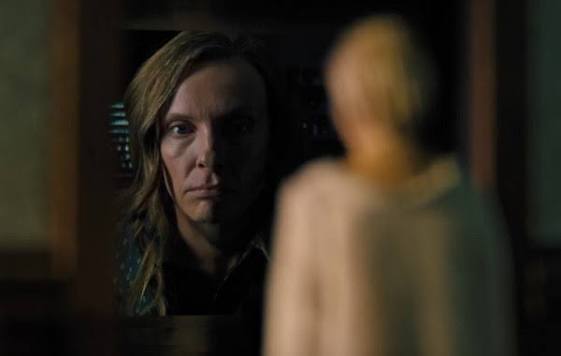
Annie Graham is an artist who creates detailed miniature models of houses and rooms. Her work reflects her complicated relationship with reality: she can construct an entire world and control every tiny detail, even when her own life feels increasingly unstable.
When her mother, Ellen, dies, Annie attends the funeral with her husband, Steve, and their two children, Peter and Charlie.
Ellen was a difficult and mysterious woman. Her relationship with Annie was strained, and her death brings little of the emotional closure Annie might have hoped for. Instead, it exposes unresolved family wounds that have existed for years.
Annie begins to suspect that her mother concealed important parts of her life. Ellen’s behavior had often seemed strange, and Annie now struggles to understand how much she truly knew about the woman who raised her.
Meanwhile, Charlie, Annie’s thirteen-year-old daughter, behaves in unusual ways. Quiet, withdrawn, and fascinated by small objects, Charlie appears disconnected from the people around her. She spends much of her time drawing and constructing strange little figures.
At first, these details seem like expressions of a troubled child coping with loss. But the film gradually surrounds them with an unsettling atmosphere, suggesting that Charlie’s odd behavior may have a deeper meaning.
The family has entered a period of mourning. They do not yet realize that something far more dangerous has begun.
The Tragedy That Changes Everything
Peter, Annie’s teenage son, wants to experience an ordinary adolescence. He attends school, spends time with friends, and struggles with the usual pressures of growing up. His relationship with Annie, however, is tense, shaped by years of emotional conflict and his mother’s unpredictable reactions.
One evening, Annie insists that Peter take Charlie to a party.
Peter reluctantly agrees, and Charlie accompanies him. At the gathering, she accidentally eats a piece of cake containing nuts, triggering a severe allergic reaction. Peter rushes her away in search of help, driving desperately through the darkness.
Charlie leans out of the car window, struggling to breathe.
Then, in a sudden and horrifying moment, Peter swerves to avoid an animal on the road.
Charlie is fatally injured.
Peter stops the car. Shocked and unable to process what has happened, he sits in silence before driving home and leaving the vehicle outside.
The next morning, Annie discovers the truth.
The tragedy destroys what remains of the family’s emotional stability. Annie is overwhelmed by grief, while Peter is consumed by guilt. He cannot bring himself to explain what happened, and the silence between mother and son becomes almost unbearable.
Steve tries to hold the family together, but there is no simple way to repair the damage.
The death of Charlie appears to be the central horror of the film. Yet as the story progresses, it becomes clear that this tragedy is only one part of a much larger and more disturbing pattern.
Grief Becomes Something Darker
Annie’s grief begins to distort her sense of reality. She struggles to function, attends support meetings, and attempts to understand how her family can continue living after such a devastating loss.
During one meeting, she encounters a woman named Joan, who claims to have discovered a way to communicate with deceased loved ones.
Joan tells Annie that she has successfully contacted her own dead grandson. She offers to show Annie how to perform a ritual that supposedly allows the living to speak with the dead.
Desperate for relief, Annie becomes interested.
The possibility of communicating with Charlie offers something grief has denied her: the hope that death might not be final.
But the ritual introduces new and terrifying experiences into the Graham household. Strange sounds, disturbing visions, and unexplained appearances begin to plague Annie and Peter.
Annie sees things she cannot explain. Peter experiences frightening episodes that leave him questioning his own sanity. The house, once a place of family life, becomes a space filled with dread.
The film deliberately blurs the boundary between psychological collapse and supernatural terror. The characters are grieving, traumatized, and emotionally vulnerable. Yet the events surrounding them seem increasingly difficult to dismiss as products of their minds.
Annie’s attempt to reconnect with her daughter may have opened a door that should never have been touched.
The Secret Hidden in the Family History
As Annie investigates her mother’s past, she uncovers disturbing evidence that Ellen was involved with a secretive group connected to occult practices.
Old photographs, family documents, and strange symbols reveal that Ellen’s influence extended far beyond the ordinary boundaries of family life.
Annie begins to understand that her mother had concealed an elaborate network of beliefs and intentions. The strange behavior she once attributed to Ellen’s personality now appears connected to something deliberate.
The discovery changes the meaning of everything that has happened.
Charlie’s death, Annie’s increasingly disturbing experiences, and the family’s history of emotional suffering begin to look less like isolated misfortunes and more like pieces of a carefully constructed design.
The film’s title becomes increasingly significant. Hereditary is not merely about physical traits passed from one generation to the next. It explores the possibility that families can transmit trauma, secrets, and destructive patterns that their descendants never chose.
But the horror here goes beyond metaphor. The evidence points toward a supernatural scheme that has been developing for years, with the Graham family at its center.
Annie realizes that her mother may have been preparing for something long before the funeral.
And the people she thought she understood may have been playing roles in a plan whose true purpose is only now becoming visible.
A Mother Against Her Own Family
The growing terror drives Annie toward increasingly desperate actions. She fears that Peter may be in danger, yet her attempts to protect him become entangled with the very forces she hopes to defeat.
Her relationship with Steve deteriorates as he struggles to understand what is happening. He wants a rational explanation and believes Annie needs help, but she is convinced that the threat is real.
Their disagreement becomes another source of danger.
The family’s home is no longer a refuge. Familiar rooms seem to conceal impossible things, and ordinary objects acquire sinister significance. The miniatures Annie creates begin to feel like reflections of a reality in which the characters are trapped, moving through spaces whose outcomes may already have been determined.
Peter’s mental state also worsens. He experiences terrifying visions and strange physical sensations, and he becomes increasingly unable to trust his own perceptions.
The people who should be protecting one another are now separated by fear, guilt, and suspicion.
Annie tries to resist what she believes is happening, but the more she investigates, the more she discovers that the danger is not simply outside the family. It is connected to their history, their relationships, and the choices made before Peter and Charlie were old enough to understand them.
The horror becomes deeply personal: the people Annie loves most may be the very people she is powerless to save.
The Final Revelation
As the film approaches its climax, the mystery surrounding Ellen and the occult group finally comes into focus.
The Graham family has been drawn into a ritualistic plan designed to bring about the arrival of a powerful supernatural entity. The strange events that have haunted them are not random. They have been connected to a deliberate effort to prepare a suitable host.
The revelation transforms the story from a psychological family drama into a nightmare of manipulation and predestination.
Annie’s grief, Peter’s guilt, Charlie’s strange behavior, and Ellen’s secrets all take on a new meaning. The family has been caught in a plan whose origins reach back long before the opening scene.
Peter desperately attempts to escape the terror consuming his home. But every apparent route to safety leads him deeper into the nightmare.
The final sequence abandons any comforting illusion that the characters can simply recover from their suffering. The film’s supernatural forces have been moving toward a specific outcome, and the last moments reveal just how completely the family has been trapped.
In the treehouse, the remaining members of the occult group gather around Peter. Their actions confirm the purpose behind the horrors that have unfolded.
The entity known as Paimon has found the host its followers sought.
Peter is crowned as the ritual reaches its conclusion, while the cultists celebrate the completion of their plan.
The ending is chilling because it offers no conventional victory, no rescue, and no clear path back to normal life. The family tragedy was not merely a chain of terrible accidents. It was part of a scheme that the characters could barely comprehend until it was too late.
Why Hereditary Is So Disturbing
Hereditary stands out because its horror grows from recognizable human experiences: grief, guilt, resentment, and the fear of losing control over the people we love.
The supernatural elements are terrifying, but the emotional foundation makes them even more effective. Annie and Peter are not simply fighting a monster. They are struggling with pain that has already damaged their family before the full extent of the supernatural threat becomes clear.
Toni Collette’s performance gives Annie’s suffering a raw intensity, while Alex Wolff portrays Peter as a young man overwhelmed by guilt and fear. Their performances make the family’s collapse feel painfully intimate.
Ari Aster also uses silence, framing, and unsettling visual details to create dread long before the film reveals its darkest secrets. The miniature houses become a powerful symbol of control, observation, and the possibility that the characters are living inside a structure built by someone else.
Ultimately, Hereditary asks whether people can escape the legacies they inherit—or whether some forces are already shaping their lives before they understand what is happening.
The Graham family searches for answers, comfort, and a way to survive its suffering.
Instead, it discovers that the past has never truly released its grip.
And by the time the truth becomes impossible to deny, the future has already been decided.