Buddy Holly Recorded This Heartbreaking Song Weeks Before His Death — Then Its Meaning Changed Forever
Buddy Holly Recorded This Heartbreaking Song Weeks Before His Death — Then Its Meaning Changed Forever
There are songs that become hits because of a catchy melody, an unforgettable performance, or perfect timing. And then there are songs whose meaning changes because history intervenes.
For Buddy Holly, “It Doesn’t Matter Anymore” would become one of those haunting recordings.
When Holly entered a New York recording studio in late 1958, there was no reason to believe he was creating anything resembling a farewell. He was only 22 years old, already famous, newly married, and still exploring where his remarkable musical instincts might take him next.
The song itself was about something painfully familiar: heartbreak.
Written by Paul Anka, “It Doesn’t Matter Anymore” told the story of someone finally accepting that a relationship was finished. Instead of exploding with anger, the narrator seemed ready to walk away. The emotional wound remained, but the struggle was ending.
Holly brought something particularly powerful to that idea.
His performance did not sound theatrical or desperate. His youthful voice remained controlled, almost peaceful. Yet beneath that restraint was an unmistakable sadness, giving the recording an emotional weight that would become almost impossible to separate from what happened next.
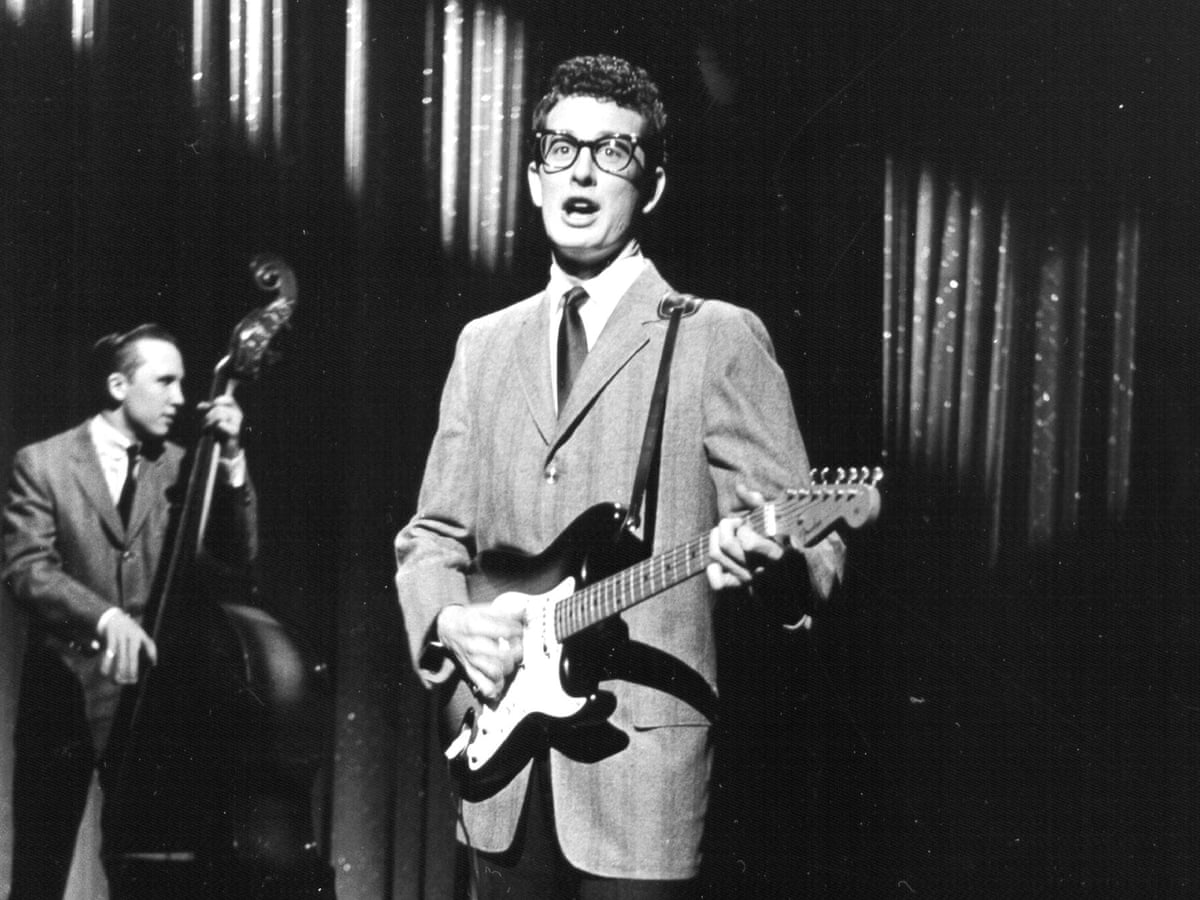
A Different Side of Buddy Holly
By 1958, Holly had already helped reshape the sound and image of rock ’n’ roll.
Songs such as “That’ll Be the Day,” “Peggy Sue,” and “Oh, Boy!” had established him as one of the defining young voices of the era. His distinctive vocal style, guitar playing, songwriting instincts, and studio experimentation would influence generations of musicians who followed.
But “It Doesn’t Matter Anymore” showed another dimension.
Rather than relying on the driving guitar sound associated with many of his best-known recordings, the song moved toward a polished pop arrangement. Strings surrounded Holly’s vocal, giving the track a sweeping quality that felt different from the raw excitement of his earlier rock ’n’ roll work.
It suggested an artist who was still changing.
At only 22, Holly had already achieved more than many musicians accomplish across entire careers. Yet his artistic story was clearly unfinished. There were new sounds to explore, new songs to record and new possibilities waiting beyond the music that had first made him famous.
Nobody listening to that session could have known how little time remained.
The Record Arrived — Then Everything Changed
“It Doesn’t Matter Anymore” was released in January 1959.
Under ordinary circumstances, it might simply have become another step in Holly’s rapidly developing career.
But February 3 changed everything.
During the Winter Dance Party tour, Holly chartered a small airplane after a performance at the Surf Ballroom in Clear Lake, Iowa. The flight was intended to take him toward the next tour stop and provide relief from the exhausting conditions musicians had been enduring on the road.
The aircraft crashed shortly after takeoff.
Holly was killed alongside fellow performers Ritchie Valens and J.P. “The Big Bopper” Richardson, as well as pilot Roger Peterson.
Buddy Holly was just 22.
The tragedy would eventually become deeply embedded in American popular culture, with February 3, 1959 later famously associated with “The Day the Music Died.”
And suddenly, a recently released heartbreak song carried an entirely different emotional shadow.
A Love Song That Began to Sound Like Goodbye
Nothing about “It Doesn’t Matter Anymore” was intended as a prediction of Holly’s death.
That distinction matters.
Paul Anka wrote a breakup song, and Holly recorded it as one. The lyrics concerned romantic disappointment and emotional acceptance—not mortality.
But listeners rarely experience music without the weight of memory.
Once Holly was gone, hearing his voice deliver words about letting go became profoundly different. What had originally sounded like resignation after a failed romance could now feel, to grieving fans, like something much larger.
That transformation was not contained in the recording itself.
It happened in the hearts of the people listening.
They knew something Holly could not have known while standing before the microphone: there would be no long career afterward, no next decade of recordings, no opportunity to watch his musical style mature with age.
The young voice captured on the record suddenly belonged permanently to 1958.
That knowledge gave every note additional gravity.

Success He Never Lived to See
In the aftermath of Holly’s death, “It Doesn’t Matter Anymore” continued climbing the charts.
The single reached No. 13 on the Billboard Hot 100 in the United States, becoming one of the significant posthumous successes associated with his catalog.
But chart statistics tell only part of the story.
Numbers can document popularity. They cannot explain what happens when millions of listeners realize that a voice they are hearing will never enter a recording studio again.
Holly’s death froze his public image at an impossibly young age.
There would be no middle-aged Buddy Holly looking back on the birth of rock ’n’ roll. No veteran performer revisiting “Peggy Sue” decades later. No interviews reflecting on how music had changed since the 1950s.
His future became one of popular music’s great unanswered questions.
That is part of what makes his final-period recordings so compelling.
Every one of them offers a glimpse of an artist who was moving forward without knowing how abruptly that journey would end.
Paul Anka Never Expected the Song to Carry This Weight
There is another poignant element behind “It Doesn’t Matter Anymore.”
Paul Anka was himself an extraordinarily young songwriter when he wrote the song for Holly. The composition connected two emerging figures in late-1950s popular music at a moment when neither could have imagined the historical significance the recording would eventually acquire.
After Holly’s death, the song could no longer exist simply as a clever piece of pop songwriting.
Circumstance had rewritten its emotional context.
That phenomenon has occurred throughout music history. A lyric written about one experience can take on another meaning after tragedy strikes. Listeners bring their knowledge of what happened afterward, transforming ordinary phrases into something unexpectedly painful.
With Holly, the effect is especially powerful because of his age.
He does not sound like someone approaching the end.
He sounds young.
He sounds composed.
Most hauntingly, he sounds like someone who expects there will be another song tomorrow.

A Voice Forever Suspended in Time
More than six decades later, Buddy Holly remains one of rock ’n’ roll’s foundational figures.
His recording career was astonishingly brief, yet his influence stretched far beyond his lifetime. Future musicians studied his songwriting, his use of the studio, his guitar-driven arrangements and even the idea that a rock performer could write and shape his own material.
But “It Doesn’t Matter Anymore” occupies a particularly emotional place within that legacy.
It captures the terrible contradiction at the center of Holly’s story.
The song is about moving beyond something that has ended, yet Holly himself was standing at the beginning of what should have been an enormous future.
He was 22 years old.
There should have been decades ahead.
Instead, history left listeners with recordings.
And perhaps that is why this particular one continues to feel so haunting.
Buddy Holly was not saying goodbye when he recorded “It Doesn’t Matter Anymore.” He was simply singing a beautifully written song about heartbreak.
But history knew what was coming.
The audience eventually knew too.
So when that unmistakable young voice reaches us from another era, the song can feel less like the end of a romance and more like an accidental farewell preserved forever on tape.
A goodbye Buddy Holly never intended to give—and one the world was never prepared to hear.
