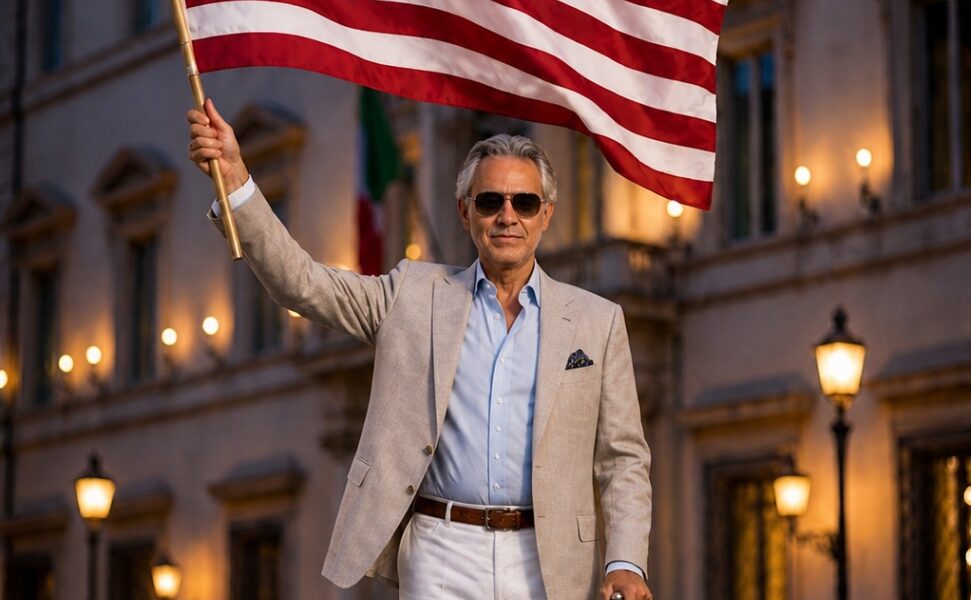
BREAKING NEWS: Andrea Bocelli Takes an Unexpected Stand That Leaves an Entire Crowd in Silence

In a moment that reportedly unfolded during a high-profile live appearance, Andrea Bocelli found himself at the center of an unexpected and emotionally charged scene that quickly drew global attention.
What began as a routine public performance soon shifted into something far more intense, as tension rose inside the venue and disruptive chants started to spread from sections of the audience.
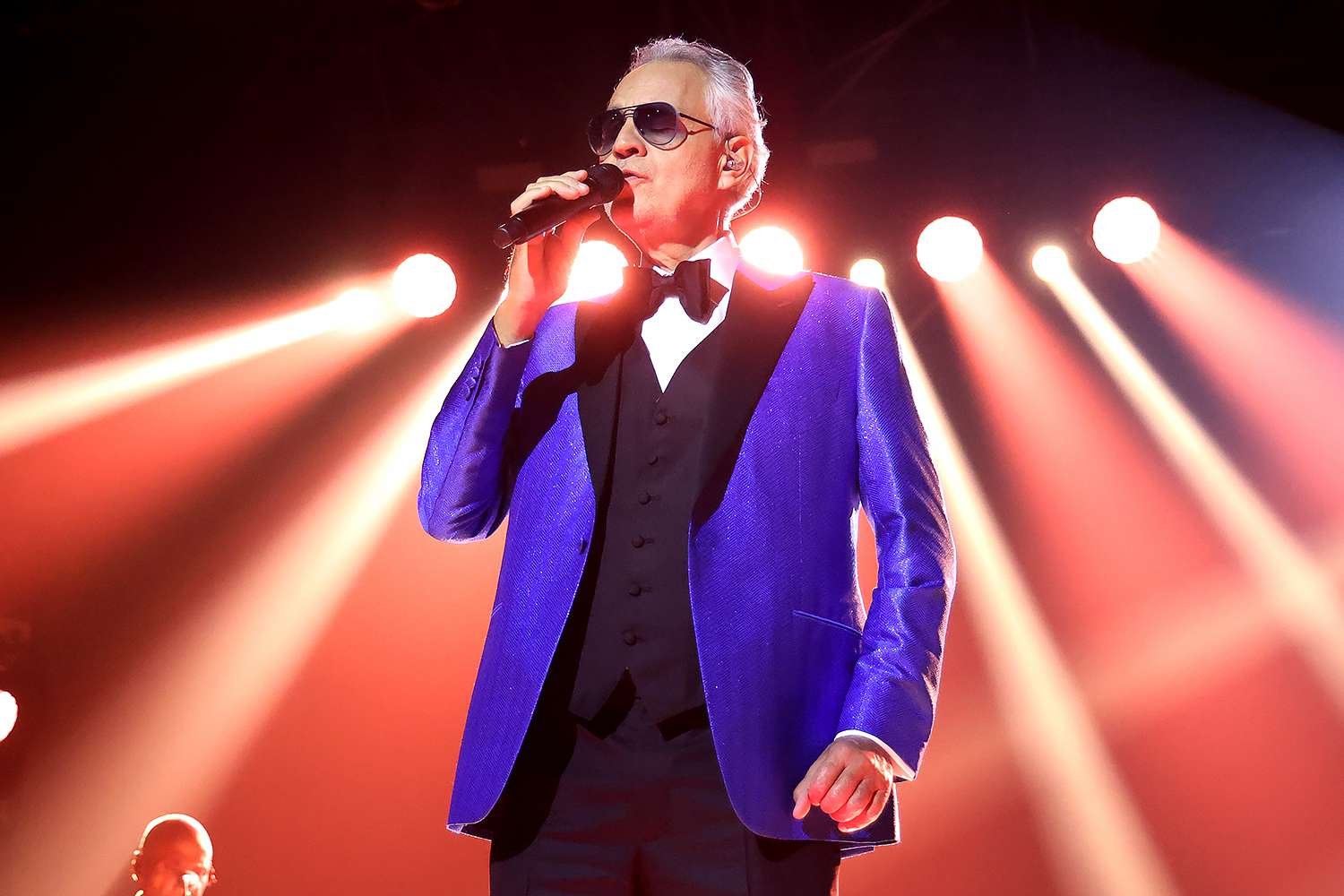
Witnesses describe an atmosphere that changed rapidly, with frustration building and the energy inside the hall becoming increasingly difficult to contain.
Many in attendance expected a confrontation or even an early end to the appearance as the situation escalated.
The noise grew louder, the crowd became divided, and uncertainty filled the room.
But what followed was not what anyone anticipated.
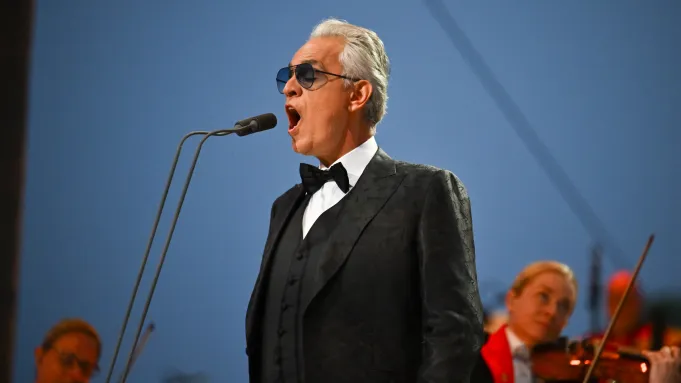
Instead of responding with visible frustration or stepping away from the stage, Bocelli paused for a brief moment.
The hall remained unsettled, voices still echoing, but his presence appeared calm and controlled.
Then, without any announcement or attempt to challenge the disruption, he leaned slightly forward and began to sing.
At first, the sound was soft—nearly delicate in comparison to the noise surrounding him.
His voice carried a steady emotional depth that seemed to cut through the tension rather than fight against it.
The effect was immediate but subtle, drawing attention not through force, but through quiet clarity and control.
As the performance continued, something remarkable began to unfold.
The surrounding noise started to lose its intensity, not because it was suppressed, but because it was being overtaken by something entirely different.
The tone in the room shifted gradually, as if the audience itself was being guided into a shared emotional space.
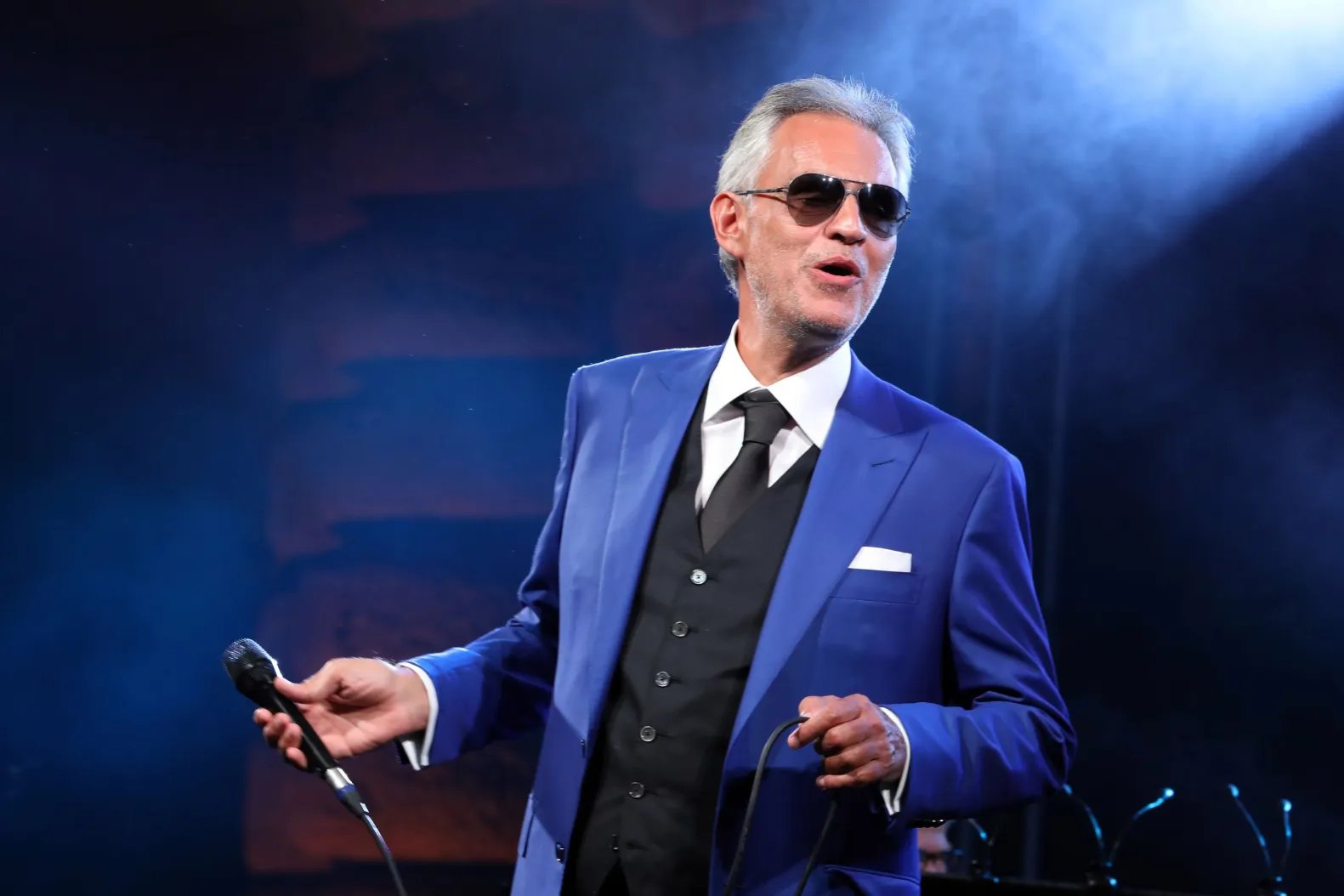
One by one, people began to rise from their seats. The change was not abrupt, but organic.
The energy in the venue transformed from division into attention, from tension into focus.
Soon, voices from the crowd began to join in, blending with Bocelli’s singing in an unexpected collective response.
Phone lights flickered across the audience, illuminating the space with a soft glow.
The visual shift added to the emotional weight of the moment, turning the venue into something that felt unified despite the earlier disruption.
Several attendees were visibly emotional, with some seen wiping away tears as the atmosphere evolved into something deeply moving.
The chants that had once dominated the room gradually disappeared.
They did not end through confrontation or intervention, but simply dissolved as the shared moment of music took over.
What remained was a quiet, powerful sense of connection that filled the space.
Observers later described the scene as “electric,” emphasizing how quickly the emotional tone of the event had changed.
Others called it “deeply human,” pointing out how rare it is for a public gathering to shift so completely without escalation or conflict.
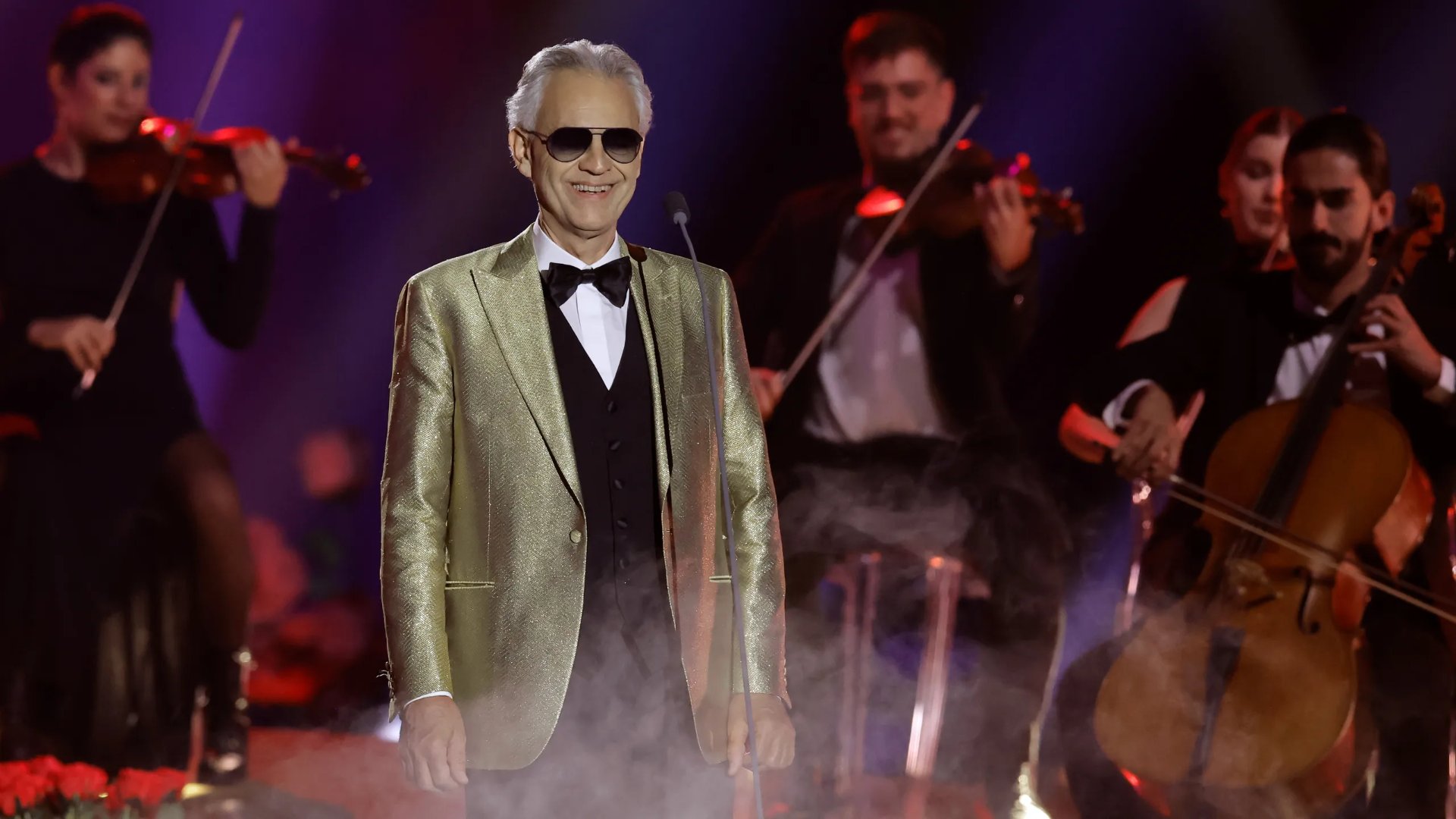
Throughout the entire moment, Bocelli maintained his focus on the performance itself.
There was no visible attempt to address the disruption directly.
Instead, his approach relied entirely on presence, tone, and emotional expression.
It became clear to those watching that the response was not about control in a conventional sense, but about transformation through music.
For an artist long recognized for emotional depth and vocal precision, the moment reflected something beyond performance technique.
It demonstrated how sound and feeling can influence an environment in ways that spoken words often cannot.
The impact did not come from volume or confrontation, but from restraint and expression combined.
As the final moments of the performance settled, the atmosphere in the venue remained noticeably different from when it began.
The intensity that had defined the earlier disruption was no longer present.
Instead, a sense of shared experience lingered among those who had witnessed the shift firsthand.
One attendee later described the experience as something that could not easily be repeated or recreated.
According to their account, the transformation of the crowd was not planned or structured, but it felt profoundly real in its effect.
The sense of unity, even if temporary, stood out as the most memorable part of the evening.
In a world where public events often reflect division or tension, this moment became a striking reminder of how quickly emotions can change under the right influence.
It did not resolve larger issues or erase disagreement, but it revealed how a single artistic response can alter the direction of a shared experience.
By the end of the appearance, Bocelli had not only continued his performance but had reshaped the emotional environment around him.
The stage remained the same, the venue remained unchanged, yet the atmosphere had shifted completely.
What stayed with the audience was not the disruption itself, but the way it was transformed.
A moment that began in tension concluded in silence, unity, and reflection—carried entirely by the power of a voice that chose expression over confrontation.
