🚨 Everyone Is Pointing to the Same Detail After Elon Musk’s Shocking Announcement
The internet didn’t just react—it exploded.
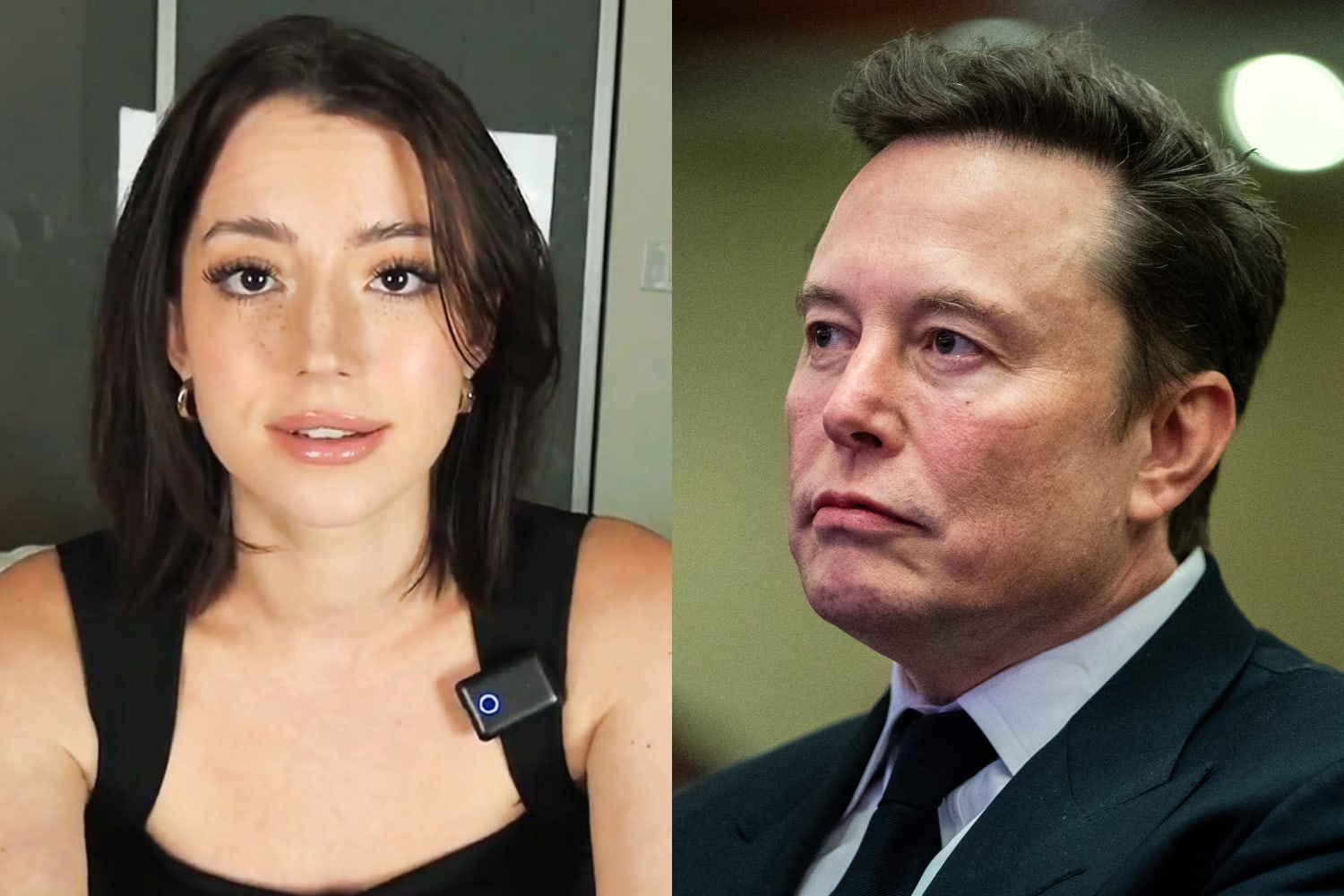
Just when people thought they had seen every headline possible about Elon Musk, a new claim surfaced that sent shockwaves across social media: he had allegedly revealed a 13th child, this time with Ashley St. Clair. But strangely, that wasn’t what people focused on the most.
Instead, millions of eyes locked onto a single line buried within his statement—one sentence that quickly became the center of global attention.
Not the number.
Not the identity.
But the words.
“…I want to locate for those within the trans community that I’ve hurt.”
Within minutes, the quote spread like wildfire. Screenshots, reposts, reaction videos—every platform became saturated with discussion. People weren’t just reacting—they were analyzing, dissecting, and debating what it really meant.
Was it an apology?

A moment of reflection?
Or something else entirely?
For years, Elon Musk has been a polarizing figure, especially when it comes to discussions around gender identity and the LGBTQ+ community. Some of his past comments have drawn sharp criticism, particularly from members of the trans community. So when this line surfaced, it immediately struck a nerve.
Supporters saw something different in it.
They interpreted it as a rare moment of accountability—a powerful figure acknowledging harm, even if imperfectly. “Growth starts somewhere,” one user wrote. “Maybe this is his first step.” Others echoed similar sentiments, arguing that public figures rarely admit fault, and even an indirect statement could signal change.
But critics weren’t convinced.
Many pointed out that the wording was unclear, awkward, and lacked direct responsibility. “If it’s an apology, say it clearly,” one viral comment read. “Don’t hide behind vague language.” Others questioned the timing, suggesting it felt strategically placed rather than emotionally genuine.
And that’s where the debate intensified.
Because the alleged announcement didn’t exist in a vacuum. It arrived at a moment when Musk was already under scrutiny—business pressures, public controversies, and constant media attention surrounding his every move. For some, this raised a bigger question:
Why now?
Was this a coincidence?
Or was it carefully timed?

In the world of Elon Musk, where even a single post can influence markets and headlines, many find it hard to believe anything is accidental. Yet others argue that this line of thinking misses something fundamental—that behind the billionaire persona is still a human being capable of reaching emotional limits.
Meanwhile, the mention of Ashley St. Clair added another layer of intrigue. Her name quickly trended, drawing curiosity and speculation. People searched for connections, timelines, and any hint that could confirm or deny the claim. But as the noise grew louder, clarity became harder to find.
And that’s when something interesting happened.
The supposed “13th child” story—arguably the most shocking part—began to fade into the background.
The conversation had shifted.
It was no longer about the child.
It was about the sentence.
That single line became the focal point, revealing something deeper about today’s digital culture. People are no longer just consuming headlines—they are interpreting meaning, demanding accountability, and holding public figures to new standards.
In many ways, this moment says as much about the audience as it does about Elon Musk.
It shows how quickly attention can pivot. How one phrase can redefine an entire narrative. And how, in a hyper-connected world, words carry weight far beyond their original context.
Some media analysts noted that this is a textbook example of narrative control slipping away. “You might release a statement with one intention,” one expert explained, “but the public decides what matters.” And in this case, the public chose that one sentence.
Still, the truth remains uncertain.
Was it a genuine attempt to reach out?
A poorly phrased acknowledgment?
Or simply a line taken out of context and amplified beyond its original meaning?
There may not be a clear answer anytime soon.
What is clear, however, is the impact.
Millions engaged.
Debates sparked across platforms.
And once again, Elon Musk found himself at the center of a global conversation—not just because of what was said, but because of how it was interpreted.
In the end, perhaps the most important question isn’t whether the claim is true or false.
It’s why this moment resonated so strongly.
Because beneath the speculation, the controversy, and the viral headlines lies something more familiar:
A reminder that in today’s world, every word matters.
