
BREAKINGNEWS Alabama Crimson Tide stadium turns into full Pride colors as Greg Byrne issues powerful message of equality


A gesture that turns into a statement
Greg Byrne emphasized that the decision was not designed for marketing, nor for symbolic participation in a national moment, but rather, as he put it, a responsibility. The athletic department, historically tied to intense public opinion, acknowledged that the visibility of major sports programs can carry a powerful social influence.
Byrne explained that Alabama’s platform reaches millions of viewers across the country every season. Therefore, the act of displaying Pride colors in one of college football’s most iconic locations was not merely a light installation—it was a declaration of belonging wrapped inside an athletic institution known for discipline, excellence, and high competitive standards.
The evolving culture of college sports
Avoiding symbolism without substance

Tradition meets transformation
For fans, the sight was surreal. Many noted that Alabama represents one of the most historically conservative corners of American collegiate sports. Seeing a crimson legacy momentarily replaced with a rainbow message was not something any fan may have predicted even a few years ago.
Reaction online varied, but a striking number of supporters praised the decision. Some referred to the moment as “the most groundbreaking social gesture in SEC athletics so far,” reflecting a growing belief that schools must represent every member of their student body—not only the ones who wear helmets on Saturdays.
Byrne’s direct message
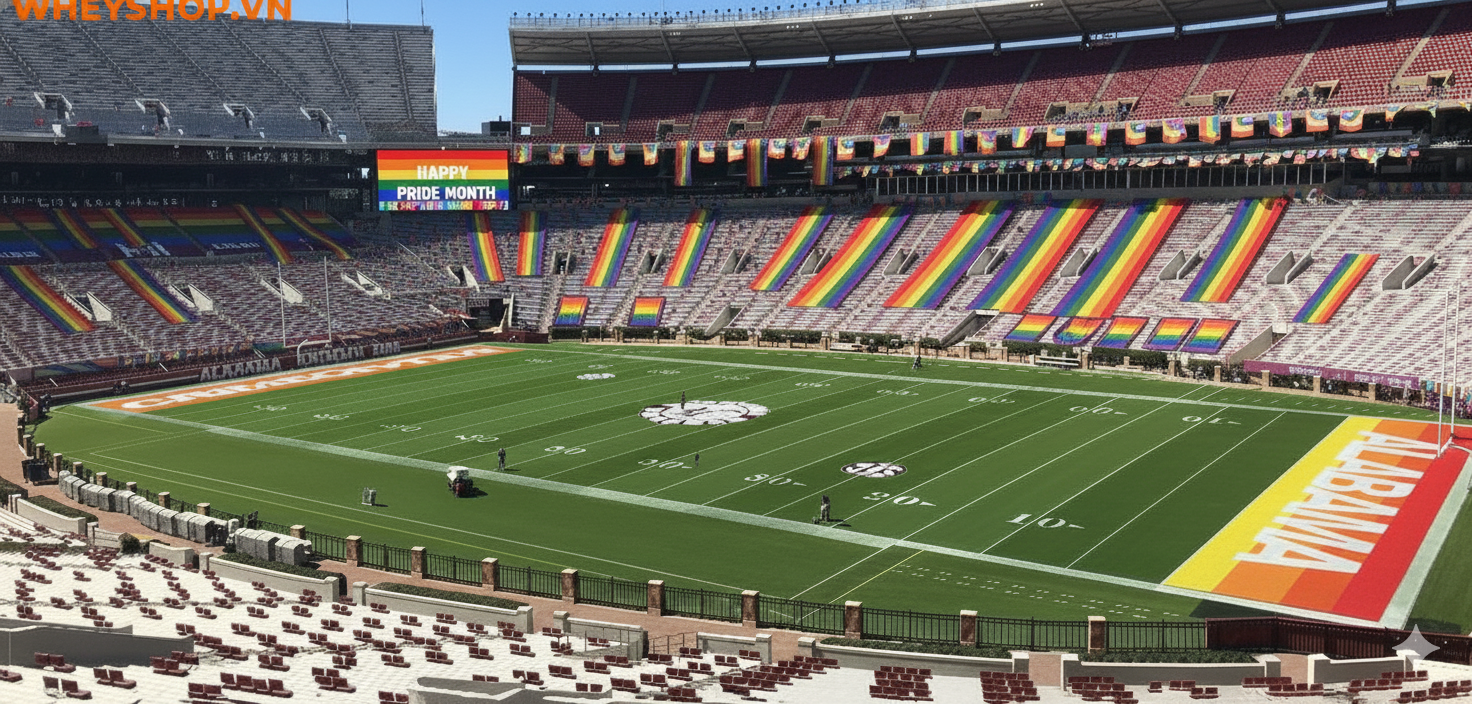
A turning point for the Crimson Tide
Observers noted that Alabama is entering a new cultural chapter. Once known almost exclusively for championships, dominance, and athletic reliability, the Crimson Tide has opened a discussion that goes beyond Saturday night lights, forging a narrative that reaches future generations of athletes.
Student organizations applauded Byrne’s leadership. LGBTQ+ student groups celebrated the moment as proof that football culture can coexist with identity-focused inclusion. Players on the roster mentioned that they felt more connected, more accepted, and more aware of the diversity within their own team.
The national significance
Awareness replacing silence