
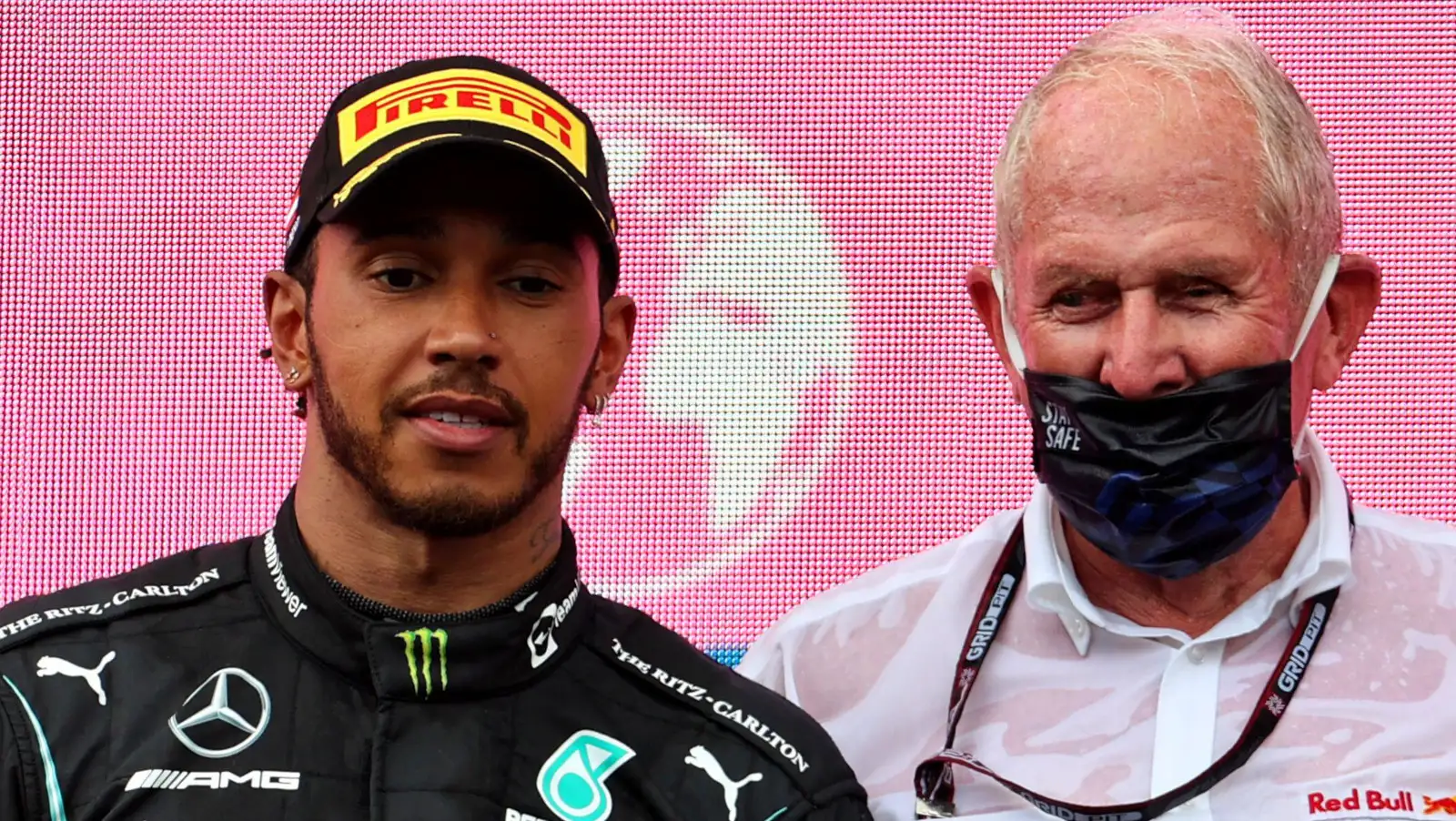
Hamilton’s drive was widely praised. He executed clean overtakes, managed tire degradation well, and kept pressure on faster cars ahead of him. On the surface, it was vintage Hamilton—calculated, aggressive when needed, and ruthlessly consistent.
Mercedes has been on a long rebuilding arc since the end of their dominant era. Every upgrade package promises progress, but the same underlying issues keep resurfacing.
Despite the machinery limitations, Hamilton’s podium was a reminder of why he remains one of the most complete drivers in modern racing. His ability to manage tires, adjust driving style mid-race, and extract performance from an unbalanced car kept Mercedes alive in the fight.
Behind the scenes, engineers are reportedly divided on the direction of development. Some believe the current aerodynamic concept still has untapped potential. Others argue that Mercedes needs a full philosophical reset if they want to compete with the front-running teams consistently.

While Mercedes wrestles with balance and development direction, rival teams continue refining their packages. The gap in execution between top teams is now less about raw speed and more about adaptability across different circuits.
On paper, it’s a strong result. In reality, it might be something more complicated—it might be a warning sign disguised as success.

Mercedes now faces a difficult question: continue refining a concept that delivers occasional highs, or reset entirely in pursuit of stability?
Hamilton’s podium was beautiful—clean, emotional, and a reminder of his enduring brilliance. But it was also layered with contradiction. It celebrated individual excellence while exposing structural fragility.
