GB News Spotlight Turns to Andy Burnham Amid Growing Political Pressure
GB News Spotlight Turns to Andy Burnham Amid Growing Political Pressure
A fresh wave of political attention is surrounding Prime Minister Andy Burnham, with GB News and other British media outlets focusing on a series of developments involving the economy, immigration, energy, foreign relations and the future direction of his government.
The dramatic language used in some online headlines has described the latest developments as a “bombshell” and even suggested that Burnham has suffered “utter humiliation.” However, the available reporting points to a more complicated political picture rather than one single confirmed event that has brought his government to a halt.
One of the most recent areas of scrutiny concerns Burnham’s comments about Britain’s exposure to international financial markets. On Wednesday, September 23, Burnham defended remarks he had previously made about the country being too dependent on bond markets. He said his comments had been deliberately misinterpreted by former prime minister Keir Starmer and his advisers. Burnham argued that his intention was to highlight Britain’s vulnerability to global economic shocks rather than advocate unlimited borrowing or spending.
The issue is particularly significant because the government is preparing for the next Budget while borrowing and energy costs remain important political concerns. The Guardian reported that the government borrowed £18.3 billion in the previous month, more than expected, while continuing disruption linked to the conflict involving Iran has affected energy prices. Burnham has therefore been attempting to emphasize economic resilience and fiscal responsibility while pursuing his wider political programme.
That economic debate is only one part of the pressure surrounding the new government.
Burnham has also faced questions over immigration and Channel crossings. GB News recently reported on his comments about progress in reducing illegal crossings, while noting that the government was still dealing with politically sensitive migration figures. Immigration remains one of the issues most frequently raised by opposition parties and media organizations when examining the government’s record.
At the same time, Burnham’s government has been attempting to present a broader agenda that includes economic reform, energy policy and greater local involvement in national programmes.
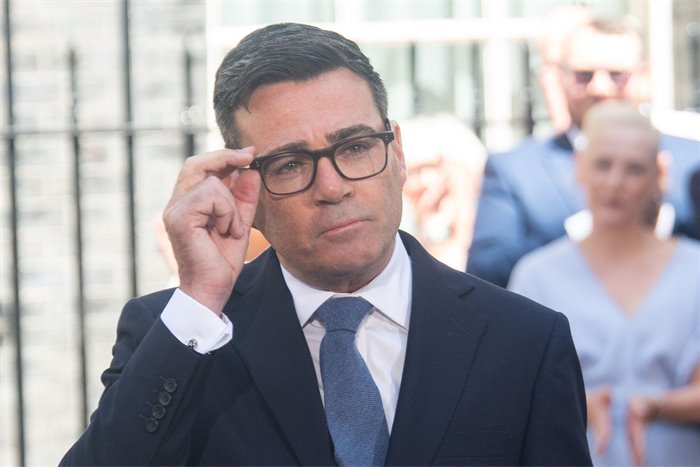
On September 17, Burnham announced almost £30 million for community-based renewable energy projects. The programme is intended to allow communities to establish or partly own renewable energy installations, including solar, wind and hydro projects. The government has linked the initiative to its wider Great British Energy programme and its target of reaching net zero emissions by 2050.
The policy has generated its own political debate. Supporters of community energy argue that local ownership could give communities a greater role in the transition to renewable power and potentially help reduce household energy costs. Critics, meanwhile, have questioned whether the government’s climate commitments are fully consistent with decisions surrounding future fossil-fuel projects. Those disagreements demonstrate why energy policy is likely to remain an important political issue for Burnham.
Another significant moment came during Burnham’s recent meeting with US President Donald Trump at the United Nations General Assembly in New York. According to reporting from the Guardian, Trump described the relationship with Burnham positively after their first face-to-face meeting and praised him as a “natural businessman.” Their discussions covered trade, energy, Rolls-Royce, artificial intelligence and immigration.
However, the meeting was not without disagreements. Trump criticized the UK’s agreement concerning the Chagos Islands, while Burnham indicated that the government would review the arrangement. The two leaders also discussed the conflict involving Iran and Britain’s wider foreign-policy position.
These international developments have added another layer to Burnham’s political responsibilities. Having recently entered Downing Street, he is now required to balance domestic political priorities with Britain’s relationships with the United States, European partners and other international allies.
Back in Westminster, scrutiny of the government’s approach has continued. Burnham’s first Commons appearance as prime minister in September included a speech in which he argued that Britain had taken a series of wrong turns over several decades. He specifically criticized the long-term economic consequences of Brexit and policies associated with Margaret Thatcher’s era, while promising what he described as substantial change and a more optimistic direction for the country.

Those comments immediately placed Burnham at the centre of a wider argument about Britain’s political and economic direction. Supporters of his approach see the emphasis on industrial strategy, community energy and public involvement as a departure from previous governments. Critics argue that ambitious political language will ultimately have to be matched by measurable results.
Another important issue is devolution. Burnham has long been associated with Greater Manchester’s expanded powers as mayor, and his national government has continued to discuss the distribution of power between Westminster and regions.
A recent report from the Institute for Public Policy Research North argued that English mayors will require greater scrutiny as their powers expand and they gain control over billions of pounds in public funding. The report highlighted both the opportunities and risks associated with transferring more responsibility away from central government.
This debate is particularly relevant to Burnham because his political career was strongly shaped by his time as mayor of Greater Manchester. His supporters have often pointed to his experience at the regional level as an important part of his political identity. His critics, however, continue to examine how effectively those ideas can be translated into national government.
The prime minister has also faced questions over party funding and political donations. Recent reporting has highlighted pressure surrounding donations to political parties and calls for greater restrictions on wealthy donors. These debates are taking place against a broader political environment in which Labour, Reform UK, Conservatives and other parties are competing to define the future direction of British politics.
For GB News viewers, these developments provide a wide range of subjects for political discussion. Headlines describing a “shock” or “bombshell” can attract attention, but the underlying issues are more complex. Burnham is dealing with economic pressures, migration, energy policy, foreign relations and questions about the balance between national and regional government.
There is also an important distinction between political commentary and confirmed events. A television commentator or newspaper columnist may describe a development as a humiliation, crisis or turning point, but those descriptions represent interpretation rather than independently established facts. The concrete developments are the policies, statements, parliamentary events and documented disputes surrounding the government.
That distinction matters particularly in a rapidly changing political environment. Burnham became prime minister only recently, and his government is still establishing its priorities. His administration’s decisions will likely face continued scrutiny from broadcasters, newspapers, opposition parties and members of the public.
For now, the evidence points to a government operating under substantial political pressure while pursuing a wide-ranging programme. Economic resilience remains a central theme. Immigration continues to generate controversy. Climate and energy policy are being expanded while facing criticism from different sides. Relations with the United States are
developing, and devolution remains an important part of the government’s agenda.
The latest headlines may therefore be dramatic, but the bigger story is the continuing political debate over what Burnham’s government will actually deliver. As the next Budget approaches and major policy decisions come closer, attention will remain firmly focused on Downing Street.
Rather than one confirmed event bringing the political debate to an end, the current situation represents a series of developing controversies and policy challenges. GB News and other broadcasters are likely to continue covering them closely, while Burnham will face the task of explaining his government’s decisions to Parliament and the public.
The coming weeks will provide further evidence about how these policies develop in practice. Until then, the political story remains one of competing claims, scrutiny and debate rather than a single definitive “bombshell” that settles the argument.
