Police Escort in Gosport Sparks Heated Debate Over Channel Migration
Police Escort in Gosport Sparks Heated Debate Over Channel Migration
A striking scene in Gosport has triggered a fresh political debate after a convoy of police vehicles escorted empty coaches away from the Hampshire town following a planned response to a migrant boat arrival.
The unusual convoy was filmed on the evening of September 22, after authorities had prepared for a small boat carrying migrants to potentially arrive in Gosport. Instead, the passengers were transferred to a Border Security Command vessel and taken to Dover. The coaches that had been prepared for their onward transportation therefore left Gosport without passengers.
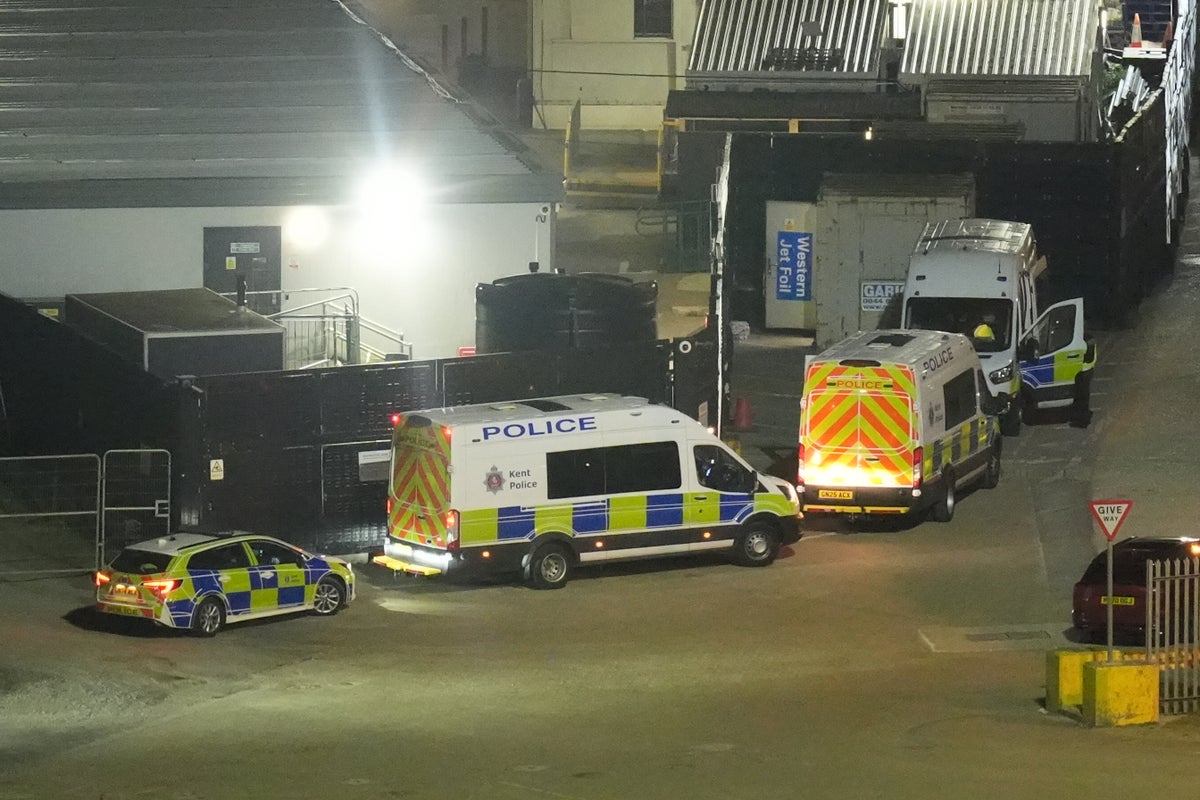
Footage posted online showed several coaches travelling with a substantial police presence, including police cars, vans and a motorcycle. Reform UK councillor George Madgwick described the convoy as larger than the escort normally associated with the prime minister or King. That comparison was his characterization of the footage rather than an official assessment of the size or cost of the operation.
The images quickly attracted attention because the buses were empty. For critics of the government’s approach to Channel migration, the convoy became a symbol of what they regard as excessive expenditure and security around migrant arrivals. Other observers pointed out that the police operation took place against the background of a significant protest and concerns about public safety.
Hampshire and Isle of Wight Constabulary gave a different explanation for the substantial police presence. The force said officers had been deployed to Gosport and Portsmouth to facilitate peaceful protest, protect the local community and support partner agencies dealing with the emergency at sea. (Hampshire Constabulary)
That context is important because the operation was not simply a routine transport movement. Hundreds of people had gathered in Gosport after reports that the small boat might arrive there. Police therefore had to consider both the maritime emergency and the possibility of confrontation between protesters, officials and emergency personnel.
According to the police, some people remained in Gosport after it became clear that the vessel would dock elsewhere. The force said some members of the remaining group became hostile towards officers. Six people were subsequently arrested on allegations including careless driving, assaulting an emergency worker and aggravated trespass.
The arrests underline the security concerns surrounding the event. Two men from Salisbury were arrested on suspicion of aggravated trespass, while four people from Gosport were arrested on suspicion of assaulting an emergency worker. Police said investigations were continuing

Meanwhile, the migrant boat itself followed a different route from the one many protesters had expected.
Reports said approximately 60 people had spent more than 33 hours at sea in difficult conditions. The French coastguard said the passengers had refused assistance and were determined to continue their journey towards the United Kingdom. British rescue services subsequently became involved, and the passengers were transferred before being taken towards Dover
The final destination was significant because it meant the anticipated arrival at Gosport did not happen. According to reporting, the passengers arrived in Dover early on Wednesday morning. The coaches already positioned in Hampshire were consequently unnecessary for the original purpose for which they had been prepared
That sequence of events explains why the images of the empty convoy attracted so much attention.
George Madgwick posted footage showing the vehicles leaving the area and questioned the amount of public money that had been spent on the operation. Other political figures and campaigners also used the footage to criticize the government’s handling of small-boat arrivals.
However, the precise cost of the operation was not established in the reports reviewed. Claims about the financial burden should therefore be distinguished from confirmed figures. The presence of a large police operation does not by itself establish the total amount spent.
There was also a wider political dispute over whether Gosport should have been used as a landing point at all.
Conservative MP Dame Caroline Dinenage argued that future small boats intercepted in the area should be taken directly to Dover rather than brought into the Portsmouth Harbour area. Her position reflected concerns about disruption to the local community and the policing resources required when protests are expected. (Breitbart)
The debate is taking place within a broader national controversy over Channel crossings. Small boats have become one of the most politically sensitive subjects in British politics, with successive governments facing pressure to reduce crossings and improve border enforcement.
At the same time, the police and rescue services have responsibilities that continue regardless of political disagreement. When a boat is in difficulty at sea, rescue agencies must assess immediate risks to those onboard. When a possible landing generates a protest, police forces must also consider the safety of residents, protesters, emergency workers and officials.
The Gosport episode brought all of these responsibilities together within a matter of hours.
The town prepared for the possibility of an arrival. Protesters gathered near the marina. Police established security measures. Rescue agencies dealt with the vessel offshore. The migrants were ultimately transferred towards Dover. Then the unused coaches and accompanying vehicles departed Gosport under police escort.
The result was an unusual series of images that quickly spread online.
For some commentators, the convoy represents evidence that the government’s migration system requires a different approach. For others, the police presence demonstrates the practical difficulties created when an anticipated migrant arrival becomes the focus of a large public demonstration.
Neither interpretation changes the basic sequence of events: the boat did not disembark in Gosport, six people were arrested during the surrounding protest, and the prepared coaches subsequently left the area without passengers. (Hampshire Constabulary)
The incident also demonstrates how social media can transform local events into national political stories. A short video showing police vehicles accompanying empty coaches can circulate rapidly, often without the full context of why the convoy was there.
That makes the surrounding details particularly important.

The police did not say that their deployment was solely intended to protect migrants. Their official statement said the operation was designed to facilitate peaceful protest, protect the local community and support partner agencies in the event of an emergency at sea. (Hampshire Constabulary)
The force’s explanation therefore provides a broader picture than the footage alone.
There is also no official evidence establishing that the convoy was literally larger than security arrangements normally provided for the King or prime minister. That phrase originated in political commentary surrounding the footage and should be understood as a comparison made by a local politician rather than an independently verified measurement.
What is not in dispute is that the operation was substantial enough to become a major talking point.
The events in Gosport came shortly after other protests connected with Channel arrivals in southern England. Earlier in September, Portsmouth also saw large demonstrations following the arrival of a small boat carrying asylum seekers. That earlier incident involved a significant police response as protesters attempted to disrupt the processing and movement of arrivals.
The repeated confrontations suggest that local authorities may continue to face difficult decisions when maritime arrivals coincide with demonstrations.
For residents, the questions are practical as well as political. How should police resources be allocated? How should emergency services respond when protests are expected? Where should people rescued from dangerous Channel crossings be processed? And how can authorities protect public safety while allowing lawful demonstrations to take place?
These questions have no simple answer, particularly when events develop rapidly.
The Gosport incident ultimately ended without the anticipated migrant landing, but the political argument surrounding it has continued. The image of empty coaches travelling under police escort has become a powerful piece of political content, while the official explanation emphasizes public safety, peaceful protest and coordination between emergency agencies.

As Britain continues to debate Channel crossings, scenes like those in Gosport are likely to remain highly controversial. Supporters and opponents of current migration policies will interpret the same events differently.
For now, the confirmed facts provide the clearest picture: a small boat spent more than 30 hours at sea, rescue and border authorities became involved, protesters gathered in Gosport, six people were arrested, and the migrants were ultimately taken to Dover rather than disembarking in Gosport. The empty coaches then left under police escort, producing the striking footage that has become the latest flashpoint in Britain’s continuing migration debate
