Yellowstone’s Darkest Ranch Secrets: Rip Wheeler’s Trust in Kayce Was Put to the Ultimate Test
Yellowstone’s Darkest Ranch Secrets: Rip Wheeler’s Trust in Kayce Was Put to the Ultimate Test
Behind the dust, gunfire, family arguments, and brutal confrontations of Yellowstone, some of the series’ most powerful moments are built around something much harder to see: trust.
At the Dutton ranch, loyalty is never a simple promise. It is something characters are expected to prove again and again, sometimes at an enormous personal cost. One decision can create an enemy. One secret can destroy a friendship. And one act of mercy can return years later as a dangerous problem.
That tension becomes especially clear when Rip Wheeler is forced to deal with the unexpected return of Walker.
Rip has always operated according to a brutally simple philosophy. If someone threatens the ranch, the problem must be handled. There is little room for hesitation, sentiment, or second chances. Walker, however, represents a completely different kind of challenge.
He is not simply another outsider.
He is someone Kayce Dutton once allowed to walk away.
And when Walker eventually finds his way back, that earlier decision suddenly carries consequences.
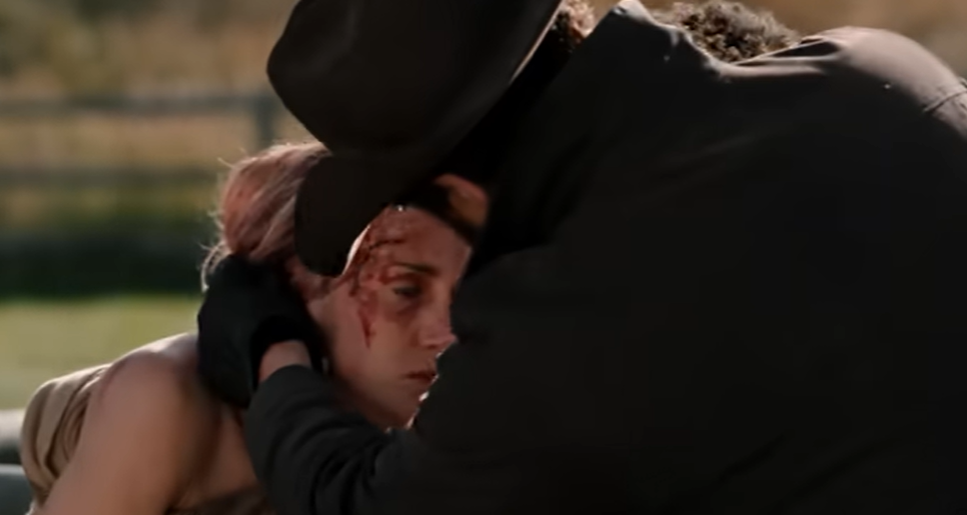
When Kayce’s Mercy Becomes Rip’s Problem
Kayce has always occupied a complicated position within the Dutton family.
Unlike Rip, he does not automatically approach every conflict with the same cold certainty. His experiences have made him cautious, conflicted, and sometimes willing to consider alternatives that others at the ranch would never accept.
Walker’s departure seemed to close one chapter.
But his return opens it again.
For Kayce, the situation becomes more than an uncomfortable reunion. His previous decision is now connected directly to Rip and the ranch’s strict code of loyalty.
Rip does not necessarily care about Kayce’s original reasoning.
What matters to him is what stands in front of him now.
Walker is back.
And that means the consequences of letting him leave have come home.
The tension works because neither man is completely operating from the same set of rules. Kayce can see the complicated circumstances surrounding Walker, while Rip sees a potential threat that has already been given one opportunity too many.
That difference creates one of the story’s most interesting conflicts: Can loyalty survive when two people have completely different ideas about what loyalty requires?
Walker Gets Another Chance
Walker’s return immediately puts him in an uncomfortable position.
He understands the kind of world he has stepped back into. The Yellowstone ranch is not a place where people casually forget past disagreements. Every action has a history, and every mistake can become evidence against you.
For Walker, survival depends on understanding the people around him.
Rip is watching.
Kayce is caught in the middle.
And the ranch itself operates according to rules that are rarely written down but almost always enforced.
The fascinating part is that Walker does not simply walk back into the ranch as if nothing happened. His presence carries uncertainty. Nobody can be entirely sure what his return will mean or how long the fragile peace can last.
That uncertainty becomes a source of tension in itself.

The Ranch Has Its Own Definition of Family
One of the reasons Yellowstone remains so compelling is its unusual interpretation of family.
Blood is important, but it is not the only thing that matters.
Rip Wheeler is not a Dutton by birth, yet his loyalty to the ranch is deeper than many blood relationships in the series. He has built his identity around protecting the place and the people he considers his own.
Kayce, meanwhile, is a Dutton by blood but frequently struggles with the expectations attached to that name.
Walker sits somewhere outside both worlds.
That makes his position especially dangerous.
He has to prove that he can coexist with people who do not easily forgive. More importantly, he has to demonstrate that he understands the cost of breaking the ranch’s unwritten rules.
The ranch can offer protection, work, and belonging.
But those things come with a price.
Beth Dutton Knows Exactly What Loyalty Costs
While Rip and Kayce deal with the Walker problem, Beth Dutton represents another side of the same theme.
Beth understands betrayal better than almost anyone around her.
She has spent much of her life surrounded by people whose loyalty comes with conditions, hidden motives, or complicated histories. Her relationship with the Dutton family has been shaped by love, resentment, sacrifice, and an almost obsessive determination to protect what she considers hers.
That is why Beth’s presence adds another layer to the ranch’s atmosphere.
For Beth, family is not necessarily about peace.
Sometimes family means standing beside someone when everyone else has already walked away.
Sometimes it means fighting for people who cannot protect themselves.
And sometimes it means destroying anyone who threatens the people she loves.
Teeter and Colby Reveal Another Kind of Bond
The relationship between Teeter and Colby offers a quieter contrast to the conflicts surrounding Rip and Walker.
Their connection develops inside an environment where toughness is almost a requirement. The bunkhouse is filled with personalities that clash, compete, joke, and occasionally threaten to tear each other apart.
Yet beneath the rough exterior is an unusual sense of community.
Teeter’s presence changes the dynamic around the bunkhouse, while Colby often provides a more grounded perspective. Their relationship demonstrates that affection can develop even in a world dominated by violence and suspicion.
That matters because Yellowstone is rarely interested in presenting its characters as purely hard or purely vulnerable.
They can be both.
A cowboy can be dangerous and still care deeply.
A ranch hand can make mistakes and still earn respect.
A person who appears emotionally distant can still become fiercely protective of someone else.
Rip Wheeler’s Unforgiving Code
Few characters embody the ranch’s harshest rules more completely than Rip.
His loyalty is absolute, but his expectations are equally severe.
Rip does not easily separate personal relationships from responsibility. If he believes someone has endangered the ranch, forgiveness becomes difficult.
That is what makes his interactions with Walker so compelling.
The conflict is not simply about whether Walker deserves another opportunity.
It is about whether Rip can accept a decision that was made without him and then live with its consequences.
Kayce’s earlier choice effectively becomes a test of their relationship.
Can Rip respect Kayce’s judgment even when he disagrees with it?
Can Kayce stand by his decision when Rip challenges it?
And can Walker prove that returning was not a mistake?
Those questions give the storyline its emotional weight.

More Than a Western Feud
At first glance, the Walker storyline may appear to be another confrontation inside a violent modern Western.
But underneath the threats and tension is a much larger question.
What does someone have to do to earn a place in a family?
At Yellowstone, belonging is never guaranteed.
It must be demonstrated.
Trust can disappear in seconds, while rebuilding it may take years. Mercy can be interpreted as weakness. Loyalty can become dangerous. And forgiveness may require a person to accept risks that others would never take.
That is why scenes involving Rip, Kayce, Walker, Beth, Teeter, and Colby resonate beyond the immediate action.
Each character represents a different understanding of loyalty.
Rip sees loyalty as an obligation.
Kayce sees it through the lens of difficult choices.
Beth treats it as something worth fighting for at almost any cost.
Teeter and Colby reveal that loyalty can also grow unexpectedly between people who begin as strangers.
And Walker represents the ultimate question: Can someone who once walked away ever truly find his place again?
The Real Danger Is Trust
The most memorable moments in Yellowstone are rarely memorable simply because somebody pulls a gun or delivers a threatening line.
They matter because the violence usually comes after something emotional has already broken.
A promise has been questioned.
A secret has been exposed.
A decision has created consequences.
Someone has returned when they were not expected to.
And suddenly, everyone has to decide where their loyalty really belongs.
That is what makes the ranch so dangerous.
The fences may keep outsiders away, but they cannot protect the people inside from betrayal, jealousy, fear, or divided loyalties.
For Rip Wheeler and Kayce Dutton, Walker’s return becomes more than a problem to solve.
It becomes a test of trust.
And in the world of Yellowstone, trust may be the most valuable—and most fragile—thing anyone can possess.
