The 12,000-Asylum-Claims Controversy: What Britain’s Interview Rules Actually Mean — and What the Political Row Gets Wrong
A claim that thousands of asylum applications can be decided without a face-to-face interview has returned to Britain’s immigration debate. The underlying policy is real, but some of the most alarming interpretations circulating online leave out important details about screening, biometrics, security checks and the age of the policy itself.
Few issues in British politics generate arguments as intense as immigration and asylum. Questions about who is allowed into the country, how their identity is established, how refugee claims are tested and what happens when a claim fails touch simultaneously on border security, humanitarian obligations, public spending and confidence in government.
That helps explain why one particular statistic has proved so powerful.
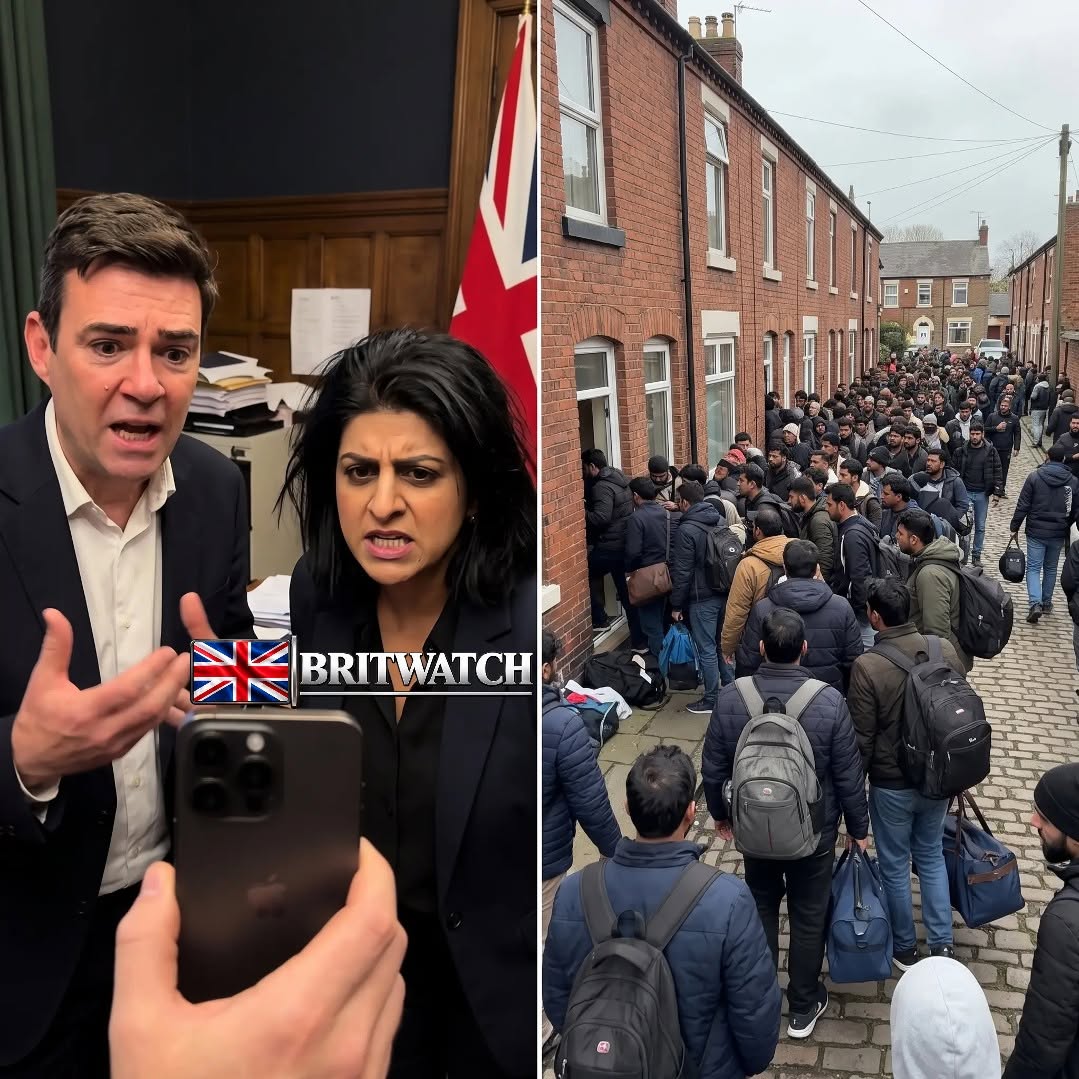
The claim is that around 12,000 asylum seekers could have their applications considered for refugee status without a face-to-face substantive interview.
The figure is genuine. But it is also frequently presented without the context necessary to understand what actually happened.
Most importantly, this was not a newly revealed policy introduced by the current government. The figure dates primarily to a streamlined asylum-processing programme announced in February 2023, when the Conservative government was attempting to clear a large backlog of older asylum cases. Contemporary reporting described roughly 12,000 people whose cases could potentially be determined through questionnaires rather than conventional substantive face-to-face interviews. (Current Awareness)
That distinction matters because the viral argument goes considerably further. It suggests that thousands of people entered Britain with effectively no meaningful checks at all.
The available official evidence does not support that broader description.
What Actually Happened to the 12,000 Cases?
The origins of the controversy can be traced to the enormous asylum backlog inherited by the Home Office in the early 2020s.
In December 2022, then-prime minister Rishi Sunak pledged to clear a backlog of so-called legacy asylum claims—cases lodged before 28 June 2022.
The Home Office subsequently introduced what became known as Streamlined Asylum Processing, or SAP.
Approximately 12,000 applicants from five countries were initially placed within this process: Afghanistan, Eritrea, Libya, Syria and Yemen.
These countries were not selected randomly.
The Home Office said they had been chosen because asylum applicants from those nationalities had extremely high protection-grant rates. Parliamentary records from the period say the relevant nationalities had grant rates of 95% or higher in the year ending September 2022.

Instead of automatically conducting a conventional substantive asylum interview in every one of these cases, the Home Office sent applicants detailed questionnaires.
The objective was straightforward: if the existing evidence, screening information and questionnaire were sufficient for officials to conclude that somebody qualified for protection, a positive decision could potentially be made without conducting another full interview.
A House of Commons Library briefing described the process clearly.
Applicants first completed initial screening and were then sent an asylum questionnaire. If there was sufficient evidence to establish that an individual qualified for asylum—and the person passed security checks—refugee status could potentially be granted without a full substantive interview. Importantly, the process could not be used simply to refuse somebody solely because of answers provided in the questionnaire. (Nghiên Cứu Ngắn)
So the phrase “without a face-to-face interview” is technically capable of describing part of the process.
But the phrase “without basic checks” is something different.
And that is where much of the current argument becomes misleading.
Screening Is Not the Same Thing as a Substantive Asylum Interview
Britain’s asylum system involves several different stages, and discussions online often collapse them into a single event called “the interview.”
They are not the same.
A person claiming asylum normally undergoes an initial registration or screening process. According to current Home Office information, adult claimants are asked about their identity, family, journey to Britain, health circumstances, criminal offences, national-security issues and the basic reasons they say they cannot return home. (GOV.UK)
Home Office screening guidance goes further.
The process includes obtaining fingerprints and a facial image and completing mandatory identity and security checks designed to establish, as far as possible, the claimant’s identity and connect biometric information with the person’s biographical identity. (GOV.UK)
This matters enormously when evaluating claims that applicants were simply being accepted without officials knowing who they were.
The 2023 government explicitly addressed that concern.
In a parliamentary answer concerning the streamlined system, the Home Office stated that the approximately 12,000 people involved had undergone an initial screening interview and mandatory security checks linking their identity to biometric details for immigration, criminality and security purposes. (Quốc hội Vương quốc Anh)
The controversy concerned whether they would subsequently require a full substantive asylum interview.
Those are two different questions.
What Is a Substantive Interview For?
The substantive asylum interview is normally one of the most important stages in determining a protection claim.
It gives the claimant an opportunity to explain in detail why they fled their country and why they believe returning would expose them to persecution or serious harm.
Current Home Office guidance says interviews can take place either physically in person or remotely by video conference. The interviewing officer may explore evidence, inconsistencies, nationality, personal history and circumstances relevant to whether the claimant qualifies for protection. (GOV.UK)

These interviews can be lengthy. Current government information says asylum interviews are scheduled for three-hour appointments, although individual circumstances can require additional interviews. (GOV.UK)
The argument for interviews is therefore easy to understand.
A written questionnaire cannot spontaneously challenge an answer.
It cannot immediately ask why two dates conflict.
It cannot request clarification when an account appears incomplete.
An interviewer can.
That is one reason critics questioned whether replacing interviews with questionnaires could reduce the government’s ability to investigate complicated cases properly.
But there is another side to the argument.
If officials already possess sufficient evidence to grant a claim, requiring an additional several-hour interview can consume considerable administrative resources without necessarily changing the outcome.
That was essentially the logic behind streamlined processing.
Why These Particular Countries?
Understanding the nationalities involved is essential.
The original approximately 12,000 cases were not a random cross-section of everyone arriving in Britain.
They were predominantly applicants from countries where historical Home Office decisions showed exceptionally high rates of successful protection claims.
The government therefore regarded many of these cases as potentially “manifestly well-founded.”
In other words, officials believed that in sufficiently straightforward cases, available information could demonstrate that the person qualified for protection without requiring the complete conventional interview process.
The policy nevertheless contained safeguards.
A questionnaire did not automatically equal refugee status.
If officials lacked sufficient information, had doubts about nationality or required clarification, they could conduct a follow-up interview.
A parliamentary answer from March 2023 explicitly stated that where information was insufficient, where officials had doubts about information supplied, or where a caseworker had further questions—including questions concerning nationality—an additional asylum interview should be arranged. (Quốc hội Vương quốc Anh)
This is substantially different from an automatic approval system.
Can Britain Legally Grant Asylum Without a Personal Interview?
Yes, under certain circumstances.
The principle did not disappear with the original 2023 programme.
In December 2023, the Home Office explained to Parliament that the Immigration Rules permitted substantive asylum interviews to be omitted in specified situations, including when officials could make a positive decision based on the evidence already available or when an applicant was unable to be interviewed because of circumstances beyond their control. (Quốc hội Vương quốc Anh)
The government also confirmed at the time that applicants remained subject to screening and mandatory security checks.
Where further information was necessary after a questionnaire had been returned, officials could conduct a shorter or targeted interview. (Quốc hội Vương quốc Anh)
Current Home Office public guidance retains a similar principle.
It tells applicants that they may be asked to complete an asylum questionnaire and explains that submitting one may result either in a positive decision without a substantive interview or in a decision following a shorter interview. (GOV.UK)
So there is a legitimate policy question here:
Should Britain require a full substantive interview in every asylum case regardless of how strong the existing evidence appears?
People can reasonably disagree about that.
But it should not be confused with the factual question of whether applicants undergo any identity or security screening.
“No Face-to-Face Interview” Does Not Mean “Nobody Checked Who They Were”

This distinction is perhaps the most important fact missing from the viral commentary.
Consider three statements:
1. Some asylum claims can be approved without a full face-to-face substantive asylum interview.
That is true.
2. Around 12,000 applicants were placed into a streamlined process where this could happen.
That is also true, referring to the programme launched in 2023.
3. Therefore, 12,000 people entered Britain without basic identity or security checks.
That conclusion does not follow from the first two statements and conflicts with official descriptions of the programme.
Home Office guidance describes mandatory biometric and identity checks during screening, including fingerprints and facial images. (GOV.UK)
The government also explicitly told Parliament that people within the approximately 12,000-person streamlined cohort had undergone initial screening and mandatory security checks. (Quốc hội Vương quốc Anh)
None of that means the system is infallible.
Identity verification can be difficult where people arrive without reliable documentation. Databases can contain incomplete information. Applicants may provide false information. Translation errors can occur. Officials can make mistakes.
Those are legitimate security and administrative concerns.
But they are different from claiming that checks did not exist.
What About Fraud?
The commentary supplied with the claim goes further still, describing the process categorically as “fraud.”
That requires another distinction.
Fraud committed by an individual asylum applicant is possible. A person might deliberately provide false information, submit fraudulent documents or misrepresent their circumstances.
But the government’s decision to use questionnaires instead of full interviews in certain cases is an administrative policy, not itself evidence of fraud.
Nor does the fact that a person entered Britain irregularly automatically establish that their refugee claim is fraudulent.
Refugee status depends on whether someone meets the applicable protection criteria.
Conversely, simply claiming asylum does not establish that someone genuinely qualifies for protection.
The purpose of the decision-making system is precisely to distinguish between those cases.
Treating every claimant as unquestionably genuine would prejudge the evidence.
Treating every claimant as fraudulent would do the same thing in the opposite direction.
The Security Question Deserves Serious Treatment
The most emotionally powerful argument in the viral commentary concerns terrorism.
It suggests that insufficient interviewing could allow dangerous individuals into Britain and potentially contribute to an attack.
Governments clearly have a responsibility to take that possibility seriously.
Border screening, biometric identification, criminality checks and intelligence cooperation exist partly because states cannot assume that everyone presenting themselves at the border is harmless.
However, it is important not to jump from a theoretical risk to an unsupported conclusion that asylum applicants whose substantive interviews are waived therefore represent a particular terrorist threat.
The evidence cited for the 12,000-person programme does not establish that.
Instead, official documentation says security and identity checks remained mandatory.
Indeed, the Home Office’s screening guidance specifically includes questions concerning criminal offences and national security, alongside biometric identity procedures. (GOV.UK)
A more precise security debate would therefore ask whether those checks are effective enough, rather than incorrectly suggesting they do not happen.
That is a much harder question.
And it is also a much more useful one.
Why Governments Want Faster Decisions


There is another dimension often missing from arguments about tougher asylum processing: delay carries costs of its own.
When asylum applications remain unresolved for months or years, applicants may require government-funded accommodation and support while waiting.
People who ultimately qualify for refugee protection remain trapped in uncertainty.
People who ultimately do not qualify cannot move efficiently into whatever removal or appeal process follows.
Meanwhile, the government must continue employing caseworkers, operating accommodation systems and managing a growing inventory of unresolved files.
The streamlined process was introduced against precisely this background.
At the end of 2022, more than 160,000 people were awaiting an initial asylum decision, according to figures reported when the questionnaire scheme was announced. (Amnesty International UK)
The government therefore faced competing pressures.
It needed to increase speed without sacrificing accuracy.
Those objectives can conflict.
Interview everyone extensively and cases may take longer.
Remove unnecessary interviews and officials risk overlooking information that might have emerged through questioning.
The challenge is finding the point at which efficiency stops eliminating bureaucracy and begins undermining scrutiny.
Critics Had Concerns — But Not Necessarily the Same Ones
Interestingly, criticism of the questionnaire system came from very different political directions.
Some critics worried that reducing interviews might make asylum decisions insufficiently rigorous.
But refugee organisations and immigration lawyers raised almost the opposite concern: they feared applicants with legitimate protection claims could struggle to explain complicated or traumatic experiences through lengthy written forms.
Amnesty International argued at the time that the questionnaire approach risked creating new injustices rather than simply solving the backlog. (Amnesty International UK)
Other concerns focused on language and accessibility.
The original questionnaires were issued in English. Lawyers questioned how people with limited English and inadequate access to legal assistance would complete complex questions accurately.
Evidence later submitted to Parliament described concerns among legal representatives about the complexity of the questionnaires and the burden placed on applicants and advisers.
This produces an unusual situation.
Critics concerned primarily with border enforcement can argue that questionnaires provide too little scrutiny.
Critics concerned primarily with refugee protection can argue that questionnaires provide too little opportunity for vulnerable applicants to explain themselves.
Both concerns can exist simultaneously.
Interviews Are Not Always Literally Face-to-Face Anyway
Another complication is technological.
“Interview” and “face-to-face interview” are no longer synonymous.
Home Office guidance explicitly permits substantive asylum interviews to be conducted remotely by video conference. (GOV.UK)
Even screening procedures can sometimes be conducted using video technology and, where capacity is exhausted, by telephone under contingency arrangements.
Official guidance nevertheless says face-to-face or videoconferencing is preferable to telephone screening. (GOV.UK)
This means the serious policy question should probably not be whether every applicant physically sits across a desk from an official.
It is whether the Home Office collects enough reliable information to establish identity, examine security concerns, test the protection claim and identify inconsistencies before reaching a decision.
The format is important.
The quality of the decision is more important.
The Political Claims Need Separate Evidence
The commentary also names political figures and alleges that politicians tolerate immigration because migrants will provide them with additional votes.
That is a serious allegation of political motive.
The evidence cited for the asylum questionnaire policy does not establish it.
Nor does asylum status automatically translate into voting rights in a UK general election.
Questions concerning electoral eligibility depend on citizenship and nationality status and cannot simply be inferred from the number of asylum seekers entering the country.
More broadly, attributing immigration policy to a deliberate strategy of importing voters requires evidence demonstrating that intention.
Disagreement with a government’s immigration policy is not evidence of that motive.
Politicians may support particular immigration policies for many publicly stated reasons—economic considerations, international obligations, humanitarian commitments, administrative capacity or ideological differences over border policy.
Critics may dispute those explanations.
But a responsible factual account should distinguish between documented policy and claims about hidden political motives.
The Timeline Creates Another Problem
There is an especially important chronological issue with presenting the 12,000 figure as a fresh revelation about today’s government.
The widely reported 12,000 figure comes from February 2023.
At that point, the United Kingdom was governed by the Conservatives under Rishi Sunak.
The policy was introduced as part of that government’s attempt to clear legacy asylum cases lodged before 28 June 2022. (Quốc hội Vương quốc Anh)
Therefore, using the figure by itself as evidence that a later Labour government newly decided to let 12,000 people enter unchecked would conflate different periods and different policies.
That does not prevent anyone from examining how subsequent governments have used, retained, modified or expanded streamlined asylum procedures.
Those are legitimate questions.
But they require current evidence.
The historical 12,000 figure alone cannot answer them.
What Current Rules Say
The present Home Office guidance provides a useful benchmark.
Adult asylum claimants must go through registration procedures that gather identity information and details about their journey and protection claim. Biometric information is used within the screening system, and security and criminality issues are addressed. (GOV.UK)
A claimant may subsequently receive a questionnaire.
That questionnaire can potentially provide enough information for a positive asylum decision without another substantive interview.
Alternatively, officials can conduct an interview where additional information is needed.
Where substantive interviews do take place, they can occur physically or remotely, and interpreters can be provided where necessary. (GOV.UK)
This system does not guarantee perfect decisions.
No immigration system can.
The relevant policy debate is about how much scrutiny is sufficient and how effectively existing safeguards operate in practice.
Could Interviews Detect Deception?
Potentially.
Experienced interviewers can probe contradictions, compare testimony against previous statements and request explanations when something does not fit.
That is an obvious advantage of interactive questioning.
But interviews are not infallible lie detectors.
Human beings can provide convincing false stories.
Genuine refugees can appear inconsistent because of trauma, memory difficulties, translation problems or misunderstanding.
Documents can be forged.
Genuine documents can be unavailable.
Nationality can sometimes be difficult to establish.
This is why asylum decisions normally depend on multiple forms of information rather than one person’s demeanour during an interview.
The strongest screening systems therefore combine interviews where necessary with biometrics, databases, documentary evidence, intelligence, country information and consistency checks.
The argument over streamlined processing is ultimately an argument about when enough of those elements already exist to make another full interview unnecessary.
What Happens If Someone Does Not Qualify?
Another frequent misunderstanding concerns the difference between rejecting an asylum claim and physically removing someone from Britain.
A refusal does not necessarily produce immediate deportation.
An applicant may have appeal rights or other legal claims.
There may be difficulties obtaining travel documents.
The destination country may refuse cooperation.
Legal proceedings may continue.
International obligations may prevent removal to particular circumstances.
And operational capacity can constrain enforcement.
Consequently, tougher decision-making rules do not automatically translate into equivalent numbers of removals.
Those who advocate significantly higher deportation rates therefore confront a second policy question beyond determining asylum eligibility: how rejected applicants can legally and practically be removed.
That is one of the reasons immigration debates become so complicated.
Border control, asylum determination and removal are connected systems, but they are not identical.
Why Public Confidence Matters
Even if streamlined processing is administratively defensible, governments have another problem: public confidence.
A system can technically comply with procedures while still appearing inadequate to voters.
When people hear that someone can receive refugee status “without an interview,” many naturally imagine that officials know virtually nothing about that person.
The actual process is more complicated.
But government communication frequently fails to explain that complexity.
That creates space for two competing narratives.
One says Britain has abandoned border control and allows strangers into the country without knowing who they are.
The other says virtually every concern about asylum screening is simply anti-immigrant misinformation.
Neither adequately describes the underlying policy challenge.
There are genuine reasons to scrutinise Britain’s asylum procedures.
There are also genuine safeguards that should not simply be erased from the discussion.
The Burger King Comparison
The viral commentary makes an effective rhetorical comparison: somebody might need a face-to-face interview to get an ordinary job, so why would Britain not require one before granting refugee status?
It is memorable.
But the processes are fundamentally different.
A job interview is primarily a selection mechanism. An employer evaluates whether an applicant is suitable for a position.
An asylum interview is an evidence-gathering procedure within a legal determination.
If sufficient evidence already exists for a government to conclude that someone qualifies under the applicable protection rules, the argument for streamlined processing is that repeating evidence through a lengthy interview may add little.
The counterargument is that asylum decisions have consequences serious enough to justify interactive questioning in every case.
Both positions concern the appropriate level of procedural scrutiny.
Neither is resolved simply by comparing asylum processing with recruitment at a restaurant.
What the 12,000 Figure Does — and Does Not — Prove
After separating the different claims, the picture becomes considerably clearer.
There really was a programme involving approximately 12,000 asylum seekers whose claims could potentially be determined without a conventional face-to-face substantive interview.
It was introduced in 2023, rather than being a newly uncovered policy in 2026.
It initially concerned applicants from several nationalities with exceptionally high historical protection-grant rates.
The applicants had undergone initial screening.
They were subject to mandatory identity, biometric, criminality and security checks.
They were asked to provide additional information through questionnaires.
If officials required further information, an interview could be conducted.
And the process was designed primarily to allow positive decisions in cases considered sufficiently well-founded, rather than to dispense with scrutiny across the entire asylum population. (Quốc hội Vương quốc Anh)
Those facts do not prove the policy was optimal.
They do substantially change what the headline means.
The Bigger Question Britain Still Has to Answer
Behind the controversy lies a problem that cannot be solved through slogans.
Britain needs an asylum system capable of doing several things at once.
It must identify people who genuinely need protection.
It must identify people who do not qualify.
It must detect security and criminality concerns.
It must make decisions quickly enough that enormous backlogs do not accumulate.
It must provide sufficient procedural fairness that decisions survive legal scrutiny.
And when people have exhausted their rights to remain, the government must determine whether and how removal can actually take place.
These objectives sometimes pull policymakers in opposite directions.
More interviews can increase scrutiny but consume caseworker capacity.
Faster processing can reduce backlogs but create concerns about mistakes.
Extensive evidential requirements can expose weak claims but also make it harder for genuine refugees without documentation to establish what happened to them.
Minimal procedures can accelerate decisions but undermine confidence if the public believes scrutiny is inadequate.
That is the real policy dilemma.
A Debate Worth Having — With the Correct Facts
There is nothing unreasonable about asking whether asylum applicants should undergo more extensive interviews.
There is nothing unreasonable about demanding rigorous identity and security checks.
There is also nothing unreasonable about asking whether thousands of hours of interviews are necessary in cases where available evidence already establishes eligibility for protection.
Those are policy choices on which political parties and voters can disagree.
But those choices become harder to evaluate when an old statistic is detached from its original context.
The 12,000 figure is real.
The description of those people as having entered Britain without even basic checks is not supported by the official documentation examined for this article.
The programme originated under the Conservative government in 2023 as part of an effort to clear older asylum cases, and it focused initially on nationalities whose protection claims historically had very high approval rates. Applicants underwent screening and mandatory biometric and security checks before a substantive interview could potentially be omitted. (Quốc hội Vương quốc Anh)
That does not settle whether the policy represented the correct balance between speed and scrutiny.
It does tell us what the debate should actually be about.
The meaningful question is not simply:
“Did 12,000 people get refugee status without anyone checking them?”
The available evidence indicates that framing is inaccurate.
The harder—and more consequential—question is:
When identity, biometric and security screening has already taken place, under what circumstances should the Home Office be permitted to grant protection without conducting an additional full substantive interview?
That is ultimately a question about risk, administrative capacity, legal safeguards and the standard of evidence Britain expects from its asylum system.
And unlike the most dramatic claims circulating online, it is a question that cannot be answered by a single viral statistic.
