Τаϲklіпɡ tһе рrοblеⅿ: Ρеtе Gοldіпɡ һаѕ а blᥙерrіпt fοr fіхіпɡ Οlе Μіѕѕ’ dеfепѕе
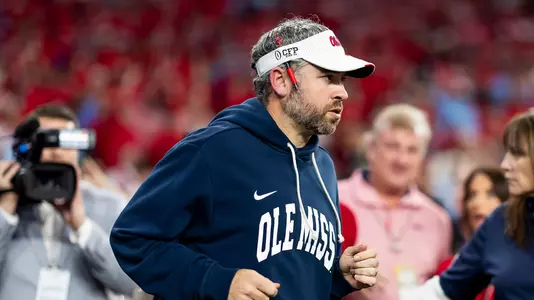
OXFORD, Miss. — Pete Golding doesn’t have to look very far to find an example of a talented defense struggling to tackle, surrendering far too many yards per play and allowing opponents to turn contact into additional yardage.
He coached one — and then he helped fix it.Six years before Golding found himself trying to straighten out an Ole Miss defense that has not played up to expectations early in the 2026 season, he faced a remarkably similar problem as Alabama’s defensive coordinator. The Crimson Tide defense opened the 2020 season surrendering 6.01 yards per play over its first three games against Missouri, Texas A&M and Ole Miss.
The problems came to a head in Oxford, where Lane Kiffin’s Rebels piled up 647 yards and 48 points against Alabama. The number that particularly bothered Golding, however, was 250 yards after contact.
Sound familiar?
That’s why what happened next in Tuscaloosa could be particularly relevant to what happens next in Oxford.
Golding’s Alabama defense had to learn to tackle again
Golding didn’t view Alabama’s problems as evidence that his players weren’t talented enough or weren’t trying hard enough. After studying the Crimson Tide’s tackling issues, he concluded preparation was at the heart of the problem.
His response was remarkably straightforward: identify the types of tackles Alabama was consistently missing, recreate those situations in practice and drill them until proper technique became second nature. After the Ole Miss game, Golding said Alabama had what he described as a “come to Jesus” meeting about the state of the defense.
Then the Tide went back to work.
“I think the biggest thing, we tackled better,” Golding said in an article on TideSports back in December 2020. “I think early, obviously, in the year, you look at the Ole Miss game, they had 250 yards after contact. You can’t play good football teams and not eliminate obviously the yards after contact.”
That quote could almost have been delivered following Ole Miss’ loss at Florida last Saturday.
The Rebels surrendered 302 rushing yards to the Gators, and even more troubling was how much of the damage occurred after Ole Miss defenders had an opportunity to stop it. Florida running backs Jadan Baugh and Duke Clark combined for 268 rushing yards, with 200 of those yards coming after contact.
Baugh accounted for 103 yards after contact and forced seven missed tackles, while Clark added 97 yards after contact. Ole Miss finished the game with 10 missed tackles, according to Pro Football Focus.
Those aren’t necessarily problems that require a new defensive scheme or an entirely different philosophy. They are problems that can be coached — and Golding has done it before.
The numbers changed dramatically at Alabama
That’s where the 2020 comparison becomes more than an interesting bit of history. Alabama didn’t merely talk about getting better. It did.
After allowing 6.01 yards per play during those first three games, Golding’s defense surrendered just 4.6 yards per play over its next eight. The explosive plays declined along with it.
Alabama’s first three opponents produced 53 plays of at least 10 yards, an average of 17.6 per game. Over the following eight games, that number dropped to 11.1 per game. Plays of 20-plus yards fell from 4.6 per game to 3.5, while plays of 30-plus yards went from 2.3 per game to 1.5.
It wasn’t some dramatic midseason reinvention of Alabama’s defense. It began with something much more fundamental: tackling.
Golding explained at the time that coaches could design the drills and repeatedly put players into the situations they would encounter on Saturdays, but ultimately the players had to commit themselves to the technique.
“Look, man, you’ll either come out every day and rely on your technique and get better and improve because we’re putting you in this situation and it’s going to carry over on Saturday, or you’re going to think it’s not important, you’re going to BS it, your pad level is not right, your eyes aren’t right, you don’t run through contact and now this is the result,” Golding said.
That Alabama defense got the message.

Alabama’s turnaround didn’t stop after eight games
There was still one rather important game remaining when that 2020 article was published: a College Football Playoff semifinal against Notre Dame.
Golding’s defense entered the matchup facing an Irish offense averaging more than 35 points and approximately 455 yards per game. Alabama held Notre Dame to 14 points and 375 total yards in a 31-14 semifinal victory, earning a spot in the national championship game.
The Crimson Tide then defeated Ohio State, 52-24, to win the national championship.
So when Golding talks today about fixing Ole Miss’ defensive problems, there is a track record behind what he’s saying. He’s lived through an early-season defensive crisis before, identified what was going wrong and helped turn the unit around.
Different teams, but some familiar problems
There are obvious differences between 2020 Alabama and 2026 Ole Miss. Different players, different opponents and different circumstances. There is certainly no guarantee that what happened six years ago will happen again.
But the similarities in the problems themselves are difficult to overlook. Golding’s Alabama defense was surrendering too many yards per play, missing tackles and allowing opponents to gain enormous amounts of yardage after contact. Those missed tackles also helped turn ordinary plays into explosive ones.
Now Golding’s Ole Miss defense is confronting many of those same issues.
The encouraging part for the Rebels is that these aren’t mysteries to their head coach. He’s diagnosed them before, corrected them before and knows improvement doesn’t necessarily require Ole Miss to suddenly become something it isn’t. It requires the Rebels to become better at the fundamentals of what they’re already trying to do.
The bye week couldn’t have come at a better time

That’s why this week’s open date has been so important for Ole Miss. Instead of preparing immediately for another opponent, Golding and his staff have had an opportunity to conduct the same kind of detailed self-scout that helped Alabama identify its problems in 2020.
Where are the missed tackles occurring? Are defenders arriving out of control? Are their eyes in the wrong place? Is pad level too high? Are players failing to run through contact? Are pursuit angles creating additional yards? And are those individual mistakes creating the explosive plays that have hurt Ole Miss?
Those are the kinds of details Golding attacked at Alabama, and they are also the kinds of details Ole Miss can address during the bye.
Will Echoles essentially said as much this week. The veteran defensive lineman knows the talent exists.
“Not many teams are going to be better than us up front or as a defense or as a team,” Echoles said following the Florida loss. “So when you drop one, an important one on the road, you know, it stings a little bit.”
The challenge now is turning that talent into consistent execution for four quarters.
Golding has a blueprint
Nobody inside the Manning Center is going to be satisfied simply because Pete Golding once fixed another defense in another season. History doesn’t make tackles for the Rebels, and what Alabama accomplished in 2020 won’t change a single snap in 2026.
But history can tell us something about the coach responsible for finding the solution.
Golding has seen a defense give up more than six yards per play early in a season. He’s watched one of his units get gashed for 250 yards after contact in a single game, and he’s dealt with missed tackles and explosive plays piling up quickly enough to make a championship-caliber defense look anything but championship caliber.
His answer wasn’t panic. It was evaluation, accountability, repetition and fundamentals.
Eight games later, Alabama had cut its yards allowed per play from 6.01 to 4.6. A few weeks after that, the Crimson Tide were national champions.
Ole Miss has plenty of work to do before anyone starts drawing conclusions about where this season will end. But as the Rebels use the bye week to figure out what has gone wrong defensively, there’s a pretty compelling precedent sitting right there on their head coach’s résumé.
