THE LONE GUNMAN — MONCO PROVES HE DOESN’T NEED ANYONE
THE LONE GUNMAN — MONCO PROVES HE DOESN’T NEED ANYONE
For a Few Dollars More (1965) is remembered as one of the defining films of the Spaghetti Western era, but its greatest strength is not simply its gunfights or dramatic confrontations. Beneath the dust, bullets, and unforgettable music lies a story about men who survive because they understand danger better than anyone around them. In the “Going Alone” clip, Clint Eastwood’s character, Monco, embodies that philosophy perfectly.
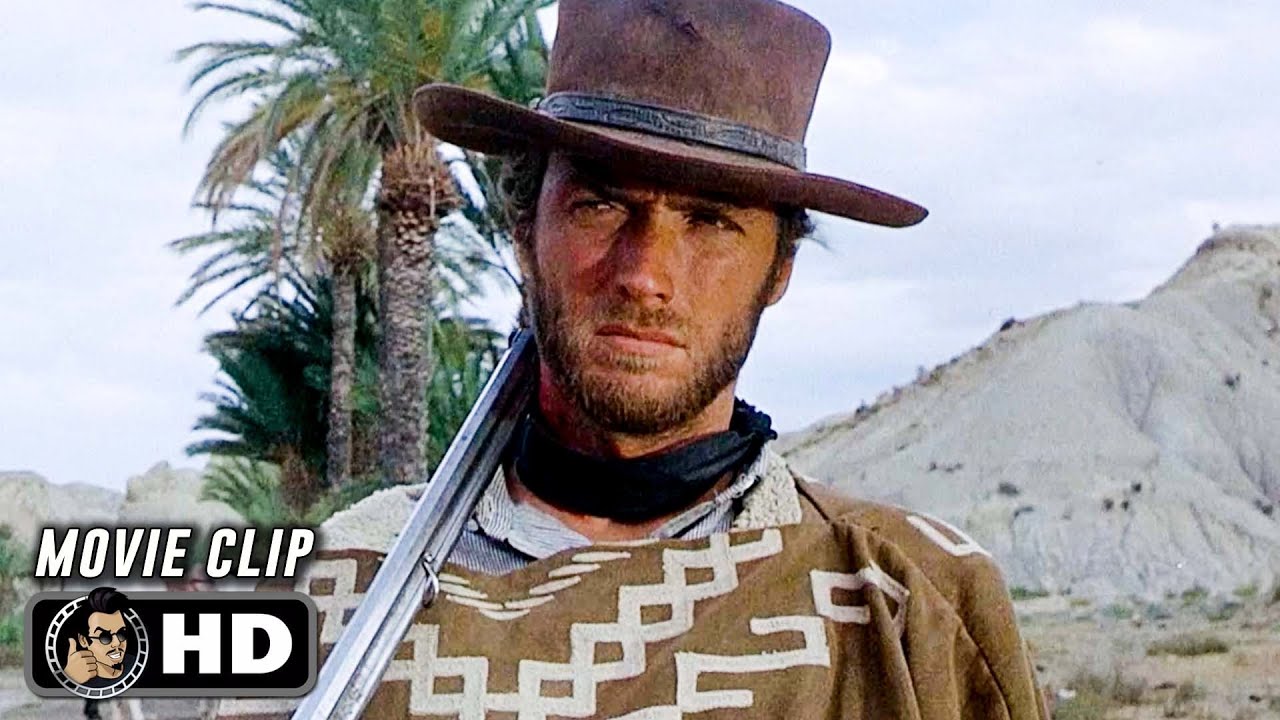
Monco is not a traditional hero. He does not ride into town searching for glory, justice, or admiration. He is a bounty hunter who understands the value of patience, information, and survival. He knows that the frontier is filled with men who can kill without hesitation, and he has learned that trusting the wrong person can be more dangerous than facing an enemy alone. His willingness to go alone reveals one of the most important qualities of his character: confidence without unnecessary bravado.
Directed by Sergio Leone, For a Few Dollars More transformed the Western genre through its distinctive visual style and deliberate pacing. Leone understood that tension could be created without constant action. A glance, a pause, a distant sound, or the slow movement of a character could create more suspense than an entire gunfight. Clint Eastwood became the perfect performer for this style because Monco rarely needs to explain himself. His face, posture, and movements communicate almost everything.
The idea of “going alone” fits Monco because independence is part of his survival strategy. He is not a man who easily places his fate in someone else’s hands. The frontier rewards people who can read situations quickly, and Monco has developed an instinct for recognizing danger before it arrives. He knows when to wait, when to move, and when to keep his distance.
That makes the character particularly compelling. Monco is dangerous, but he is not reckless. He understands that courage is not the same thing as rushing toward danger. Sometimes courage means remaining calm when everyone else is nervous. Sometimes it means walking away from a situation because there is nothing to gain. And sometimes it means entering a dangerous place alone because you know exactly what you are capable of doing.
Clint Eastwood’s performance makes these qualities believable. His version of the Western gunslinger is defined by restraint. He does not need long speeches to establish authority. Instead, Eastwood uses silence and body language. A slight movement of his eyes can suggest that Monco has already calculated the situation. A relaxed posture can make his opponents even more nervous because they cannot tell whether he is afraid or completely confident.
This was one of the reasons Eastwood became such an important figure in Western cinema. His characters often appeared emotionally distant, but that distance created mystery. Audiences were encouraged to watch carefully and discover what the character was thinking through small details. Monco’s strength comes from that ambiguity. He does not reveal everything, and neither does the film.
The “Going Alone” concept also connects with one of the film’s larger themes: survival in a world where alliances are rarely simple. Monco eventually encounters Colonel Douglas Mortimer, played by Lee Van Cleef, another highly capable man with his own motives. Their relationship becomes one of the most memorable partnerships in Western cinema because neither man completely trusts the other.
At first, Monco and Mortimer appear to be competitors. Both are experienced, intelligent, and dangerous. Yet they eventually recognize that working together may be more effective than working separately. Their partnership does not erase their individuality. Instead, it demonstrates that even the strongest lone wolves sometimes understand the value of having an equally capable partner.
This makes Monco’s independent nature even more interesting. His willingness to go alone does not mean he is incapable of cooperation. It means he refuses to depend on others unless they have earned his respect. Mortimer eventually proves himself to be one of the few men Monco can work beside without constantly looking over his shoulder.
The film’s atmosphere reinforces this idea. Leone’s frontier is not a romantic place filled with simple heroes and villains. It is harsh, unpredictable, and morally complicated. Bounty hunters chase criminals for money. Criminals manipulate one another for survival. Revenge can become more powerful than wealth. Every character has a reason for doing what he does.
Monco operates comfortably within that world because he understands its rules.
The famous score by Ennio Morricone adds another layer to the experience. Music in Leone’s Westerns often becomes part of the storytelling rather than simply background sound. The combination of Morricone’s music, Leone’s wide compositions, and Eastwood’s controlled performance creates an atmosphere in which even a simple journey can feel dangerous.
That is what makes a clip like “Going Alone” so effective. The scene does not need to rely entirely on explosions or gunfire. The character himself creates the tension. When Monco moves through the frontier alone, viewers understand that danger could appear at any moment. His confidence makes the silence feel meaningful.
The Western genre has produced countless gunslingers, but Monco remains distinctive because he represents a different kind of masculinity. He is not constantly trying to prove that he is the toughest man in the room. He simply behaves as though he already knows what he can do. That confidence gives the character an almost effortless coolness.
Clint Eastwood would carry this style into many of his later Western roles, but Monco remains an important early example. His performance helped establish the screen persona that audiences would associate with Eastwood for decades: quiet, observant, independent, dangerous, and unwilling to waste words.
For a Few Dollars More also demonstrates why the Spaghetti Western became such an influential movement. Leone took familiar Western ideas—bounty hunters, outlaws, revenge, gunfights, dusty towns—and presented them with a new visual language. Characters became more complex, violence became more stylized, and silence became an essential part of the storytelling.
The “Going Alone” moment fits perfectly into that cinematic world. It captures a man who understands that the frontier does not reward weakness. Monco does not need a crowd behind him to feel powerful. He carries his own confidence, experience, and instincts wherever he goes.
Yet the deeper message is not simply that a man should always fight alone. It is that survival requires knowing yourself. Monco knows his strengths. He knows his limitations. He knows when to take a risk and when to wait. Most importantly, he understands that fear is only useful if it makes you more careful.
That philosophy is one reason the character remains memorable nearly six decades after the film’s release.
“Going Alone” may seem like a simple Western moment, but it reflects the character of Monco and the filmmaking philosophy of Sergio Leone. Clint Eastwood turns silence into personality, movement into suspense, and confidence into a weapon.
In a frontier where trust can disappear as quickly as a gunshot, Monco keeps moving forward on his own terms.
And sometimes, going alone is exactly what makes a man impossible to stop.
