TUCO’S JOKES ARE GONE — THE MOST DESPERATE MOMENT OF HIS LIFE
TUCO’S JOKES ARE GONE — THE MOST DESPERATE MOMENT OF HIS LIFE
In Sergio Leone’s The Good, the Bad and the Ugly (1966), few moments reveal the brutal reality of the Western world more powerfully than the sequence in which Tuco is captured and tortured. Known for his humor, cunning, and ability to survive almost any situation, Tuco suddenly finds himself powerless. His usual confidence disappears as he is trapped inside a world controlled by violence, intimidation, and fear.
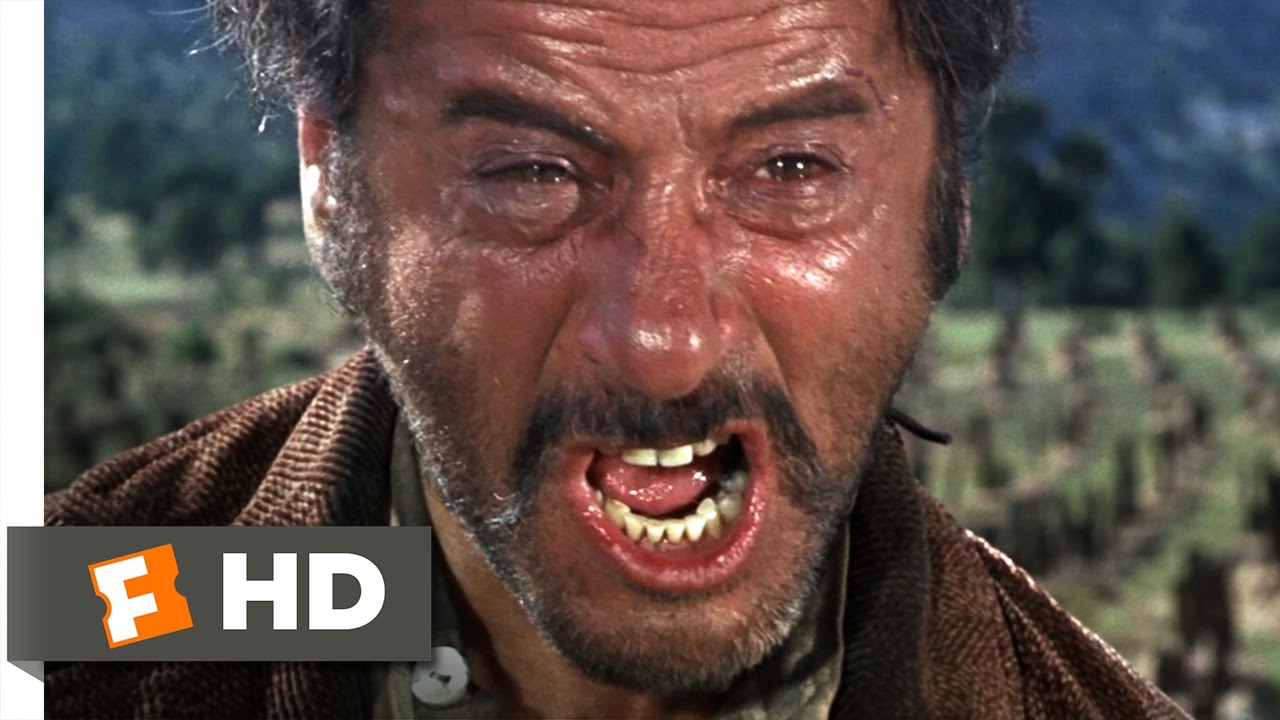
Tuco, played brilliantly by Eli Wallach, is one of the most unforgettable characters in the film. He is greedy, unpredictable, funny, dishonest, and surprisingly resilient. Throughout the story, he repeatedly finds ways to escape situations that should have destroyed him. He argues, tricks people, threatens enemies, and uses his intelligence to stay alive. But the torture sequence exposes the limits of his usual survival tactics.
This is what makes the scene so important.
Tuco is not simply being punished. He is being pushed beyond the emotional and physical limits that normally allow him to remain in control. For much of the film, Tuco creates chaos around himself. He is constantly moving, talking, scheming, and looking for an opportunity. During the torture, that control is taken away from him.
Sergio Leone uses this contrast to make the moment especially powerful.
The audience has already seen Tuco as a comic figure. His arguments with Blondie provide some of the film’s funniest scenes, and his explosive personality often brings energy to the story. Yet Leone never allows the comedy to completely hide the danger of the world these characters inhabit. Behind the humor is a frontier where people can disappear, betray one another, or die without warning.
The torture scene brings that darker side to the surface.
Eli Wallach’s performance is central to its impact. Tuco is not portrayed as an emotionless tough guy. He reacts like a man who is genuinely afraid, exhausted, angry, and desperate to survive. His expressions communicate pain and frustration, but they also reveal something essential about his character: Tuco refuses to surrender completely.
Even when he is powerless, some part of his personality remains alive.
That stubbornness is one of the reasons audiences connect with him. Tuco is far from heroic in the traditional sense. He lies, steals, betrays, and manipulates people. Yet he also possesses an extraordinary instinct for survival. He is the kind of character who can be selfish and sympathetic at the same time.
The torture sequence forces viewers to look beyond his jokes.
Suddenly, Tuco is not simply the loud, unpredictable outlaw who follows Blondie across the desert. He is a human being caught in an extremely dangerous situation. His vulnerability makes the character more complicated and gives the story greater emotional weight.
This is also where Leone’s filmmaking style becomes especially important.
The Good, the Bad and the Ugly is famous for spectacular landscapes, long stares, dramatic close-ups, and explosive gunfights. But Leone understood that violence could be frightening without constantly showing action. Sometimes the anticipation of what might happen creates greater tension than the action itself.
In Tuco’s torture sequence, the atmosphere becomes oppressive. The sense of confinement contrasts sharply with the enormous landscapes seen elsewhere in the film. Tuco may have spent much of the story running across the open frontier, but here he is trapped. The visual environment reflects his loss of freedom.
The contrast between open space and confinement is important to the film as a whole. Blondie and Tuco are constantly traveling, searching for information, money, and gold. Movement gives them opportunities. Being trapped removes those opportunities.
For Tuco, that is terrifying.
The scene also deepens the relationship between Tuco and Blondie. Their partnership has never been simple. They repeatedly betray one another, insult each other, and argue over money. Yet there is a strange bond between them. Each understands that the other possesses qualities necessary for survival.
Blondie is calm, precise, and emotionally controlled. Tuco is energetic, impulsive, and unpredictable. Their personalities could not be more different, but that difference makes them effective together.
When Tuco is tortured, the audience understands how much more serious their situation has become. The games are no longer funny. The search for treasure is no longer simply an adventure. Powerful enemies are willing to use extreme violence to obtain information.
The stakes have changed.
Another important element is the presence of Angel Eyes. Played by Lee Van Cleef, Angel Eyes represents a completely different kind of danger. He is controlled, calculating, and ruthless. Unlike Tuco, he does not rely on humor or emotional outbursts. He approaches violence with cold precision.
This makes Tuco’s personality appear even more vulnerable by comparison.
Tuco is chaotic, but Angel Eyes is methodical. Tuco reacts to danger, while Angel Eyes creates danger. Their contrast demonstrates the different forms evil can take within Leone’s Western universe.
The scene also contributes to the film’s broader exploration of greed and survival. Almost every major character is motivated by something: money, revenge, power, or the desire to stay alive. The famous search for buried gold brings these motivations together, but the journey repeatedly shows that the treasure is capable of bringing out the worst in people.
Tuco wants the gold because he sees it as a path to freedom and wealth. Blondie wants his share. Angel Eyes wants control and information. None of them can simply walk away.
The torture sequence reminds viewers that the price of this obsession can be enormous.
Yet even in his darkest moment, Tuco remains Tuco. His survival instinct never completely disappears. That is what makes the character so memorable. He is not transformed into a noble hero by suffering. Instead, his experience reinforces the qualities that have allowed him to survive throughout the story.
His desperation becomes another form of strength.
Eli Wallach deserves enormous credit for balancing comedy and tragedy within the same character. Tuco can make audiences laugh in one scene and feel genuine concern for him in the next. That emotional flexibility prevents him from becoming a simple comic sidekick.
He is a survivor.
The sequence also demonstrates why The Good, the Bad and the Ugly remains one of the most influential Westerns ever made. Leone understood that great Western characters needed more than guns. They needed personality, contradictions, motivations, and weaknesses.
Tuco has all of them.
His torture is therefore more than a violent episode. It is a moment that strips away the comedy and reveals the desperate human being underneath. The man who usually talks his way out of trouble suddenly has almost nothing left except his determination to survive.
That makes the scene uncomfortable, memorable, and emotionally significant.
The film constantly asks what people are willing to do when survival and wealth are at stake. Tuco’s suffering provides one of the clearest answers. The frontier is not a place where cleverness always wins. Sometimes even the smartest survivor can become helpless.
But helplessness does not necessarily mean defeat.
Tuco survives because he refuses to give up. His journey through the film is filled with humiliation, betrayal, danger, and absurdity, yet he continues moving forward. That persistence is arguably his greatest quality.
In the end, the torture scene gives The Good, the Bad and the Ugly a darker emotional dimension. It reminds audiences that beneath the legendary gunfights and unforgettable humor lies a brutal world where survival is never guaranteed.
Tuco may be greedy. He may be reckless. He may be impossible to trust.
But when the frontier pushes him to the edge, he fights to stay alive.
And that is exactly what makes Tuco one of the most unforgettable survivors in Western cinema.
