🔥🤠 Everyone Knows Rip Wheeler Can Win a Fight — But One Quiet Yellowstone Moment Revealed Why He’s Far More Dangerous Than His Fists
Rip Wheeler has thrown men to the ground.
He has threatened dishonest ranchers.
He has stared down criminals who believed they had nothing left to fear.
But one of the most revealing moments in a “Rip vs. Everyone” collection contains almost none of that.
A grieving mother is holding a rifle.
Everyone expects the confrontation to explode.
Rip does something completely different.
He asks why.
Then he asks for her daughter’s name.
And suddenly the man famous for ending problems with force shows that sometimes his greatest strength is knowing exactly when not to fight.
People usually understand Rip Wheeler too late.
They see the dark clothes.
The cowboy hat.
The quiet stare.
And they assume the danger begins when Rip throws the first punch.
That is only part of the story.
Across the confrontations collected in “Best of Rip vs. Everyone,” Rip repeatedly demonstrates something more interesting than physical strength.
He has a code.
He watches.
He warns.
He decides whether someone deserves another opportunity.
And once that opportunity disappears, the outcome can change very quickly.
But the most memorable scenes also reveal that Rip does not use force simply because he can.
Sometimes the toughest man in the room is the one who chooses not to swing.
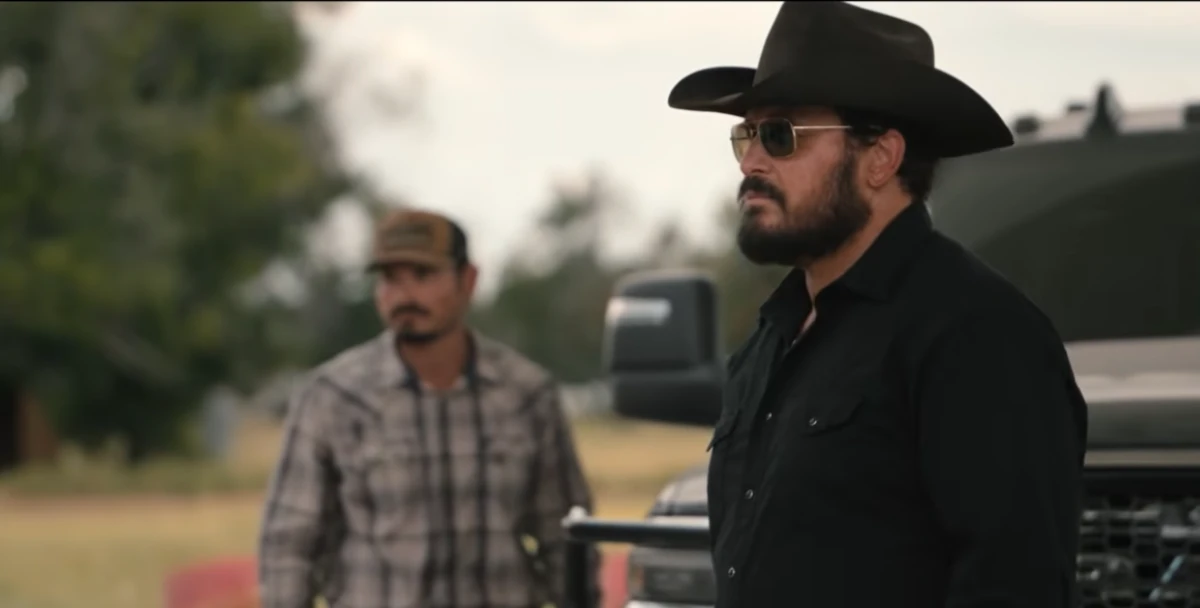
RIP’S WARNINGS ARE MORE DANGEROUS THAN MOST PEOPLE’S THREATS
One confrontation begins with a dispute over who has authority on the property.
The other man believes Rip cannot remove him because someone else hired him.
Rip immediately makes it clear that assumption is wrong.
The argument becomes physical.
The man goes down.
But Rip does not continue attacking simply for the pleasure of winning.
He gives him a chance to stay down and let the confrontation end.
Beth’s cold addition—“Or don’t”—makes the choice even clearer.
That pattern repeats throughout Rip’s confrontations.
The violence is rarely the opening move.
The warning comes first.
Ignoring it is what becomes expensive.
In another scene, a drunken man keeps provoking Ramos and Azul with increasingly ugly insults.
Rip initially watches.
Then the man finally crosses the line.
Rip steps in and delivers one of the clearest summaries of his philosophy:
“You get that one for free. The next one’s going to cost you.”
Rip does not need to keep fighting after the message lands.
That is exactly what makes him intimidating.
He is not trying to look dangerous.
He is trying to solve the problem.
THEN A WOMAN POINTS A RIFLE — AND RIP CHANGES COMPLETELY
The confrontation with Anna Dupree is different.
She has a weapon.
The situation appears ready to explode.
Rip could immediately treat her like another threat.
Instead, he asks what happened.
Anna tells him that the man in front of her killed her baby.
That answer changes Rip’s approach.
He recognizes the grief underneath the anger.
He tells her that if somebody took someone he loved, he would understand the desire for revenge.
Then he asks another question.
What was her daughter’s name?
Teresa.
That one detail transforms the scene.
Rip uses Teresa’s memory to reach the mother behind the rifle.
Would her daughter find peace in what Anna was about to do?
Would Anna?
Slowly, the confrontation begins to change.
The gun comes down.
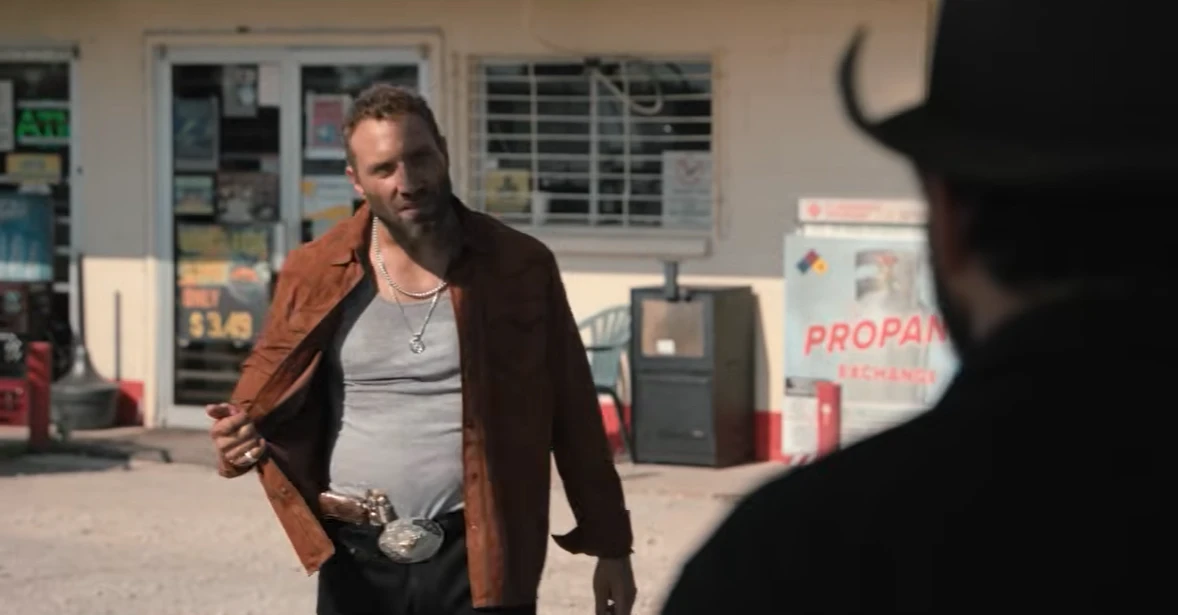
This is perhaps the clearest evidence that Rip’s power is not simply physical.
He defeats the moment without defeating Anna.
There is no victory pose.
No brutal takedown.
He understands her pain well enough to stop the killing before it happens.
Then Rip immediately reminds everyone that compassion has not made him soft.
He turns toward the man Anna blamed and makes it clear that the mercy he just helped create should not be misunderstood.
That contrast is pure Rip Wheeler.
Empathy for one person.
A warning for another.
🎬 FULL VIDEO
BETRAY THE RANCH AND THE RULES CHANGE FAST
Rip becomes much less forgiving when trust involving the ranch is broken.
When he discovers that somebody sold him a sick bull, the seller offers to repay the money.
Rip is not interested.
At that point, reimbursement is not the real issue.
The man has violated the trust required to operate in Rip’s world.
Rip gives him a short period to leave and makes the consequences of returning unmistakable.
The same philosophy appears in other disputes.
Someone demands an apology.
Another cowboy challenges his authority.
Arguments turn physical.
But once the confrontation is finished, Rip usually returns to the same priority:
The ranch still has work to do.
Water the horses.
Get back to work.
Pack your belongings if you cannot follow the rules.
Personal drama does not get to become larger than the ranch itself.
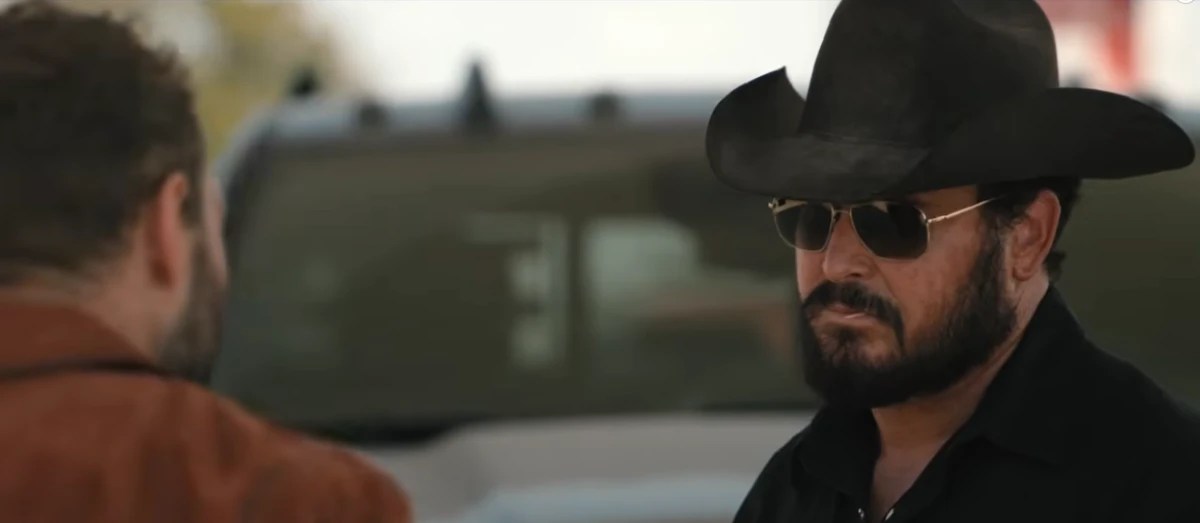
CARTER BRINGS OUT THE RIP MOST PEOPLE NEVER SEE
Perhaps the greatest contrast appears when Rip deals with Carter.
Carter challenges him.
He rides away.
He talks back.
At one point, Carter practically invites Rip to fire him.
The scene appears ready to become another authority battle.
Instead, Rip talks.
He tells Carter that he has lost more than he has won.
And that failure has taught him more than success ever did.
Then comes a line that cuts through the toughness:
“We don’t get to choose the pain, but we get to choose how we build from it.”
Carter tells him he will never be his father.
Rip does not argue.
“No, I won’t.”
That answer matters.
Rip does not demand a title Carter is not ready to give him.
Then Carter accuses Rip and Beth of acting like saviors because they took in an orphan.
Rip’s response reveals the connection Carter has missed.
Carter is not the only orphan in the family.
Rip understands that absence because he has lived it too.
For a few seconds, the intimidating ranch enforcer disappears.
What remains is a man recognizing his own pain in a younger version of himself.
THEN SOMEONE CHALLENGES HIM AGAIN — AND THE OLD RIP RETURNS
That softness never means the danger is gone.
When another property dispute becomes hostile, Rip offers the same basic choice he has given people before.
Easy way.
Hard way.
The other man chooses poorly.
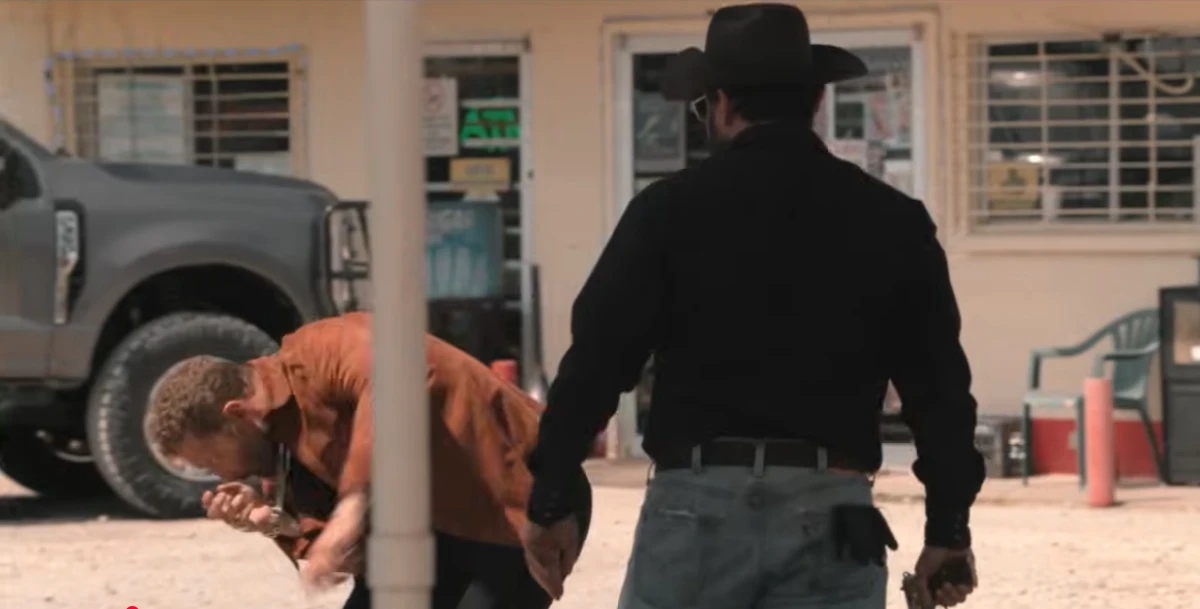
The fight is quick.
When the opponent is down, Rip asks if he is finished.
That question captures the character perfectly.
Rip does not need the fight to continue.
He needs the problem to stop.
Once it does, he moves forward.
THAT IS WHY “RIP VS. EVERYONE” IS ABOUT MORE THAN FIGHTING
Put all these scenes together and a different version of Rip Wheeler emerges.
Yes, he is brutal.
Yes, he can be frightening.
Yes, people who underestimate him often regret it.
But toughness alone would not make the character this compelling.
The grieving mother reveals his empathy.
Carter reveals his buried pain.
The dishonest rancher reveals his absolute intolerance for betrayal.
The criminals threatening the operation reveal how far he will go when the ranch is put at risk.
Each opponent exposes another piece of the man.
And that is why the quiet moments matter so much.
Rip does not enter every room looking for somebody to hit.
He enters looking for the problem.
Sometimes the answer is a warning.
Sometimes it is a conversation.
Sometimes it is compassion.
And sometimes someone ignores every opportunity to walk away.
That is when Rip Wheeler becomes the man everyone was afraid he might become.
Many characters threaten people.
Rip usually does something different.
He gives them one final chance to make the right decision.
The terrifying part is what happens when they don’t.
