THE ROAR OF THE WILD: Why Legends of the Fall Remains an Immortal Epic of Love, Guilt, and Destiny
By Staff Writers
Published: October 9, 2026

LOS ANGELES — Some films are not merely watched; they are experienced like a violent, soul-shaking storm. From the very first notes of James Horner’s sweeping, melancholy film score, as the camera glides effortlessly over the mist-shrouded, endless expanses of the Montana wilderness, viewers are plunged headfirst into an unforgettable emotional odyssey.
Edward Zwick’s cinematic masterpiece Legends of the Fall, adapted from Jim Harrison’s powerful novella, captured the imaginations of audiences in the 1990s and retains every ounce of its raw, visual, and visceral power today. Eschewing the clean, neatly packaged moral compass and happy endings of traditional Westerns, the film unfurls as a sweeping, blood-soaked, and deeply human ballad about family loyalty, destructive passions, and the relentless, unforgiving march of time.
The Foundation in Isolation: The Ludlow Dynasty
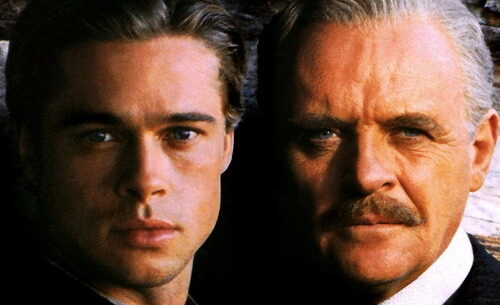
The saga begins far away from the corrupting influence of modern civilization, deep within the harsh and rugged terrain of early 20th-century Montana. Col. William Ludlow (portrayed with magnificent, Shakespearean intensity by Anthony Hopkins) has turned his back on the U.S. military in bitter disgust over its brutal campaigns of displacement against Indigenous peoples. He retreats to the edge of the wilderness, carving out an isolated homestead to raise his three sons with relative independence and freedom.
At his side are three brothers whose personalities diverge sharply:
-
Alfred (Aidan Quinn): The eldest brother—prudent, dutiful, rational, and relentlessly driven to meet the rigid expectations of both his father and polite society.
-
Tristan (Brad Pitt): The untamed rebel, a wild spirit who forges deep, spiritual bonds with the local Cree nation, living in harmonious sync with nature while radiating an animalistic, magnetic charisma.
-
Samuel (Henry Thomas): The youngest, most idealistic sibling, whose return from the outside world sets the tragic machinery of fate into motion.
This fragile, masculine domestic sanctuary is thrown into chaos when Samuel returns from his university studies accompanied by his fiancée, Susannah (Julia Ormond). Elegant, refined, and Eastern-bred, Susannah is initially a stranger in the brutal landscape of Montana, yet she is inevitably seduced by its rugged magic—and by the magnetic pull of the Ludlow men.
World War I as the Catalyst of Tragedy
The outbreak of the First World War sweeps over the family like an inescapable curse. Although Colonel Ludlow vehemently condemns the conflict as an imperialist slaughter, Samuel insists on enlisting out of a misplaced sense of patriotic duty.
Determined to protect their youngest brother, Alfred and Tristan defy their father’s wishes and volunteer to fight on the Western Front. What begins as a protective family mission quickly devolves into a human nightmare. The trench warfare of Flanders is portrayed not as a glorious adventure, but as an industrial, soul-consuming meat grinder.
When Samuel is killed during a reckless scouting mission—despite Tristan’s agonizing, desperate efforts to save him—the backbone of the Ludlow family snaps. Consumed by grief and a primal lust for vengeance (cutting out the hearts of fallen enemy soldiers in a berserker rage), Tristan descends into his own personal hell, while a grievously wounded Alfred returns home a changed man. Samuel’s death sows the permanent seeds of ruin.
The Destructive Power of Unrequited Love

Back in Montana, the narrative transforms into a classical, Greek-style tragedy. Susannah, drowning in her grief, finds solace and eventually fierce, consuming passion in the arms of Tristan. Yet Tristan is fundamentally unsuited for domestic life; he is a wanderer, hunted by inner demons, survivor’s guilt, and an untamable wild spirit.
Aidan Quinn’s Alfred, who has loved Susannah from afar for years, must agonizingly watch as the woman he cherishes falls under his brother’s spell. When Susannah becomes pregnant with Tristan’s child only to be abruptly abandoned (as Tristan flees to protect her from his own encroaching darkness), the family structure shatters permanently. Alfred departs for Helena, entering politics, building a powerful empire, and ultimately marrying Susannah—a union that breaks the heart of the anti-establishment Colonel.
Brad Pitt and the Birth of an Icon

Regardless of the occasional critique that the film leans dangerously close to melodramatic territory, Brad Pitt’s iconic portrayal of Tristan Ludlow remains pure cinematic gold.
With his flowing golden hair, weather-beaten stare, galloping bareback across the plains, or wrestling with grizzly bears in the snow, Pitt was catapulted into global superstardom by this role. Tristan is the ultimate tragic archetype: every woman who loves him perishes; every man who challenges him meets a grim fate. He attracts catastrophe like a lightning rod yet strives, in his own fractured way, to maintain a code of honor.
Simultaneously, Anthony Hopkins dominates the final act as the broken Colonel, reduced to silence following a stroke, forced to watch corrupt local lawmen and bootleggers threaten his home. When the old man rises with a shotgun to defend his remaining family, fatherly love, blinding rage, and raw desperation merge into an unforgettable performance.
An Epic for the Ages

That Legends of the Fall met with mixed critical reviews upon its initial release stems largely from its utter refusal to employ modern irony. It is unabashedly romantic, grandiose, operatic, and uncompromising. John Toll’s breathtaking cinematography (which deservingly won an Academy Award) captures nature with a near-spiritual reverence. Montana is never a mere backdrop; it is a living, breathing character—relentless, stunning, and ultimately cleansing.
Legends of the Fall endures because it reminds us that life is not a straight, predictable line, but a continuous series of painful farewells. It speaks of individuals who love with every fiber of their being, lose everything, and yet find the courage to keep walking, stitched together by the indelible scars of their past. It remains a monumental piece of cinema whose emotional weight refuses to fade.