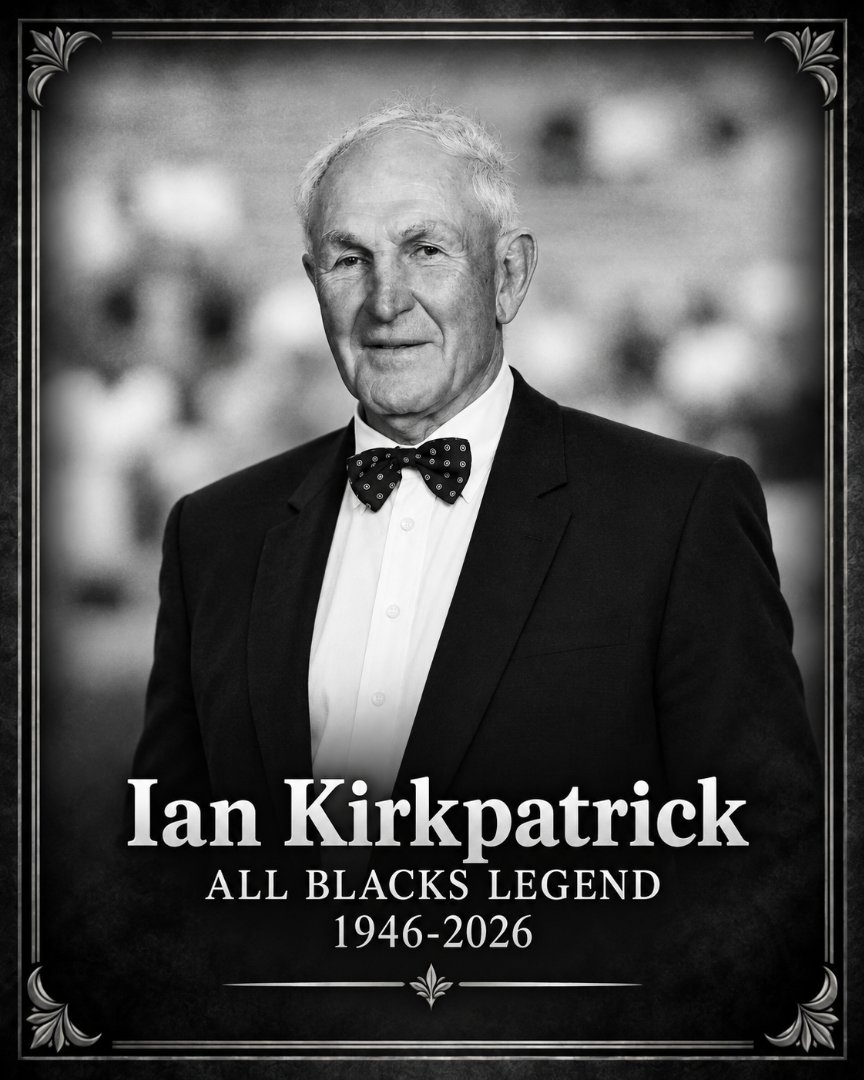
The international rugby community is in deep mourning today following the passing of former All Blacks captain and legendary flanker Ian Kirkpatrick, who has died at the age of 78.
Kirkpatrick, widely regarded as one of the finest blindside flankers to ever wear the famous black jersey, leaves behind an unforgettable legacy that helped define New Zealand rugby during the late 1960s and 1970s.
Tributes have poured in from around the globe from teammates, opponents, and fans honoring a true titan of the game.
A Career Defined by Dominance and Endurance
Born on May 24, 1946, in Gisborne, New Zealand, Ian Kirkpatrick emerged as an exceptional athletic talent early in his youth.
Making his test debut for the All Blacks in 1967 against France at Colombes, Kirkpatrick wasted little time establishing himself as an indispensable force in the back row.
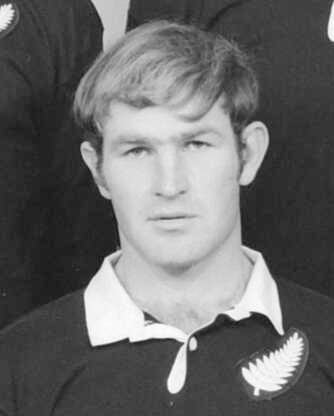
Standing 6 ft 3 in (1.91 m) and weighing over 100 kg, he combined formidable physical strength with remarkable speed, agility, and dynamic ball-carrying ability.
In an era where flankers were primarily expected to focus on defensive graft and set-piece work, Kirkpatrick revolutionized the position with his explosive attacking play.
Over a decade-long international career spanning from 1967 to 1977, Kirkpatrick earned 39 test caps for New Zealand, scoring 16 test tries—a remarkable goal-scoring record for a forward in that era.
In total, he represented New Zealand in 113 matches across all levels, scoring 50 tries.
Leading the All Blacks
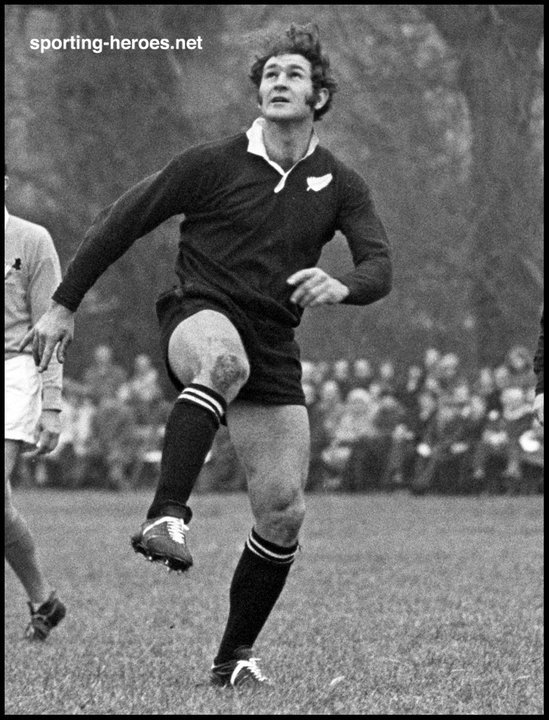
Kirkpatrick’s leadership qualities were recognized early on.
He was handed the All Blacks captaincy in 1972, guiding the national side through 9 tests as skipper until 1974, including historic tours of the Northern Hemisphere.
Among his many iconic moments on the pitch, none is more celebrated than his legendary solo try against the British & Irish Lions during the second test at Christchurch in 1971.
Brushing off multiple tackles and sprinting nearly half the length of the field, Kirkpatrick’s effort remains etched in rugby folklore as one of the greatest individual tries ever scored in test match history.
In addition to his national duties, Kirkpatrick was a proud stalwart for Poverty Bay and Canterbury at the provincial level, earning admiration across New Zealand for his unwavering consistency and durability.
Remarkably, despite the punishing physical nature of his position, he never missed an All Blacks match due to injury during his entire ten-year international career.
Tributes Pour In
Following news of his death, New Zealand Rugby (NZR) issued a statement expressing profound grief and gratitude for Kirkpatrick’s vast contributions to the sport.
“Ian Kirkpatrick was a giant of New Zealand rugby—a leader, an innovator, and an inspiration to generations of players who followed in his footsteps,” the statement read.
“His physical presence on the field was matched only by his humility and grace off it.
The entire rugby family grieves this tremendous loss.”
Former teammates and international opponents alike shared personal memories of competing alongside and against the legendary flanker.
Tributes highlighted not only his terrifying presence on the field but also his gentle nature and warmth as a friend away from the pitch.
A Lasting Legacy
Kirkpatrick’s immense contribution to the sport was formally recognized with his induction into the International Rugby Hall of Fame in 2003 and the World Rugby Hall of Fame in 2014.
He was also appointed a Member of the Order of the British Empire (MBE) in 1980 for services to rugby.
As flags fly at half-mast at rugby clubs across New Zealand and moments of silence are observed at matches worldwide, the rugby world bids farewell to a iconic leader whose impact on the game will never be forgotten.