Buddy Holly’s Whirlwind Romance: The Red Rose, the Sudden Proposal, and a Love Story Fate Would Never Let Grow Old
Some love stories unfold over years, built slowly through shared experiences, quiet promises, and countless ordinary moments. Others arrive like a sudden burst of music, changing everything in a matter of weeks. For rock and roll pioneer Buddy Holly and María Elena Santiago, romance moved at breathtaking speed. A chance meeting, a thoughtful red rose, and a heartfelt marriage proposal transformed two young lives forever. Yet the happiness they discovered together would soon become part of one of the most heartbreaking stories in music history.
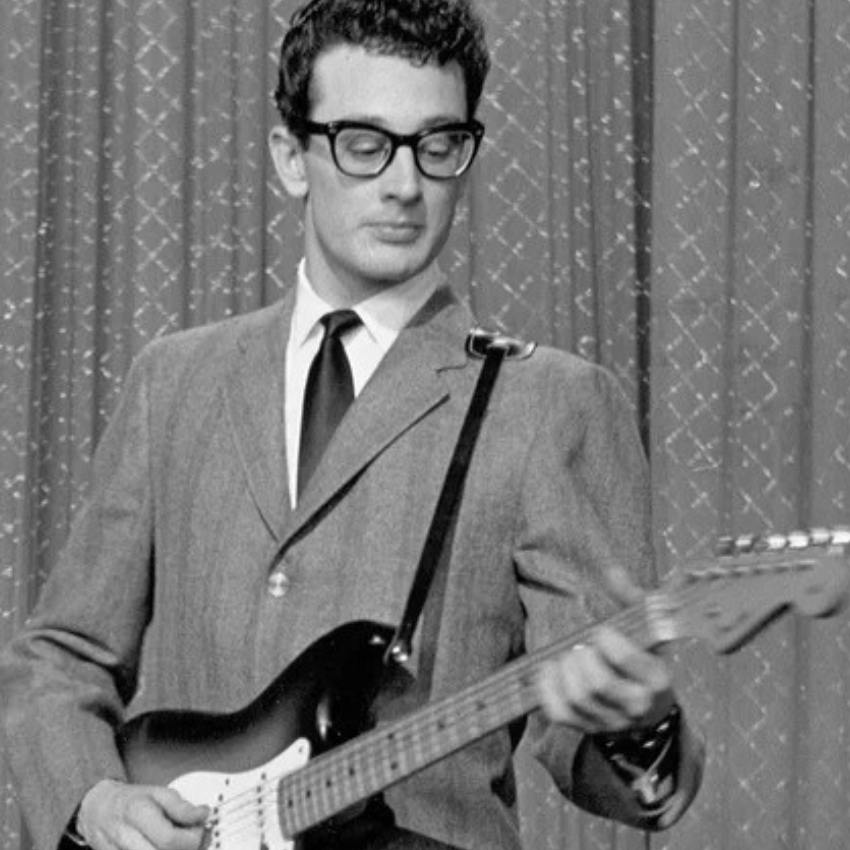
Behind the thick black glasses, distinctive voice, and revolutionary guitar sound was a young man searching for something beyond fame. Holly was rapidly becoming one of the most recognizable figures in the emerging rock and roll movement, but his personal life held a different kind of excitement. In María Elena, he found a connection that would inspire him to make one of the most important decisions of his life.

Their relationship began in 1958, when Holly was building his career and navigating the increasingly demanding world of professional music. At the time, he was working with music publisher Peer-Southern in New York City. There, he met María Elena Santiago, a young woman whose presence would soon change his future in ways neither could have imagined.
Their first encounter did not resemble the grand romantic scenes that would later surround their story. It was an ordinary meeting in a professional environment, the kind of moment that might easily have passed without leaving a lasting impression. But sometimes the most significant chapters of a person’s life begin without warning.
Holly was reportedly captivated by María Elena, and he did not spend long wondering whether he should pursue his feelings. His approach reflected the impulsive confidence of a young man who had found something he genuinely wanted. Rather than allowing the opportunity to disappear, he took the initiative and invited her out.
Their first date took them to PJ Clarke’s, the well-known Manhattan restaurant that had long attracted musicians, writers, and other creative personalities. Away from concert stages and recording studios, Holly had an opportunity to connect with María Elena as a person rather than as an audience member or admirer. Their time together helped establish a bond that would quickly become much more serious.
One of the most memorable details associated with their courtship is the red rose Holly presented to her. The flower became a symbol of his affection, a small but meaningful gesture from a young musician whose life was moving at extraordinary speed. While his songs reached audiences across America and beyond, his feelings for María Elena were personal, immediate, and deeply significant.
The rose represented something different from the excitement of rock and roll. It was not a performance, a publicity opportunity, or another milestone in his growing career. It was a romantic gesture directed toward one person, expressing a tenderness that could easily be overlooked beneath his energetic musical image.
What happened next surprised those who knew him.
Holly proposed to María Elena after a remarkably short courtship. Their relationship had developed so quickly that marriage seemed almost unbelievable to people accustomed to watching young couples take considerably longer to make such a commitment. Yet Holly appeared certain about what he wanted. He had achieved tremendous professional momentum, but he was also ready to establish a personal life with the woman who had captured his heart.
María Elena accepted his proposal, setting the stage for a marriage that would become one of the defining personal chapters of Holly’s life.
On August 15, 1958, the couple married at Tabernacle Baptist Church in Lubbock, Texas, Holly’s hometown. The ceremony marked the beginning of a new phase for the young musician, who was only twenty-two years old. For a man whose career had already brought him international recognition, marriage represented a different kind of commitment: a promise to share his future with someone beyond the spotlight.
Their decision was not simply a romantic footnote in the biography of a famous performer. It revealed a young artist who wanted more than chart positions, recording contracts, and applause. Holly was establishing a home and imagining a future that included love, companionship, and the possibility of building a family.

The speed of their romance naturally attracted attention. In the world of entertainment, where relationships were often scrutinized and public images carefully managed, such a sudden marriage could invite speculation. But the most enduring part of their story is not how quickly they fell in love. It is the significance that relationship assumed when Holly’s life was cut tragically short.
After their wedding, the couple spent time in New York City, where Holly continued pursuing his musical ambitions. His career was evolving, and he was increasingly interested in expanding his creative independence. He had already helped reshape popular music through his songwriting, guitar-driven arrangements, and the distinctive sound he developed with the Crickets.
Holly’s influence would eventually extend far beyond the hits that made him famous during his lifetime. His approach to songwriting and the structure of his band helped establish a model that later rock musicians would follow. Artists across the Atlantic, including members of the Beatles, admired his work and recognized the possibilities he had opened for the genre.
Yet behind that growing legacy was a husband whose time with María Elena would prove painfully brief.
In early 1959, Holly joined the Winter Dance Party tour, traveling through the American Midwest with other performers during a demanding schedule of concerts. The journey was physically exhausting, with long stretches of travel between venues in harsh winter conditions. The tour represented another opportunity to perform for fans, but it also placed Holly far from the domestic life he had only recently begun building.
On February 3, 1959, Holly died in a plane crash near Clear Lake, Iowa. He was just twenty-two years old. The accident also claimed the lives of Ritchie Valens and J. P. Richardson, widely known as the Big Bopper, turning an ordinary winter night into a lasting tragedy in American popular music.
For María Elena, the loss was devastating. Their marriage had barely begun, and the future they might have shared disappeared almost as suddenly as their romance had started. She was pregnant at the time and later suffered a miscarriage. The personal grief she endured stood in heartbreaking contrast to the public attention surrounding her husband’s death.
News of Holly’s passing spread quickly, shocking fans who had watched the young musician rise to prominence. His death would become closely associated with the phrase “The Day the Music Died,” immortalized in Don McLean’s 1971 song “American Pie.” Over time, the tragedy became one of rock and roll’s most enduring cultural reference points.
But while the world mourned a musical pioneer, María Elena had lost her husband. The distinction matters. History often remembers famous people through their achievements, their final moments, and the influence they leave behind. For those who loved them privately, however, the loss is measured in the ordinary experiences that will never happen: conversations left unfinished, anniversaries never celebrated together, and plans that can no longer become reality.
The red rose, the sudden proposal, and the wedding in Texas now belong to a story that carries both romance and sorrow. Their relationship was brief, but its significance cannot be measured by its duration alone. Holly’s marriage revealed a deeply personal side of a musician whose public identity was frequently defined by his talent, ambition, and groundbreaking contribution to rock and roll.
More than six decades later, his songs continue to reach new listeners. His recordings preserve the youthful energy of a performer who seemed poised to accomplish so much more. María Elena’s place in his story also remains essential, reminding audiences that behind the legend was a real person who fell in love, made promises, and believed in a future with his wife.
Perhaps the most heartbreaking element of their romance is the future that remains imaginable but forever unrealized. There could have been decades of shared memories, new music, family milestones, and the ordinary joys that make a marriage meaningful. Instead, their love became part of a history shaped by sudden loss.
Buddy Holly’s whirlwind romance did not have the time to become a long marriage, but it left behind a powerful reminder of how unexpectedly life can change. One meeting brought two people together. One rose expressed affection. One proposal opened the door to a shared future.
Then tragedy closed that door far too soon.
The music survived, and so did the memory of the young man behind it. But the story of Buddy Holly and María Elena endures for a reason beyond fame or musical achievement. It is the story of a love that began with extraordinary promise, became a marriage in the blink of an eye, and was frozen in time before its greatest chapters could ever be written.
