The Ballad of Buster Scruggs: The Wild West Has Never Been This Unpredictable
The American frontier has long been portrayed as a land of fearless gunslingers, dusty saloons, desperate outlaws, and men willing to risk everything for freedom. But in The Ballad of Buster Scruggs, the Wild West becomes something far more unpredictable. Blending dark comedy, shocking violence, unexpected tragedy, and unforgettable characters, the 2018 film delivers a Western experience that constantly challenges the audience’s expectations.
Directed by Joel and Ethan Coen, the film unfolds through six separate stories set in the American frontier. Each chapter presents a different perspective on life, death, ambition, and survival in a world where fortune can change in an instant. Some moments are hilariously absurd, while others are hauntingly bleak. Together, they create a portrait of the Old West that is as entertaining as it is unforgiving.

Buster Scruggs: The Smiling Cowboy Nobody Should Underestimate
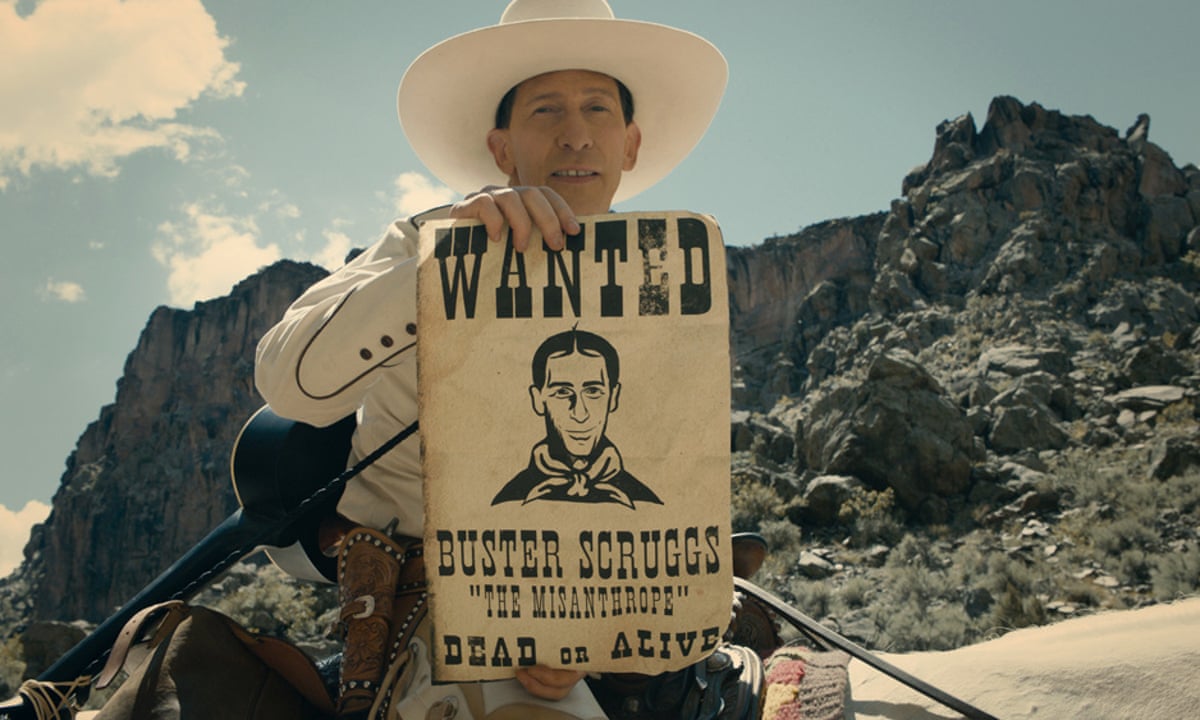
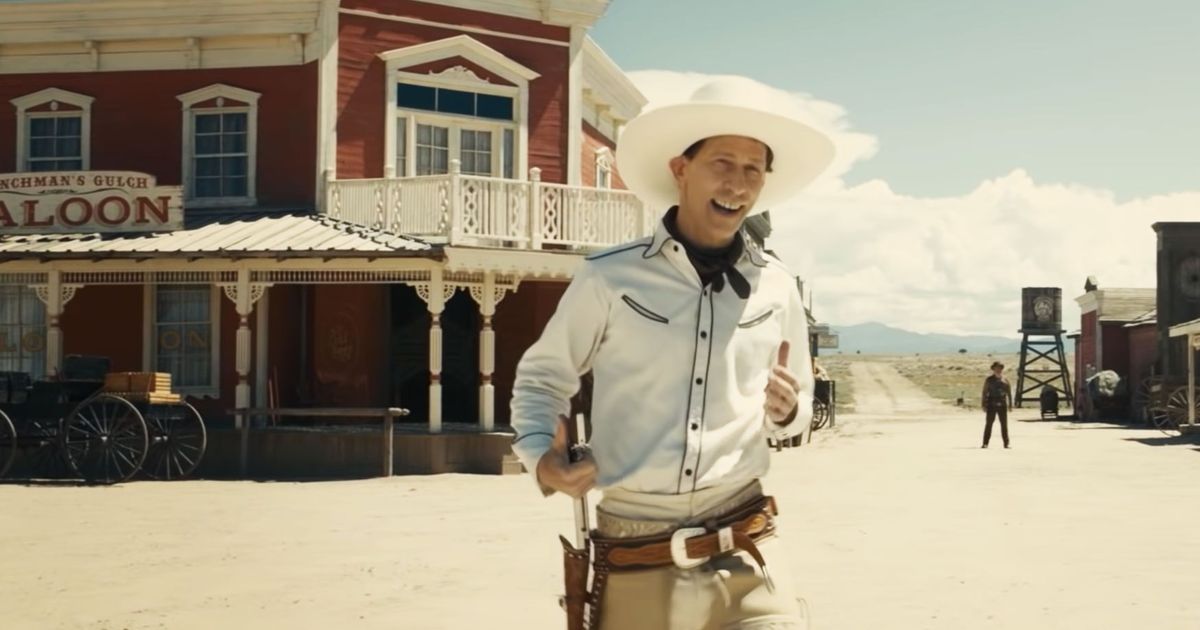
The opening chapter introduces Buster Scruggs, a cheerful gunslinger whose bright personality stands in striking contrast to his deadly reputation. Dressed in white, carrying a guitar, and singing with an almost innocent enthusiasm, Buster looks more like a traveling entertainer than a man capable of dominating a saloon showdown.
That appearance, however, is precisely what makes him so memorable.
Buster enters dangerous situations with remarkable confidence, treating confrontations as though they were simply another opportunity to entertain an audience. His enemies may believe that a smile makes him harmless, but they quickly discover that his quick draw and extraordinary accuracy tell a very different story.
The saloon scenes capture the film’s unusual combination of comedy and violence. Tension builds as strangers exchange challenging looks, hands move toward revolvers, and the possibility of bloodshed hangs over the room. Then Buster does something so unexpected that the confrontation becomes almost theatrical.
His character plays with the familiar image of the Western gunslinger. Rather than presenting violence as a solemn display of toughness, the Coen brothers turn it into a bizarre performance in which confidence, timing, and absurdity matter as much as skill with a weapon.
Buster’s story establishes the film’s central principle: in this version of the Wild West, appearances are dangerously misleading.
Six Stories About Fortune, Fear, and Survival

Although Buster provides the film’s most immediately recognizable opening, his adventure is only the beginning. The remaining chapters introduce characters whose lives are shaped by greed, loneliness, desperation, and the constant possibility of death.
In “Near Algodones,” a would-be bank robber discovers that even a seemingly straightforward crime can produce a chain of increasingly ridiculous consequences. His plans unravel in ways that expose the strange relationship between luck and punishment on the frontier. The story turns the traditional outlaw narrative into a darkly comic examination of how little control people sometimes possess over their own destinies.
“Meal Ticket” takes a considerably darker approach. A traveling impresario tours the frontier with a performer whose extraordinary abilities attract audiences. Their relationship reveals the harsh economics of entertainment in a world where human value can become inseparable from profit. Behind the traveling show lies a disturbing question: what happens when someone’s livelihood depends entirely on the interest of others?
“The Gal Who Got Rattled” shifts the focus to Alice Longabaugh, a young woman traveling west in search of a new life. Her journey brings her into contact with unfamiliar people, difficult choices, and dangers she cannot fully anticipate. As the story develops, the promise of opportunity becomes increasingly entangled with uncertainty.
This chapter is particularly effective because its emotional tension grows from ordinary human vulnerability rather than constant gunfire. Alice is not a legendary gunslinger, and she cannot simply rely on superior marksmanship to escape every problem. Her circumstances reflect the precarious position of people attempting to build a future in an unfamiliar and unforgiving environment.
“Buster Scruggs” may initially seem like the film’s defining chapter, but these contrasting stories demonstrate that the frontier contains many different kinds of danger. Sometimes the threat comes from a revolver. Sometimes it comes from poverty, isolation, or a decision that cannot be reversed.
The Prospector and the Price of Obsession
In “All Gold Canyon,” an aging prospector ventures into a beautiful, secluded valley in pursuit of gold. His determination transforms the landscape into the center of an intensely personal struggle.
Unlike the opening chapter’s rapid-fire confrontations, this story takes its time. The prospector studies the ground, searches for promising signs, and works patiently toward the possibility of discovering a fortune. The natural world becomes a character in its own right, offering beauty and opportunity without promising either safety or success.
His search reflects one of the oldest themes in Western storytelling: the belief that somewhere beyond the next ridge lies the chance to change everything.
But the pursuit of wealth carries its own dangers. Obsession can make a person vulnerable, and the promise of gold can attract people who are willing to take what someone else has worked to find. The story’s tension emerges from the fragile boundary between patience and greed, reminding viewers that even the most isolated places are not beyond human conflict.
Why the Film’s Dark Humor Works
One of the most distinctive qualities of The Ballad of Buster Scruggs is its refusal to maintain a consistent emotional tone. A scene may begin with a playful song before turning violent. A character may appear destined for success, only for circumstances to change without warning. A seemingly ordinary conversation may reveal an unsettling truth about human nature.
The Coen brothers use these sudden shifts to challenge the romantic mythology surrounding the American West.
Traditional Western films often celebrate courage, justice, and the triumph of determined individuals. This film acknowledges those familiar ideas but refuses to make them universal rules. Courage does not always guarantee victory. Intelligence cannot eliminate bad luck. Good intentions do not necessarily protect people from tragedy.
The humor can be uncomfortable precisely because it arrives when viewers least expect it. Violence is sometimes presented with an absurd casualness, while genuinely tragic moments are allowed to unfold without easy consolation.
Rather than simply mocking Western conventions, the filmmakers use them to explore the unpredictability of existence. The frontier becomes a place where people search for meaning in circumstances that rarely provide satisfying explanations.
A Cast That Brings the Frontier to Life
The film’s ensemble cast helps distinguish each chapter through its performances and personalities. Tim Blake Nelson gives Buster Scruggs an energetic charm that makes the character simultaneously entertaining and intimidating. His musical performance, exaggerated politeness, and cheerful confidence create an unforgettable interpretation of the singing cowboy.
James Franco, Liam Neeson, Harry Melling, Tom Waits, Zoe Kazan, and other performers bring contrasting personalities to the remaining stories. Some characters are driven by ambition, others by desperation, and still others by the simple desire to survive another day.
Their performances reinforce the anthology’s greatest strength: the frontier is not represented by one heroic figure or a single defining conflict. It is populated by people with different dreams, weaknesses, and understandings of the world.
The film’s cinematography also contributes to its distinctive atmosphere. Vast landscapes, isolated settlements, dusty streets, and quiet valleys emphasize both the beauty and the indifference of the natural environment. The West appears magnificent from a distance, but its scale can make individual lives seem painfully fragile.
A Western That Refuses to Follow the Rules
Ultimately, The Ballad of Buster Scruggs succeeds because it refuses to offer a predictable version of the frontier. Its six chapters move between comedy, suspense, tragedy, and philosophical reflection, presenting a world in which every apparent certainty can suddenly disappear.
Buster Scruggs remains the film’s most immediately entertaining figure, but the larger work reaches beyond his quick draw and infectious smile. The other stories reveal the economic struggles, emotional vulnerabilities, and uncomfortable truths hidden beneath the familiar mythology of the cowboy era.
The result is a Western that entertains while repeatedly unsettling its audience. It celebrates the genre’s iconic imagery but questions the comforting belief that courage and determination are always rewarded.
In this frontier, a smile can precede a gunfight, a fortune can become a curse, and a journey toward a better life can take an unexpected turn. Every story offers another reminder that survival is never guaranteed.
That unpredictability is what makes The Ballad of Buster Scruggs so memorable. It is not simply a collection of tales about cowboys and outlaws. It is a darkly comic reflection on human ambition, mortality, and the strange turns of fate that can transform an ordinary day into an unforgettable story.